
Complete Guide to Visiting the Korean Demilitarized Zone (DMZ)
The Demilitarized Zone (DMZ) separating North and South Korea is one of the most unique and historically significant destinations in the world. Stretching roughly 250 kilometers (155 miles) across the Korean Peninsula and measuring approximately 4 kilometers (2.5 miles) wide, this heavily fortified border area offers international tourists an extraordinary glimpse into modern history, geopolitics, and the ongoing division of the Korean nation.
For international visitors staying in Seoul, taking a day trip to the DMZ—specifically the Paju section featuring the Third Infiltration Tunnel and Dora Observatory—is one of the most compelling cultural and historical excursions available. Located just 50 kilometers (31 miles) north of downtown Seoul, the area is easily accessible via guided tours or organized transportation. This comprehensive guide provides everything you need to know to plan a safe, memorable, and well-organized visit to the Korean DMZ.
Understanding the DMZ: Context and Current Status
Established at the end of the Korean War in July 1953 under the Korean Armistice Agreement, the DMZ serves as a buffer zone between North Korea (Democratic People’s Republic of Korea) and South Korea (Republic of Korea). Running along the 38th parallel, the line dividing the two zones is known as the Military Demarcation Line (MDL).
DMZ vs. JSA: What Is the Difference?
It is important for travelers to distinguish between a standard DMZ Day Tour and a JSA (Joint Security Area / Panmunjom) Tour:
- Standard DMZ Tour (Paju Area): Includes Imjingak Park, the Third Infiltration Tunnel, Dora Observatory, and Dorasan Station. This area is fully open to international tourists via registered tours and local shuttle services.
- JSA / Panmunjom Tour: The famous blue conference buildings where North and South Korean soldiers stand face-to-face. *Note: Visits to the JSA are subject to strict military regulations, frequent operational suspensions, and separate booking procedures through official channels.*
This guide focuses primarily on the standard, highly accessible DMZ day tour covering the Third Tunnel and Dora Observatory, which remains the most reliable and informative experience for international travelers.
Key Highlights of a DMZ Day Trip
1. Imjingak Park (Peace Park)
Located on the banks of the Imjin River in Paju, Imjingak Park serves as the starting point for most DMZ tours. Built in 1972 to comfort war refugees who were separated from their families in the North, the park houses numerous monuments, historical artifacts, and symbolic installations.
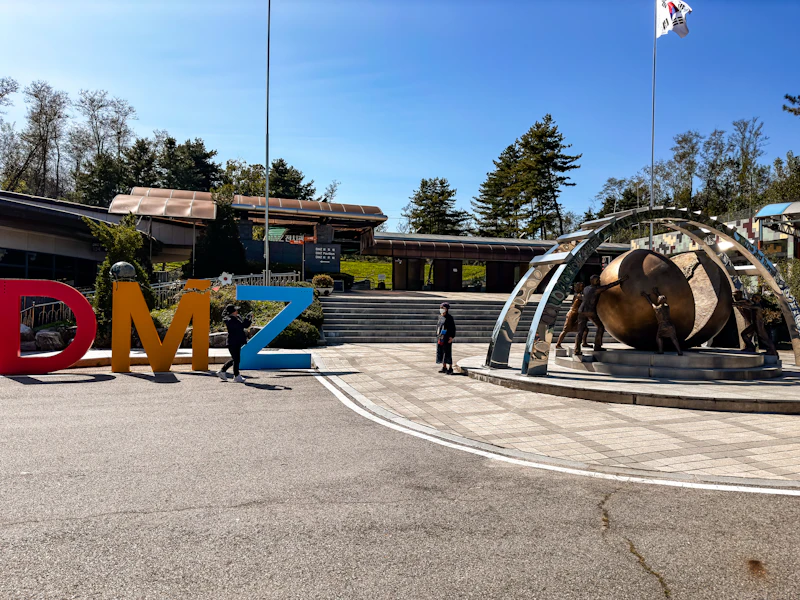
- Freedom Bridge: A wooden bridge formerly used by returned prisoners of war crossing back to South Korea. Visitors attach colorful ribbons printed with messages of hope for peaceful reunification along the security fence.
- Mangbaedan Altar: A sacred altar where South Koreans whose families originated in the North gather during traditional holidays (such as Chuseok and Lunar New Year) to perform ancestral rites facing their homelands.
- Jangdan Station Steam Locomotive: A heavily damaged steam train preserved exactly as it was left after being peppered with over 1,020 bullet holes during the Korean War, standing as a vivid symbol of the conflict.
2. The Third Infiltration Tunnel
Discovered in October 1978 based on information provided by a North Korean defector, the Third Infiltration Tunnel (also known as the Third Tunnel of Aggression) is one of four secret underground passages dug by North Korea beneath the DMZ that have been uncovered by South Korea.
Measuring 1.63 kilometers (1 mile) long, 2 meters high, and 2 meters wide, the tunnel lies 73 meters (240 feet) underground. It was designed to allow an estimated 30,000 armed troops per hour to pass covertly into South Korea to launch a surprise attack on Seoul.
- The Underground Experience: Tourists descend deep into the granite substrate to explore a section of the actual tunnel. South Korea has installed three thick concrete blockades inside the tunnel to prevent any physical entry from the North Korean side. Visitors walk up to the final concrete barrier, viewing the actual blast holes drilled by North Korean workers.
- Entry Options: Access down to the underground tunnel is achieved either via a steep walking ramp (approx. 350 meters down and back up) or via a specialized monorail train (subject to limited seating and specific ticket availability).
- Safety and Comfort: All visitors must wear provided protective hard hats, as the granite ceiling in the actual tunnel drops as low as 1.5 meters (nearly 5 feet) in certain areas.
3. Dora Observatory
Situated atop Mount Dora (Dorasan), the Dora Observatory offers unparalleled panoramic views across the Military Demarcation Line into North Korea. From this elevated vantage point, visitors can peer directly into the closed northern state using high-powered binocular telescopes.
- What You Can See: On clear days, visitors can view the North Korean city of Gaeseong, the now-dormant Gaeseong Industrial Complex, Mount Songak, and Kijong-dong (commonly referred to as the “Propaganda Village”).
- Kijong-dong & Flag Tower: In Kijong-dong, you can clearly see a 160-meter-tall (525-foot) flag tower flying a massive North Korean flag—once one of the tallest flagpoles in the world—surrounded by uninhabited concrete buildings designed to give the illusion of prosperity.
- Educational Exhibits: The observatory facility features a modern glass theater, historical exhibits, and interactive digital display boards explaining the local geography and historical conflict points.
4. Dorasan Station
Dorasan Station is a modern railway station built on the Gyeongui Line, designed to connect South Korea’s rail system with North Korea, Russia, and eventually Europe via the Trans-Siberian Railway. Although regular train service into North Korea is currently suspended due to political tensions, the station stands fully functional as a powerful symbol of potential future connection.
Inside, visitors can purchase a souvenir platform ticket, view commemorative art pieces, and stand on the platform marked with directions pointing toward Pyongyang (205 km) and Seoul (56 km).
How to Visit: Tour Booking and Options
Because the Third Tunnel and Dora Observatory lie within the Civilian Control Zone (CCZ)—a restricted military access area south of the DMZ—individual international tourists cannot drive themselves directly to these sites without passing military security checkpoints.
Method 1: Organized Group Tour from Seoul (Recommended)
The simplest and most popular option for international tourists is booking a guided tour with round-trip motorcoach transportation from central Seoul (pickup locations usually include Hongdae, Myeongdong, or Seoul Station).
- Half-Day DMZ Tour: Departs Seoul around 7:00 AM to 8:00 AM and returns around 2:00 PM to 3:00 PM. Includes Imjingak, Third Tunnel, Dora Observatory, and Dorasan Station.
- Full-Day DMZ Tour: Combines the core DMZ sites with an additional local destination, such as the Gamaksan Red Suspension Bridge or the Majang Lake Suspension Bridge. Runs from roughly 7:30 AM to 5:00 PM.
Method 2: DMZ Peace Train or Shuttle Bus from Imjingak
Travelers seeking an independent approach can take public transit (Subway Line 3/ 경의·중앙선 Gyeongui-Jungang Line or express bus) from Seoul to Imjingak Station/Imjingak Park. Upon arrival at Imjingak, visitors can purchase tickets directly at the official ticket booth for the official local DMZ shuttle bus operated by the Paju city council.
Caution: On-site ticket availability for the local shuttle is limited daily on a first-come, first-served basis, and weekend tickets often sell out early in the morning.
Costs and Ticket Pricing (in Korean Won)
Below is a breakdown of standard prices for DMZ visits as of recent published schedules. All prices are expressed in South Korean Won (KRW, ₩):
Official Local DMZ Shuttle Ticket Prices (at Imjingak Booth)
- Walking Option (Descend Tunnel on Foot):
- Adults (Ages 19–64): ₩9,200
- Children/Youth (Ages 6–18): ₩7,000
- Seniors (Ages 65+): ₩6,400
- Monorail Option (Descend Tunnel via Monorail):
- Adults (Ages 19–64): ₩12,200
- Children/Youth (Ages 6–18): ₩9,500
- Seniors (Ages 65+): ₩9,400
Organized Group Tours from Seoul
- Half-Day Guided DMZ Group Tour: ₩65,000 to ₩95,000 per person (Includes round-trip bus transportation from Seoul, English-speaking guide, and entry tickets).
- Full-Day DMZ & Suspension Bridge Tour: ₩95,000 to ₩135,000 per person (Includes admission fees, transport, guide, and lunch in some packages).
- Private DMZ Tour (Vehicle + Personal Guide): ₩350,000 to ₩600,000 total (depending on group size and vehicle size).
Strict Rules, Entry Requirements, and Dress Code
Visiting the DMZ involves entering active South Korean military control zones. Strict compliance with local regulations is mandatory for all visitors.
1. Passport Requirement (Mandatory)
Every single international visitor **must carry their original physical passport** on the day of the trip. Digital photos, paper photocopies, or foreign driver’s licenses are strictly rejected by the Republic of Korea (ROK) military guards who board tour buses at the Unification Bridge checkpoint to verify identities against tourist manifests.
2. Security Checks and Military Regulations
- You will cross military control checkpoints where armed soldiers inspect documents. Remain quiet, sit in your designated seat, and follow your guide’s instructions.
- Military personnel may conduct random bag checks or security screening.
3. Photography Restrictions
- Inside the Third Tunnel: Photography and videography are strictly prohibited inside the subterranean tunnel. All electronic devices, cameras, smartphones, and bags must be locked in free security lockers provided at the surface entrance before entering.
- At Dora Observatory: Photography is strictly limited to designated areas inside and outside the facility. Taking photos of military posts, guard towers, or specific defense installations is illegal. Always check for photo boundary lines marked on the ground or consult your guide.
- At Checkpoints: Taking photos of soldiers or military control points at the Unification Bridge is strictly forbidden.
4. Recommended Dress Code
While the dress code for the standard Paju DMZ tour is less rigid than historical rules for the JSA/Panmunjom, visitors are still expected to dress respectfully:
- Wear comfortable walking shoes or sneakers. The walk down into the Third Tunnel features a steep incline (11-degree slope), and surfaces can be damp or slippery. High heels, flip-flops, or unstable sandals are strongly discouraged.
- Dress modestly and avoid clothing featuring military camouflage prints, explicit graphics, or highly provocative slogans.
- Bring a light jacket or sweater; the underground tunnel maintains a cool temperature of approximately 11–13°C (52–55°F) year-round.
Best Time to Visit and Weather Considerations
The visual quality of your experience at the Dora Observatory depends heavily on atmospheric conditions.
- Best Seasons: Autumn (September to November) and Spring (April to May) offer clear skies, mild temperatures, and the lowest humidity, providing optimal visibility across the border.
- Winter (December to February): Offers clear skies and good visibility, but temperatures can drop well below freezing (often -10°C / 14°F at the border area). Layer warm clothing and wear thermal footwear.
- Summer (June to August): Characterized by the East Asian monsoon season. Heavy rains, high humidity, and thick fog can significantly obscure visibility at Dora Observatory.
Essential Practical Tips for International Tourists
- Book Well in Advance: Standard DMZ tour slots fill up fast due to daily visitor quotas set by the ROK military. Book your tour at least 1 to 2 weeks ahead, especially during peak travel months (April, May, September, October).
- Preparation for Claustrophobia and Physical Strain: The walking path inside the Third Infiltration Tunnel drops 73 meters down along a 350-meter inclined tunnel. The ceiling inside the tunnel is low, requiring adults to bend over slightly while walking. Travelers with severe claustrophobia, heart conditions, back injuries, or mobility impairments should opt for the monorail option or stay at the visitor center surface exhibits.
- Bring Cash in Korean Won: While tour operators accept credit cards, smaller souvenir stalls at Imjingak Park, vending machines, and local snack shops may only accept physical cash (₩ KRW).
- Unique Local Souvenirs: Don’t miss the chance to buy unique DMZ specialties sold at local gift shops. Popular options include DMZ-branded wild soybean chocolate, Jangdan soybean products, local DMZ rice, and authentic pieces of rusted border fence wire mounted on wooden commemorative plaques.
- Follow Schedule Timings Promptly: Military entry slots granted to tour groups operate on strict time windows. Arriving late back to your tour bus can disrupt entry schedules for the entire group or result in cancelled access to specific sites.
- Stay Updated on Geopolitical Events: Border operations can occasionally be altered or suspended on short notice due to military exercises, diplomatic developments, or security alerts. Check with your tour provider the evening before your trip to confirm departure schedules.
Final Summary
A day trip to the Demilitarized Zone, visiting the Third Infiltration Tunnel and Dora Observatory, is one of the most powerful and educational experiences South Korea has to offer. By planning ahead, keeping your passport ready, and adhering strictly to local safety and security rules, you will enjoy a seamless, unforgettable journey into one of history’s most significant borderlands.
You Might Also Like
Frequently Asked Questions
Do I need to bring my physical passport to visit the DMZ?
Yes, you must bring your original, physical passport on the day of your tour for military checkpoint verification. Photocopies or digital photos on your phone will not be accepted, and you will be denied entry without it.
Is it safe for international tourists to visit the DMZ?
Yes, visiting the designated tourist zones of the DMZ is extremely safe, as the area is strictly managed and monitored by the military. However, tours may be rescheduled or canceled without prior notice if military operations or geopolitical tensions arise.
How long does a DMZ day trip from Seoul take?
A standard DMZ half-day or full-day tour typically takes between 6 to 8 hours, including round-trip transportation from central Seoul. Most tours depart very early in the morning to secure ticket slots at the military checkpoints.
Searching Korea Editorial Team
Korea Travel Experts · Based in Seoul
this guide of Korea-based travel writers has been exploring South Korea for over a decade. We visit every destination we write about, verify prices and hours firsthand, and update our guides regularly to ensure accuracy. Our mission is to help travelers experience Korea like a local.
Practical Tips and Traveler Checklist
To ensure a hassle-free visit to the Paju DMZ, keep the following practical recommendations in mind:

1. Book Early, Departure Early
Due to safety regulations, daily admission quotas for entering the DMZ through the Paju checkpoint are strictly managed by the military. Independent tickets at Imjingak Park often sell out by mid-morning on weekends and peak travel seasons. Booking a tour from Seoul weeks in advance secures your spot. Expect early morning departure times (around 6:30 AM to 7:30 AM).
2. Prepare Your Physical Passport
Double-check that your passport is in your bag before leaving your hotel. Without a physical, valid original passport, you will be turned back at the military checkpoint—no exceptions are made for photocopies or digital images.
3. Dress for the Season and Environment
- Winter (November to March): The area surrounding Paju and the DMZ is significantly colder and windier than downtown Seoul. Wear heavy outerwear, thermal layers, gloves, and a hat.
- Summer (June to August): Summer months are hot and humid. Wear breathable clothing, sunscreen, and bring water. However, note that the 3rd Infiltration Tunnel stays cool (around 12°C / 53°F year-round), so a light jacket or sweater is useful inside the tunnel.
- Footwear: Wear comfortable athletic shoes or sturdy walking boots. Flip-flops, high heels, and backless sandals are unsuitable for walking down the steep, slick incline of the tunnel.
4. Respect Lockers and Tunnel Protocol
Make sure to leave all loose objects, bags, and mobile phones inside the lockers at the 3rd Tunnel entrance. Walking through the narrow tunnel requires leaning down frequently due to the low ceiling. Wearing your provided safety hard hat at all times prevents head injuries from low-hanging granite roofs.
5. Days of Operation
Standard DMZ tours do not operate on Mondays, as well as select South Korean national holidays and designated military training days. Always check the operational calendar when planning your trip.
6. Currency and Facilities
Bring some cash in Korean Won (KRW) or a local credit card. While Imjingak Park has modern convenience stores, souvenir shops, and restaurants, small expenses (such as lock rental or snacks) are most conveniently paid in cash.