
Quick Summary: Bukchon Hanok Village At A Glance
- Admission Cost: 100% Free to enter public alleys (₩0 / $0 USD). Individual museum or workshop fees range from ₩2,000 to ₩15,000 (~$1.50 to $11 USD).
- Residential Curfew Hours: 10:00 AM – 5:00 PM daily for residential alleys (strictly enforced in “Red Zones” such as Bukchon-ro 11-gil).
- Best Time to Visit: October to November (Autumn) and April to May (Spring); visit between 10:00 AM and 11:30 AM on weekdays.
- Recommended Duration: 2 to 3.5 hours.
- Physical Difficulty: Moderate. High hill inclines, uneven cobblestones, and steep granite steps require supportive walking shoes.
- Closest Transit Hub: Anguk Station (Seoul Subway Line 3, Exit 2 or 3).
Introduction: Walking Through Living History in the Heart of Seoul
In The ten-plus years living in and writing about Seoul, few neighborhood transformations match Bukchon Hanok Village. Nestled gracefully between two of the city’s grandest royal residences—Gyeongbokgung Palace to the west and Changdeokgung Palace to the east—Bukchon is not an open-air museum, nor is it a manufactured theme park. It is a living, breathing neighborhood where modern Seoulites inhabit traditional wooden homes (hanok) dating back to the Joseon Dynasty.
Historically, Bukchon (“North Village”) served as the exclusive residential enclave for high-ranking government officials, court nobility, and the royal family (the yangban class). Today, its sloping alleyways showcase an architectural blend of traditional curved tile roofs (giwa), timber framing, exposed stone walls, and updated glass-and-steel interiors. Over 900 hanoks remain preserved here, framing classic views where historic timber architecture directly lines up with the soaring glass tower of N Seoul Tower in the distant skyline.
Because Bukchon is an active residential zone, visiting requires a clear understanding of practical logistics: updated visitor hours, strict noise ordinances, navigation options, and realistic budget expectations. this guide at Searching Korea has put together this guide based on years of walking these alleys to give you every detail you need for your visit.
Is Bukchon Hanok Village Free to Visit?
Yes, walking through the alleys of Bukchon Hanok Village is completely free of charge (₩0 / $0 USD). There are no entry gates, security checkpoints, or overall neighborhood entrance fees.
However, while walking the outdoor streets costs nothing, individual venues, experiences, and historical cultural centers within the neighborhood have specific pricing structures. Below is a detailed breakdown of costs you may encounter during your visit:
| Attraction / Experience | Cost in South Korean Won (KRW) | Approximate Cost in USD (USD) |
|---|---|---|
| Neighborhood Walking Alleys | Free (₩0) | $0.00 |
| Baek In-je House Museum | Free (₩0) | $0.00 |
| Bukchon Culture Center | Free (₩0) | $0.00 |
| Traditional Hanbok Rental (2–4 Hours) | ₩15,000 – ₩35,000 | ~$11.00 – $26.00 |
| Traditional Tea House (Tea + Rice Cake) | ₩8,000 – ₩15,000 | ~$6.00 – $11.00 |
| Hanok Craft Workshops (Knotting, Lacquerware) | ₩10,000 – ₩25,000 | ~$7.50 – $18.50 |
| Bukchon Museum / Donglim Knot Museum | ₩2,000 – ₩5,000 | ~$1.50 – $3.70 |
Official Operating Hours & Residential Curfew Rules
One of the most crucial updates for travelers visiting Bukchon involves the city’s strict anti-overtourism regulations and visitor hours. Because Bukchon is home to everyday residents who face daily noise pollution and privacy issues, the Seoul Metropolitan Government and Jongno-gu District Office enforce official visiting hour policies.
Mandatory Visiting Hours for Outdoor Alleys
Official Outdoor Visitor Hours: 10:00 AM – 5:00 PM (Monday through Sunday)
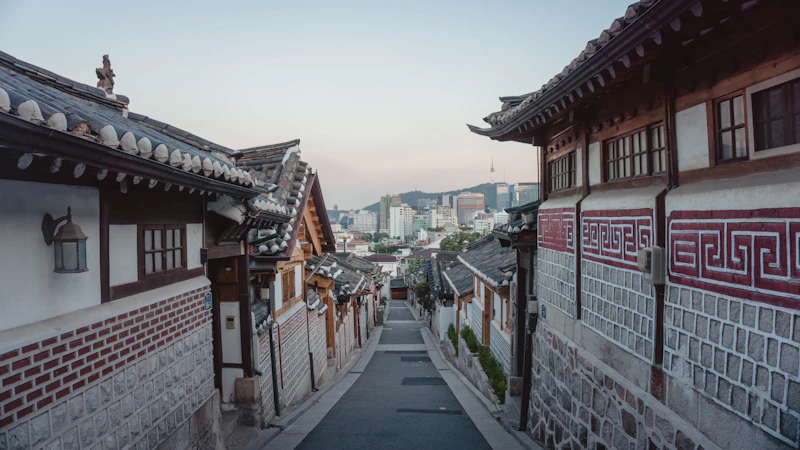
While the physical streets do not lock down overnight, visitor access to designated high-density residential alleys—specifically around Bukchon-ro 11-gil (commonly referred to as the “Red Zone”)—is strictly restricted outside of 10:00 AM to 5:00 PM. Ward wardens and municipal staff actively patrol the designated zones. Fines of up to ₩100,000 (~$74 USD) can be levied against visitors who create excessive noise, trespass on private property, or ignore quiet regulations outside these designated hours.
Indoor Venue Hours & Weekly Closures
If you plan to visit cultural centers, museums, or municipal spaces within the village, keep these operational schedules in mind:
- Bukchon Culture Center: Open Monday to Friday 09:00 AM – 06:00 PM; Saturday and Sunday 09:00 AM – 05:00 PM. Admission is free.
- Baek In-je House Museum: Open Tuesday through Sunday 09:00 AM – 06:00 PM (Last entry at 05:30 PM). Closed every Monday. Admission is free.
- Local Craft Workshops & Private Museums: Typically open Tuesday to Sunday 10:00 AM – 05:00 PM or 06:00 PM. Most are closed on Mondays.
- Teahouses & Commercial Cafes: Generally operate daily from 11:00 AM – 09:00 PM or 10:00 PM.
How to Get There: Exact Subway & Transit Directions
Bukchon Hanok Village sits in the central Jongno-gu district. Due to narrow roads, limited parking, and heavy pedestrian traffic, using public transportation is strongly advised.
By Seoul Subway (Recommended)
The primary transit gateway to Bukchon is Anguk Station on Seoul Subway Line 3 (Orange Line).
- For the Bukchon Culture Center & Main Village Alleyways: Take Anguk Station (Line 3), Exit 3. Walk straight out of Exit 3 for roughly 50 meters, then turn left onto Gyedong-gil. Walk straight for 3 minutes to reach the Bukchon Culture Center (37, Gyedong-gil, Jongno-gu, Seoul).
- For Samcheong-dong & Baek In-je House: Take Anguk Station (Line 3), Exit 2. Walk straight north along Bukchon-ro for approximately 300 meters. The entrance to Baek In-je House (16, Bukchon-ro 7-gil, Jongno-gu, Seoul) will be on your left.
By Seoul City Bus
If arriving from downtown locations such as Myeongdong or Seoul Station:
- Take Green Village Bus Jongno 01 (종로01), which circles directly through the inner Bukchon streets, stopping near key neighborhood points.
- Alternatively, take Blue Mainline Bus 109, 151, or 162 and disembark at the Anguk Station / Insadong-eok bus stop.
Taxi & Ride-Hailing Drop-Offs
If using Kakao T or a standard taxi, ask the driver to drop you off at Anguk Station Exit 2 (안국역 2번출구) or the Bukchon Culture Center (북촌문화센터). Avoid directing taxis into the narrow residential streets of Bukchon-ro 11-gil, as vehicles can get stuck in traffic and narrow street turnarounds.
Top Viewpoints and Historic Highlights
While wandering Bukchon’s alleys without a fixed itinerary is rewarding, several key historical sites offer deep insight into Korean architectural heritage.
1. Bukchon-ro 11-gil (The Main Hanok Alleyline)
Address: Bukchon-ro 11-gil, Gahoe-dong, Jongno-gu, Seoul
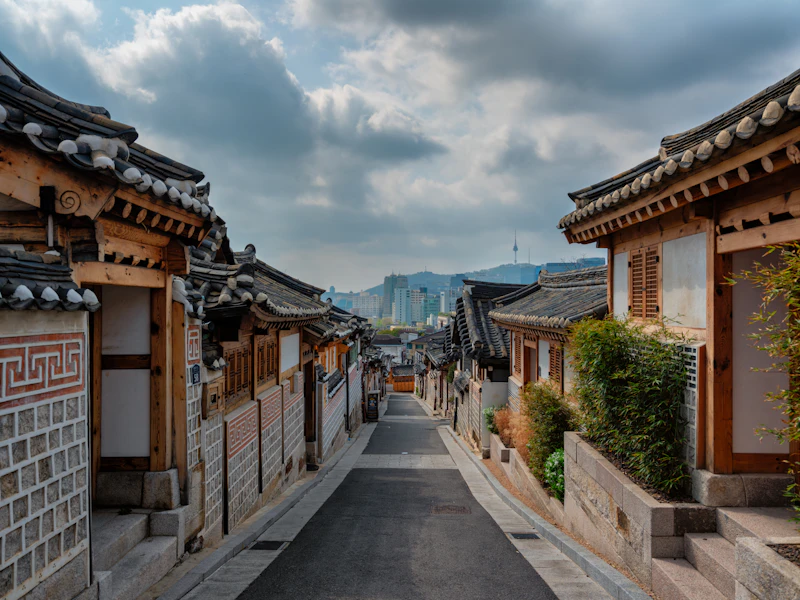
This is the iconic street featured in most travel photography. Looking uphill from the base of the alley, you are surrounded by traditional hanok roofs. When you reach the top of the hill and turn around, you get a clean view of traditional Seoul architecture framed directly against N Seoul Tower on the horizon. Remember to keep voices at a whisper along this stretch.
2. Baek In-je House Museum (백인제가옥)
Address: 16, Bukchon-ro 7-gil, Jongno-gu, Seoul
Hours: Tue–Sun 09:00 AM – 06:00 PM (Closed Mondays)
Entry Fee: Free (₩0 / $0 USD)
Built in 1913 during the Japanese colonial era, this grand estate offers a look into early modern residential architecture. Unlike Joseon-era homes, Baek In-je House incorporates modern elements like red brick accents, Japanese tatami mat reception rooms, and expansive second-story glass windows. The estate features sprawling garden courtyard grounds that offer elevated photos across the surrounding tile roofs.
3. Bukchon Culture Center (북촌문화센터)
Address: 37, Gyedong-gil, Jongno-gu, Seoul
Hours: Mon–Fri 09:00 AM – 06:00 PM; Sat–Sun 09:00 AM – 05:00 PM
Entry Fee: Free (₩0 / $0 USD)
Before exploring the residential lanes, start here. Located in a restored modern hanok once owned by the Min family (royal relatives of Queen Min), this center provides detailed architectural maps, historical video summaries, and rotating traditional craft demonstrations.
4. Eungwang-gil & Gyedong-gil Local Alleys
For a quieter atmosphere, walk east of the main tourist axis toward Gyedong-gil. Here, traditional hanok buildings house operational dry cleaners, small wooden retro bakeries, repair shops, and artisan coffee houses where local residents go about their daily routines.
Best Time to Visit: Seasonal Guide & Ideal Timing
Seoul experiences four distinct seasons, each radically altering the visuals of Bukchon’s wooden streets.
Optimal Months to Visit
- Autumn (October to Mid-November): Autumn is the ideal season to explore Bukchon. High fall skies complement the warm wood tones of the hanok eaves, while vibrant red maple leaves and golden ginkgo trees frame the stone alleyways. Temperatures hover comfortably between 12°C and 20°C (53°F to 68°F).
- Spring (April to May): Mild spring weather makes walking the steep inclines comfortable. Cherry blossoms line nearby palace walls, and magnolias bloom inside private hanok courtyards.
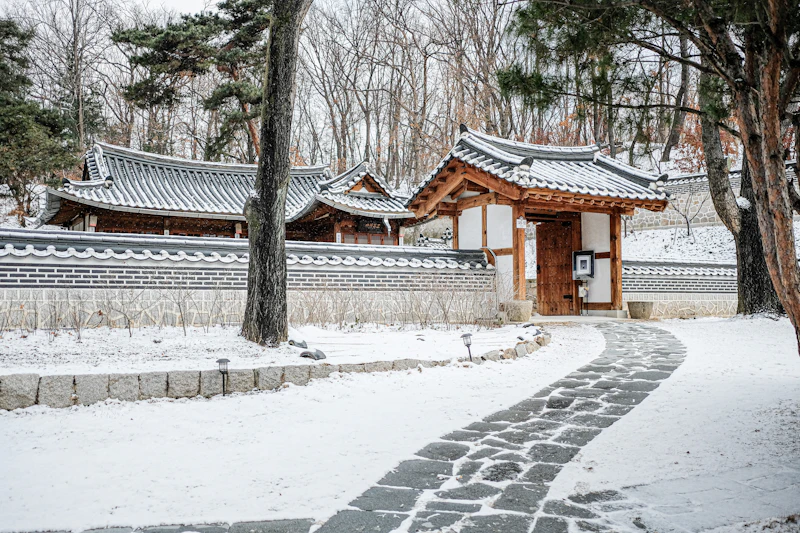
- Winter (December to February): Visiting immediately after a fresh snowfall creates a quiet, picturesque scene as white snow settles on dark grey roof tiles (giwa). However, walk carefully: steep tile-covered slopes and granite steps quickly freeze over.
- Summer (July to August): Less recommended. Seoul’s monsoon season brings intense humidity, heavy rains, and temperatures above 30°C (86°F), making climbing Bukchon’s outdoor hills exhausting.
Ideal Time of Day
To balance crowd control and neighborhood rules, arrive at Anguk Station between 09:30 AM and 10:00 AM on a Tuesday, Wednesday, or Thursday. Starting right at 10:00 AM allows you to enjoy quiet streets right when residential viewing hours open, before mid-day tour groups arrive between 1:00 PM and 4:00 PM.
Budget Breakdown: Planning Your Expenses
While entry to the neighborhood itself is completely free, actual spending varies depending on whether you are doing a brief walking tour, stopping for a traditional tea set, or booking an authentic hanok stay. Below are realistic budget estimates per person:
Estimated Visitor Budgets
| Category | Budget Traveler | Mid-Range Traveler | Luxury Traveler |
|---|---|---|---|
| Transport (Subway Return) | ₩3,000 (~$2.20 USD) | ₩3,000 (~$2.20 USD) | ₩30,000 (~$22.00 USD) (Taxi) |
| Attraction Entry | ₩0 (Free Sites Only) | ₩5,000 (~$3.70 USD) (Museums) | ₩25,000 (~$18.50 USD) (Crafts) |
| Clothing Rental | None | ₩20,000 (~$15.00 USD) (Hanbok) | ₩50,000 (~$37.00 USD) (Premium) |
| Dining & Drinks | ₩10,000 (~$7.50 USD) (Street Food) | ₩25,000 (~$18.50 USD) (Meal + Tea) | ₩90,000 (~$66.00 USD) (Fine Dining) |
| Accommodation (Per Night) | None (Day Trip) | ₩150,000 (~$110.00 USD) (Standard Hanok) | ₩450,000+ (~$330.00+ USD) (Private Villa) |
| ESTIMATED TOTAL | ₩13,000 (~$9.70 USD) | ₩203,000 (~$149.40 USD) | ₩645,000+ (~$473.50+ USD) |
Expert Tips: Insider Advice for Your Visit
Drawing from over a decade of navigating Seoul’s historical districts, our editorial team has compiled these practical tips to refine your itinerary:
1. Seek Out Elevation for Panoramas Without the Crowds
Instead of struggling through crowded group photos on Bukchon-ro 11-gil, head toward the quiet upper boundary of Samcheong-dong near Bukchon Observatory (북촌전망대) or local rooftop cafes such as Green Mile Coffee Bukchon. For a modest coffee purchase or small entry fee (approx. ₩3,000–₩5,000 / ~$2.20–$3.70 USD), you get access to elevated outdoor terraces overlooking rooflines with zero line waits.
2. Master the Hanok Teahouse Experience
Skip generic commercial cafes along the high street and reserve a low-table seat at traditional teahouses tucked away inside side alleys, such as Cha-Teas (차마시는뜰) (26, Bukchon-ro 11-na-gil). Housed in an authentic square courtyard hanok, you can sip hot jujube tea (daechu-cha) or omija tea while looking through full-length glass windows into an internal garden.
3. Check Hanbok Quality Before Renting
If you choose to wear traditional Korean clothing (hanok rentals grant free entry to all adjacent palaces like Gyeongbokgung!), look closely at rental shops around Anguk Station. Basic rental shops offer costume-grade synthetic materials starting at ₩15,000 (~$11 USD). For authentic photos, seek out high-end rental shops that offer silk, natural dye finishes, and custom fitted wraps starting at ₩35,000–₩50,000 (~$26–$37 USD).
4. Combine Your Visit Route Efficiently
Avoid doubling back up Bukchon’s steep hills by taking this efficient route: Exit Anguk Station Exit 3 → Bukchon Culture Center → Bukchon-ro 11-gil → Baek In-je House → Walk downhill directly into Samcheong-dong for lunch → Walk straight across into Gyeongbokgung Palace via the East Gate (Geonchunmun).
Common Mistakes to Avoid
To ensure a smooth trip while remaining respectful of the local community, avoid these common errors:
- Treating Residential Alleys Like an Amusement Park: Remember that people live, work, and sleep behind these wooden doors. Loud shouting, leaning heavily on gate handles, filming into private windows, or leaving trash on doorstep ledges is strictly forbidden and actively ticketed by city wardens.
- Wearing Unsupportive Footwear: Bukchon is built on a series of steep ridge hills. The streets are paved with slippery flagstones, cobbles, and high granite stairways. Avoid high heels, stiff dress shoes, or slick flat sandals; wear comfortable sneakers with solid traction.
- Arriving Before 10:00 AM or After 5:00 PM for Outdoor Alleys: Arriving too early or staying past 5:00 PM violates local residential curfew rules and risks fines. Keep early morning or late night walks confined strictly to commercial arteries like Samcheong-dong-gil or Yulgok-ro.
- Expecting Big Tour Buses to Drop You at the Doors: Large vehicles cannot navigate Bukchon’s tight corners. If you book private transport, clarify that your drop-off point will be near Anguk Station or the primary main avenue.
- Planning a Visit on Mondays Without Checking Schedules: Many museums (including Baek In-je House), historic properties, and independent workshops close every Monday. While outdoor streets remain open, indoor cultural stops will be unavailable.
Nearby Attractions to Pair with Bukchon
Given Bukchon’s central location in Seoul’s historical core, you can easily pair your visit with nearby historic attractions within short walking distance:
- Gyeongbokgung Palace (경복궁): Located just 10 minutes west on foot. (Entry: ₩3,000 / ~$2.20 USD; Free if wearing Hanbok). Closed Tuesdays.
- Changdeokgung Palace & Secret Garden (창덕궁): Located 10 minutes east on foot. UNESCO World Heritage Site featuring historic gardens. (Palace Entry: ₩3,000 / ~$2.20 USD; Secret Garden Tour: ₩5,000 / ~$3.70 USD). Closed Mondays.
- Samcheong-dong (삼청동): Situated directly downhill at the western foot of Bukchon. Famous for contemporary art galleries, indie fashion boutiques, and artisanal dessert cafes.
- Insadong (인사동): Located a 5-minute walk south across Yulgok-ro from Anguk Station Exit 6. Packed with traditional wooden souvenir shops, antique stores, hand-made calligraphy stalls, and tea houses.
Information in this guide is based on publicly available sources as of 2026. Hours, prices, and admission rules are subject to change — confirm directly with the site before visiting.