
Quick Summary: Dining Costs in Seoul
- Average Daily Meal Cost: ₩25,000 – ₩40,000 (~$18.50 – $29.50 USD) for budget travelers; ₩60,000 – ₩120,000 (~$44.50 – $89.00 USD) for mid-range; ₩200,000+ (~$148.00+ USD) for luxury dining.
- Best Time to Visit for Foodies: September to November (Autumn harvest season) & March to May (Spring local wild greens season).
- Recommended Trip Duration: 5 to 7 days to fully sample Seoul’s diverse culinary spectrum.
- Dining Difficulty: Low to Moderate (English menus are widespread in tourist hubs, though local joints require basic translation apps or ordering via touch-screen kiosks).
Introduction: Decoding Seoul’s Culinary Price Spectrum
Having lived, eaten, and explored every alleyway of Seoul for over a decade, we have watched the city’s food culture evolve into one of the most dynamic culinary landscapes in the world. Seoul is a metropolis where a world-class, soul-warming bowl of handmade noodle soup can cost you less than a coffee in London, yet a block away, an artisanal Hanwoo beef omakase will happily command a week’s wage.
One of the absolute greatest joys of traveling in South Korea is that price does not strictly dictate quality. A ₩6,000 (~$4.40 USD) dish at a traditional neighborhood market can easily deliver a more memorable flavor profile than a pretentious ₩150,000 (~$111.00 USD) hotel buffet. However, understanding how to navigate daily food costs, local tipping customs (there are none!), hidden service charges, and menu pricing structures is essential for planning a seamless journey.
In this guide, this guide breaks down food prices across three realistic budgets: Budget, Mid-Range, and Luxury. We have populated this breakdown with exact venue recommendations, current 2025 pricing in both South Korean Won (KRW) and US Dollars (USD), subway directions, and practical insider tips forged from years of boots-on-the-ground experience.
Tier 1: Budget Dining (₩3,000 to ₩12,000 / ~$2.20 to $8.90 USD per meal)
If you are traveling on a tight budget, Seoul is extraordinarily generous. Unlike many Western capitals where budget food often means processed fast-food chains, Seoul’s low-tier options feature freshly made soups, rolled-to-order rice rolls, traditional night market snacks, and world-class convenience store infrastructure.
Convenience Stores (CU, GS25, Seven-Eleven)
South Korea’s convenience stores are not merely emergency stops—they are a legitimate culinary subculture. For ₩3,000 to ₩6,000 (~$2.20 – $4.40 USD), you can assemble a complete, nutritious meal consisting of a triangular rice roll (Samgak Gimbap), a hot cup of specialty ramen, and a soft-boiled soy-marinated egg.
- Samgak Gimbap (Triangular Rice Balls): ₩1,200 – ₩1,800 (~$0.90 – $1.30 USD)
- Dosirak (Pre-packaged Meal Boxes): ₩4,500 – ₩6,500 (~$3.30 – $4.80 USD)
- Instant Ramen Cups: ₩1,300 – ₩2,000 (~$0.95 – $1.50 USD)
- Pouch Drinks with Ice Cups: ₩1,500 – ₩2,500 (~$1.10 – $1.85 USD)
Traditional Neighborhood Markets & Gimbap Joints
For sit-down dining under ₩10,000 (~$7.40 USD), local diners known as Bunsik-jip (casual snack restaurants such as Gimbap Cheonguk) and open-air traditional markets are unbeatable. Here, side dishes (banchan) like kimchi and pickled radish are included free of charge with endless refills.
Recommended Budget Spot: Gwangjang Market (광장시장)
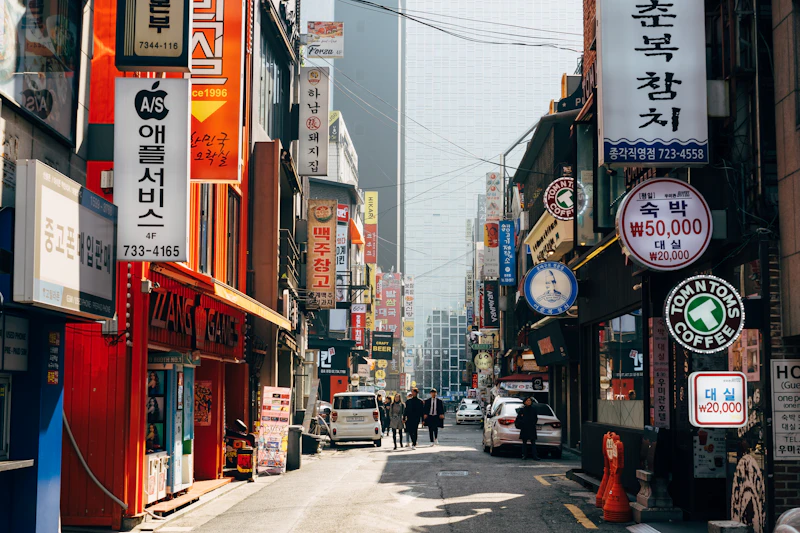
this guide continuously sends first-time visitors to Gwangjang Market to sample authentic street food classics prepared right before your eyes by legendary market aunties (ajumma).
- Must-Try Dish: Bindaetteok (Crispy Mung Bean Pancake) & Mayak Gimbap (Mini Rice Rolls).
- Price Range: ₩3,000 – ₩8,000 (~$2.20 – $5.90 USD) per dish.
- Exact Address: 88 Changgyeonggung-ro, Jongno-gu, Seoul (서울특별시 종로구 창경궁로 88).
- Subway Access: Line 1, Jongno 5-ga Station, Exit 8 (1-minute walk).
- Operating Hours: Food stalls run daily from 9:00 AM – 11:00 PM. Year-round availability, though select stalls close on the second and fourth Sunday of each month.
Recommended Budget Spot: Myeongdong Kyoja (명동교자)
A Bib Gourmand staple for decades, this venue offers massive bowls of hand-cut noodle soup (Kalguksu) served in a rich chicken broth alongside their famous garlic-heavy kimchi.
- Must-Try Dish: Kalguksu (Chopped Noodle Soup) & Mandu (Steamed Pork Dumplings).
- Price: ₩11,000 (~$8.15 USD) for Kalguksu; ₩12,000 (~$8.90 USD) for Mandu.
- Exact Address: 29 Myeongdong 10-gil, Jung-gu, Seoul (서울특별시 중구 명동10길 29).
- Subway Access: Line 4, Myeongdong Station, Exit 8 (3-minute walk).
- Operating Hours: Daily 10:30 AM – 8:30 PM (No mid-day break). Closed Lunar New Year and Chuseok day.
Tier 2: Mid-Range Dining (₩13,000 to ₩45,000 / ~$9.60 to $33.30 USD per meal)
The mid-range bracket is where most travelers spend their culinary journey. This price range unlocks authentic Korean BBQ (pork cuts like Samgyeopsal and Moksal), bubbling stew pots (Jeongol), specialized heritage soups, trendy cafes in Hongdae or Seongsu, and casual international restaurants.
Korean BBQ (Pork & Standard Beef Cuts)
Korean BBQ is typically charged per portion (usually 150g to 180g of meat per portion). High-quality domestic pork belly (Samgyeopsal) or neck meat (Moksal) ranges from ₩16,000 to ₩22,000 (~$11.85 – $16.30 USD) per portion. Keep in mind that standard Korean BBQ policy requires ordering at least two portions minimum to start a table fire.
Specialty Stews & Ginseng Chicken
Sit-down specialty establishments focused on single heritage items—such as Samgyetang (ginseng chicken soup), Dak-galbi (spicy stir-fried chicken), or Gamjatang (pork bone stew)—fall squarely into this category.
Recommended Mid-Range Spot: Geumdwaeji Sikdang / Gold Pig Restaurant (금돼지식당)
this is hands-down one of the finest domestic pork belly spots in Seoul, earning a Michelin Bib Gourmand designation. Expect thick, perfectly charred cuts of premium YBD-breed pork served alongside scallion sauces and sea salt.
- Must-Try Dish: Boneless Pork Belly (Bonsamgyeopsal) & Kimchi Jjigae (Kimchi Stew).
- Price: ₩19,000 (~$14.00 USD) per 150g portion of Pork Belly; ₩8,000 (~$5.90 USD) for Kimchi Stew. Average meal for two: ₩50,000 – ₩60,000 (~$37.00 – $44.40 USD).
- Exact Address: 149 Dasan-ro, Jung-gu, Seoul (서울특별시 중구 다산로 149).
- Subway Access: Line 3 or Line 6, Yaksu Station, Exit 2 (3-minute walk).
- Operating Hours: Daily 11:30 AM – 11:00 PM (Last order at 10:15 PM). No reservation accepted on-site except via CatchTable app kiosk; long queues are standard.
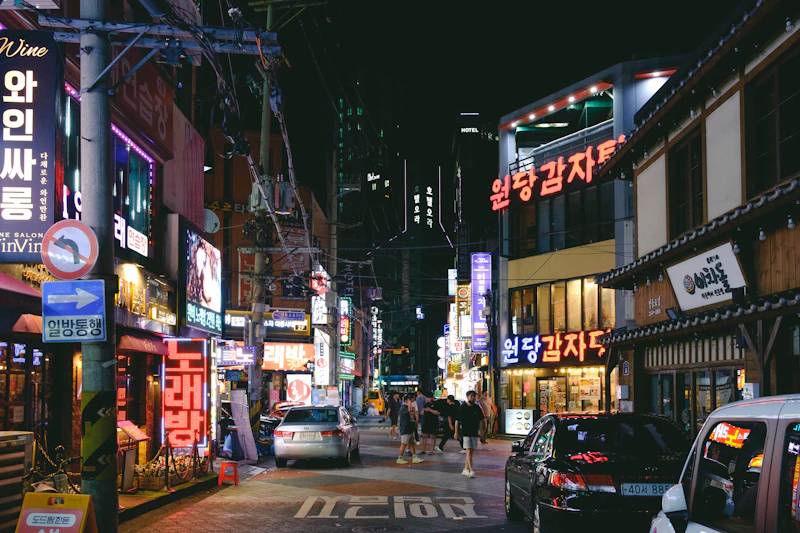
Recommended Mid-Range Spot: Tosokchon Samgyetang (토속촌 삼계탕)
Located near Gyeongbokgung Palace, this classic Hanok restaurant is famous for serving rich, medicinal ginseng chicken soup cooked with glutinous rice, pumpkin seeds, ginseng, and jujubes.
- Must-Try Dish: Tosokchon Heritage Ginseng Chicken Soup.
- Price: ₩20,000 (~$14.80 USD) per bowl; Black Bone Chicken variation ₩25,000 (~$18.50 USD).
- Exact Address: 5 Jahamun-ro 5-gil, Jongno-gu, Seoul (서울특별시 종로구 자하문로5길 5).
- Subway Access: Line 3, Gyeongbokgung Station, Exit 2 (4-minute walk).
- Operating Hours: Daily 10:00 AM – 10:00 PM (No seasonal closures except major Korean holidays morning hours).
Tier 3: Luxury & Fine Dining (₩50,000 to ₩350,000+ / ~$37.00 to $260.00+ USD per meal)
Seoul’s fine-dining scene has exploded over the past decade. The top tier features high-end Hanwoo (Korea’s top-tier indigenous beef, prized above Kobe beef by many experts), modern innovative gastronomy using local Korean ingredients, and multi-course traditional royal court dining (Hanjeongsik).
Hanwoo Beef Omakase & High-End Steakhouses
Hanwoo beef is graded 1++ (equivalent to A5 Wagyu but with a more robust, naturally beefy flavor profile). A meal at a dedicated Hanwoo omakase or high-end butcher shop will run anywhere from ₩150,000 to ₩350,000 (~$111.00 – $260.00 USD) per person depending on the cuts and course length.
Contemporary Michelin-Starred Korean Dining
Modern interpretations of classic Korean flavors utilizing Western culinary techniques have captured global attention. Dinner tasting menus at two- or three-star Michelin establishments generally start at ₩200,000 (~$148.00 USD) and scale up to ₩400,000 (~$296.00 USD) before beverage pairings.
Recommended Luxury Spot: Born & Bred (본앤브레드)
Located in the heart of the Majang Meat Market district, Born & Bred is a temple dedicated to 1++ Hanwoo beef. They operate a butcher lounge upstairs and an ultra-exclusive speakeasy Hanwoo omakase in the basement.
- Must-Try Experience: Basement Speakeasy Hanwoo Tasting Menu.
- Price: Casual Dining Hall: ₩80,000 – ₩150,000 (~$59.00 – $111.00 USD) per person; Private Speakeasy Omakase: ₩250,000 – ₩350,000 (~$185.00 – $260.00 USD) per person.
- Exact Address: 1 2-gil Majang-ro 42-gil, Seongdong-gu, Seoul (서울특별시 성동구 마장로42길 1 2-길).
- Subway Access: Line 5, Majang Station, Exit 2 (8-minute walk).
- Operating Hours: Lunch 12:00 PM – 3:00 PM; Dinner 6:00 PM – 10:30 PM. Closed Mondays. Advanced reservation mandatory via CatchTable Global.
Recommended Luxury Spot: Jungsik Seoul (정식당)
Pioneered by Chef Yim Jung-sik, this multi-Michelin-starred institution invented “New Korean” cuisine. It reimagines classic Korean comfort dishes—like octopus, gimbap, and bibimbap—into artistic culinary masterpieces.
- Must-Try Experience: Signature Dinner Course featuring the iconic Tuna Kimchi Gimbap and Sea Urchin Bibimbap.
- Price: Lunch Tasting Course: ₩185,000 (~$137.00 USD); Dinner Tasting Course: ₩280,000 (~$207.00 USD) per person. Beverage pairing: ₩140,000 – ₩220,000 (~$103.00 – $163.00 USD).
- Exact Address: 11 Seolleung-ro 158-gil, Gangnam-gu, Seoul (서울특별시 강남구 선릉로158길 11).
- Subway Access: Suin-Bundang Line or Line 7, Apgujeongrodeo Station, Exit 4 (3-minute walk).
- Operating Hours: Lunch 12:00 PM – 3:00 PM (Break time 3:00 PM – 5:30 PM); Dinner 5:30 PM – 10:00 PM. Reservations open on the first of each month for the following month.
Daily Budget Breakdown (Estimated Meal Costs per Person)
To help you budget your daily expenses accurately, this guide compiled this comparison matrix covering typical food and beverage expenditures across three traveler profiles.
| Expense Category | Budget Traveler | Mid-Range Traveler | Luxury Traveler |
|---|---|---|---|
| Breakfast | ₩3,500 (~$2.60 USD) (Convenience store sandwich + coffee) |
₩12,000 (~$8.90 USD) (Seongsu cafe pastry + specialty latte) |
₩55,000 (~$40.70 USD) (5-Star Hotel Breakfast Buffet) |
| Lunch | ₩8,000 (~$5.90 USD) (Market meal or noodle shop) |
₩22,000 (~$16.30 USD) (Specialty soup or lunch set) |
₩185,000 (~$137.00 USD) (Michelin-starred lunch course) |
| Dinner | ₩10,000 (~$7.40 USD) (Bunsik, bibimbap, or fried rice) |
₩35,000 (~$26.00 USD) (Standard K-BBQ with beer/soju) |
₩300,000 (~$222.00 USD) (Hanwoo Omakase + wine pairing) |
| Coffee / Snacks / Drinks | ₩4,000 (~$2.95 USD) (Mega Coffee / Compose Coffee) |
₩12,000 (~$8.90 USD) (Dessert cafe & street snack) |
₩30,000 (~$22.20 USD) (Hotel lounge tea / cocktail bar) |
| Total Estimated Daily Food Cost | ₩25,500 (~$18.85 USD) | ₩81,000 (~$60.10 USD) | ₩570,000 (~$421.90 USD) |
Expert Tips for Dining in Seoul
Navigating Seoul’s restaurant culture seamlessly requires knowing a few unwritten customs and tricks that standard guidebooks rarely mention:
- Absolute Zero Tipping: Tipping does not exist in South Korea. It is not expected, nor is it appreciated—in fact, leaving extra cash on a table can cause confusion as waitstaff will run after you to return “forgotten money.” Tax is always included in the menu price.
- Free Banchan & Water: Side dishes (kimchi, soybean sprouts, pickled radishes) and water are always complimentary. In self-service spots, look for signs reading “물은 셀프” (Water is self-service). You can freely ask for side dish refills (“Banchan deodeo juseyo”).
- Minimum Order Rules at K-BBQ: If you are dining solo at a Korean BBQ joint, be aware that most places require a minimum order of two portions of meat. You are welcome to eat alone, but you must pay for both portions.
- Utilize Kiosk Ordering & Apps: Many budget and mid-range spots use digital ordering screens at the entrance. Most support English interfaces. For high-end reservations, download the CatchTable Global app before your trip; it bypasses the requirement for a local Korean phone number.
- Alcohol Pricing Advantage: Alcohol in local Korean eateries is remarkably cheap. A 360ml bottle of Soju typically costs ₩5,000 (~$3.70 USD) in a restaurant (or ₩1,800 in a convenience store), while a 500ml domestic beer (Cass or Terra) runs around ₩5,000 – ₩6,000 (~$3.70 – $4.45 USD).
Common Mistakes to Avoid
- Mistake 1: Trying to Modify Menu Items. Submitting complex custom requests (e.g., “no onions, extra sauce on the side, swap rice for noodles”) is culturally uncommon and frequently refused in standard Korean kitchens. Pick dishes that match your dietary needs as listed.
- Mistake 2: Assuming Credit Cards are Not Accepted. Korea is practically a cashless society. Even market stalls accepting card payments via mobile terminals are common. Carrying around massive wads of physical cash is unnecessary; keep ₩30,000 – ₩50,000 cash for smaller street vendors, and use your credit card everywhere else.
- Mistake 3: Missing the “Break Time”. Mid-range sit-down restaurants in Seoul strictly enforce daily mid-day breaks, usually between 3:00 PM and 5:00 PM. Always check operating hours before traveling across town for lunch late in the afternoon.
- Mistake 4: Expecting Individual Bills at Group Meals. Splitting the check item-by-item is difficult for local cashier systems. It is customary for one person to pay the full bill at the register and use money transfer apps or split cash afterward.
Best Time to Visit Seoul for Culinary Explorers
While Seoul is a year-round dining destination, Consider planning your visit during two primary windows to maximize season-specific delicacies:
Autumn (September to November) — The Ultimate Foodie Season
autumn is unrivaled for dining in South Korea. The weather is crisp and ideal for street dining, night markets, and outdoor BBQ setups (Pojangmacha). Autumn marks the peak harvest for fresh ginkgo nuts, persimmons, pine mushrooms, red snow crab, and seasonal autumn gizzard shad (Jeoneo). The climate allows for comfortable outdoor dining in trendy neighborhoods like Euljiro and Ikseon-dong.
Spring (March to May) — Spring Greens & Wild Delicacies
Spring brings a celebrated culinary transition focused on fresh mountain vegetables (Namul) harvested from the countryside, wild herbs, and fresh seasonal seafood like Webfoot Octopus (Jukumi). Dining outside under blooming cherry blossoms in areas along Yeouido or the Han River park pavilions adds a memorable backdrop to everyday meals.
About This Guide
This comprehensive guide was compiled by the Searching Korea editorial team based on over a decade of first-hand dining experience, continuous market research, and local on-the-ground testing across Seoul’s 25 districts. We re-verify menu pricing, subway routing, and operating protocols periodically to ensure accuracy. None of the venues featured in this guide paid for placement; all recommendations reflect our honest, independent editorial judgment.