
Quick Summary: South Korea Tipping at a Glance
- Standard Tipping Policy: Tipping is not customary or expected in South Korea. Leaving cash on a table is generally considered improper or confusing.
- Average Daily Costs: ₩50,000–₩200,000+ per person (~$36.50–$146.00 USD) depending on travel style.
- Legal Pricing Standard: Under South Korean law, all displayed menu prices strictly include VAT (10%) and all service charges.
- Best Time to Visit: Autumn (September to November) and Spring (April to June) for mild weather and ideal touring conditions.
- Etiquette Difficulty: Very Easy — Enjoy world-class hospitality without calculating percentages or stressing over gratuities.
Introduction: The Myth and Reality of Tipping in South Korea
If you are planning a trip to Seoul, Busan, or Jeju Island, one question almost certainly tops your pre-departure checklist: Is it rude to tip in South Korea? South Korea’s no-tipping culture is well-documented and consistent across the country. Coming from North America or parts of Europe where tipping is deeply ingrained in daily transactions, walking away from a meal without leaving cash on the table can feel unnatural—even uncomfortable.
The short answer is clear: No, you should not tip in South Korea. In almost all daily situations—from neighborhood lunch joints and high-speed taxis to trendy cafes and traditional tea houses—tipping is simply not part of Korean culture. In fact, leaving money behind can lead to awkward misunderstandings, with well-meaning servers chasing you out onto the street to return the cash you “forgot.”
In this comprehensive 2025 etiquette guide, this guide breaks down the legal, cultural, and practical reasons behind South Korea’s non-tipping norms. We examine the very rare exceptions where cash tips are accepted, dissect recent digital tipping controversies in Seoul, and share insider advice on how to express genuine gratitude to service workers without breaking local etiquette.
Why Tipping Doesn’t Exist in South Korea: Legal & Cultural Foundations
To understand why tipping is unnecessary—and sometimes unwelcome—in South Korea, it helps to look at two core factors: national consumer law and Korean cultural values surrounding hospitality.
1. Legal Protection: Total Price Inclusive Law
In 2013, South Korea’s Ministry of Food and Drug Safety enforced an amendment to the Food Sanitation Act requiring all restaurants, cafes, and service establishments to display final, total prices to consumers. Under South Korean law, the price printed on a menu must include the 10% Value-Added Tax (VAT) as well as any operational or service fees.
When you see a bowl of seolleongtang (ox bone soup) listed for ₩11,000 (~$8.00 USD) on a menu in Seoul, ₩11,000 is the exact amount charged to your card at the counter. Service costs are already integrated into business overhead and staff salaries. Attempting to add an extra tip atop this finalized pricing model disrupts standard accounting and Point-of-Sale (POS) operations.
2. Professional Pride and Fair Wages
Unlike hospitality systems that rely on low base wages supplemented by customer tips, service workers in South Korea are paid fixed hourly wages or salaries mandated by federal minimum wage legislation. In 2025, South Korea’s legal minimum wage stands at ₩10,030 per hour (~$7.30 USD), providing a baseline level of compensation.
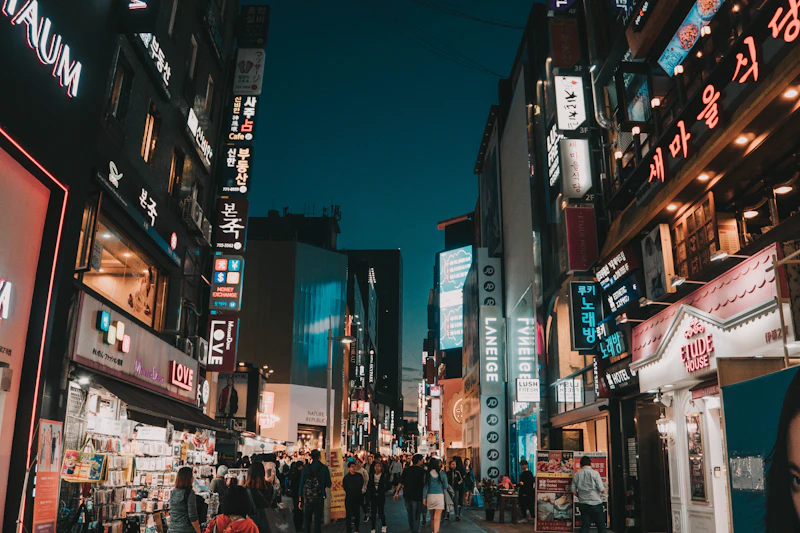
Hospitality staff view attentive service as a fundamental duty of their employment, not an extra perk to be purchased with cash gratuities. Refusing tips is a point of personal pride; receiving a monetary handout for simply doing one’s job can feel patronizing to many service professionals.
3. The Concept of Jeong (정) and Seobiseu (서비스)
In Korean culture, generous hospitality stems from Jeong—an innate sense of warmth, connection, and social affection. Instead of customers giving money to servers, businesses express goodwill toward customers through seobiseu (free complimentary items). If a restaurant owner brings your table a free bottle of soft drink, extra dumplings, or a complimentary side dish, it is an act of hospitality. Offering cash in exchange for these kind gestures undermines the personal nature of the gift.
Tipping Etiquette by Scenario: What to Do (and Avoid)
While the overall rule is zero tipping, different travel scenarios carry subtle nuances. Below is a breakdown of tipping norms across common service categories in South Korea.
1. Restaurants and Dining Establishments
From casual street food stalls in Gwangjang Market to high-end Korean BBQ spots in Gangnam, tipping is never expected or accepted.
- Casual & Mid-Range Dining: You will pay your bill at the front desk cashier register near the exit upon finishing your meal, rather than leaving payment on the table. Cash left on tables will be collected by staff and brought to you before you walk out.
- High-End Korean BBQ: Even when a dedicated server spends 45 minutes grilling high-grade Hanwoo beef directly at your table, you do not need to tip. The premium cost of the meat includes this dedicated service.
- Fine Dining & Michelin-Starred Restaurants: Upscale establishments (such as Born & Bred or Mingles) include a standard service fee directly within the meal price or invoice. Extra gratuity on credit card slips is non-existent.
Address: 38 Eulji-ro 1-gil, Jung-gu, Seoul (Subway: Line 2, Euljiro 1-ga Station, Exit 1-1)
Hours: Weekdays 07:00–20:00, Weekends 07:00–15:00
Price: Dried Pollack Soup — ₩10,000 (~$7.30 USD)
Etiquette Note: At this iconic Seoul breakfast spot operating since 1968, servers continuously refill your side dishes and broth at no extra charge. Paying exact cash or card at the front register is standard; leaving loose change on the table will result in staff calling you back to retrieve it.
2. Taxis and Rideshare Services
Taxis in South Korea are efficient, clean, and affordable. Tipping taxi drivers is not traditional.
- Standard Taxis: Meter fares are exact. If your fare comes to ₩8,600 (~$6.25 USD) and you pay with a ₩10,000 cash bill, the driver will hand you ₩1,400 in change. While telling a driver to “keep the change” (“Jangdon-eun gajigeseoyo”) when it amounts to a few hundred Won (under $0.50 USD) is acceptable, it is entirely optional. Most locals pay via T-Money transit cards or credit cards.
- Kakao T App Rides: Kakao T (Korea’s primary taxi-hailing app) introduced an optional digital tip feature (₩1,000 to ₩2,000) for select premium vehicle services in late 2023. However, choosing to skip this screen carries no penalty or drop in service quality. This digital prompt can typically be skipped without issue.
3. Hotels and Accommodation
Hotel tipping standards depend largely on the tier of accommodation you select.
- Budget Hotels, Guesthouses & Airbnbs: Zero tipping across all services.
- Luxury 5-Star Hotels: At international luxury brands like The Shilla Seoul or Four Seasons Hotel Seoul, bellhops who carry heavy luggage to your room may occasionally receive ₩3,000 to ₩5,000 (~$2.20–$3.60 USD) from international travelers. However, it is never demanded, and housekeepers do not expect daily cash envelopes on pillows.
Address: 249 Dongho-ro, Jung-gu, Seoul (Subway: Line 3, Dongguk Univ. Station, Exit 5)
Hours: 24/7 Operations
Etiquette Note: Standard 10% service charges and 10% VAT are automatically factored into hotel room rates and dining receipts. Extra cash tips handed to concierges or door staff are completely discretionary.
4. Private Tour Guides and Charter Drivers
Private group tours are the primary area where tipping culture has adapted to international expectations.
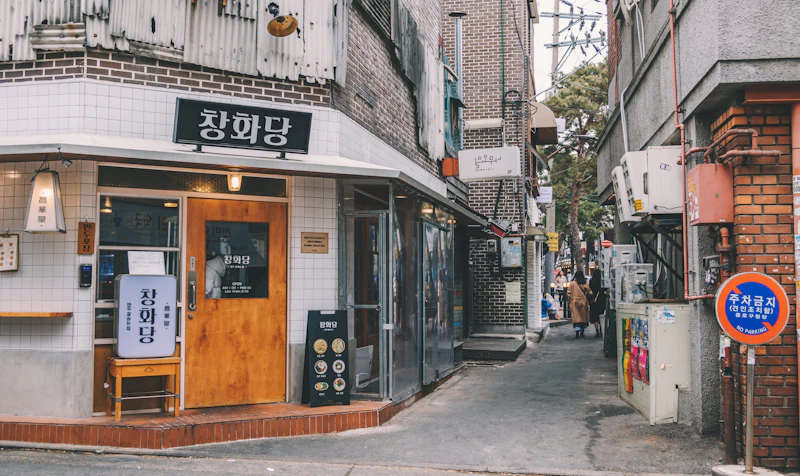
- Group Day Tours (DMZ, Nami Island): Tipping tour guides or bus drivers on multi-passenger group tours is strictly optional. If your guide provided exceptional service, ₩5,000–₩10,000 (~$3.60–$7.30 USD) per person is an appreciated gesture.
- Private Full-Day Custom Tours: For a dedicated driver or private guide working an 8-to-10-hour day, a gratuity of ₩20,000 to ₩50,000 (~$14.60–$36.50 USD) total per group is common among international tourists to show gratitude for custom itinerary planning.
5. Hair Salons, Spas, and Beauty Clinics
South Korea is a global hub for beauty, skin treatments, and hair styling. Despite high-touch service, salon staff do not expect tips.
- Hair Salons (e.g., JUNO Hair): Stylists and hair-wash assistants work on clear service menus. The menu price paid at reception covers the treatment in full.
- K-Beauty Clinics & Spas: High-end medical spas in Gangnam operate on fixed medical/aesthetic pricing schedules. Tips are neither accepted nor requested on card machines.
Address: 29 Myeongdong 8-gil, Jung-gu, Seoul (Subway: Line 4, Myeongdong Station, Exit 6)
Hours: Daily 10:00–21:30
Price Range: Haircut from ₩35,000 (~$25.50 USD)
Etiquette Note: You will pay at the front counter upon service completion. Tipping your stylist or the assistant who washed your hair is not practiced.
Summary Table: Tipping Expectations Across South Korea
| Service Category | Tipping Custom | Expected Tip Amount | Practical Notes |
|---|---|---|---|
| Casual Restaurants & Cafes | Strictly No | ₩0 / $0 | Pay at front register; do not leave cash on tables. |
| High-End BBQ / Fine Dining | No | ₩0 / $0 | Service charges and VAT are pre-included in menu prices. |
| City Taxis | Optional / Rare | Round up small change (<₩1,000) | Most passengers pay electronically via card or T-Money. |
| Luxury Hotel Porters | Optional | ₩3,000–₩5,000 (~$2.20–$3.60 USD) | Only customary in 5-star international hotels. |
| Private Tour Guides | Discretionary | ₩20,000–₩50,000/day (~$14.60–$36.50 USD) | Appreciated for full-day custom private itineraries. |
| Beauty Salons & Spas | Strictly No | ₩0 / $0 | Service treatments are fully priced on explicit cost menus. |
The Recent Tip Jar Controversy in Seoul
Over the past couple of years, travelers visiting gentrified neighborhoods in Seoul—such as Seongsu-dong, Yeonnam-dong, or Itaewon—may have spotted cash tip jars sitting beside registers at trendy bakeries or Western-style coffee shops. Understanding the local sentiment behind this trend is essential.
When a few modern cafes introduced tip jars and digital tipping prompts on POS screens in late 2022 and 2023, it sparked widespread public backlash online and in local Korean media. South Korean consumers heavily criticized these attempts as an illegal importation of foreign practices designed to raise prices surreptitiously.
Most Koreans actively decline these tip requests. Government regulatory bodies re-emphasized that coercing or prompting customers for extra fees outside displayed menu prices breaches fair trade guidelines under the Food Sanitation Act. If you encounter a tip jar at a café in Seoul, feel completely comfortable ignoring it; locals certainly do.
Budget Breakdown: What to Spend on Dining and Services in Seoul (2025)
Because you do not need to budget an additional 15% to 20% for tipping on every purchase, calculated travel expenses in South Korea are predictable. Below is an estimated breakdown of daily meal and service costs per person across three travel budgets:
| Expense Type | Budget Traveler | Mid-Range Traveler | Luxury Traveler |
|---|---|---|---|
| Breakfast | ₩4,000–₩7,000 (~$2.90–$5.10 USD) Convenience store / Toast stall |
₩10,000–₩15,000 (~$7.30–$11.00 USD) Neighborhood cafe / Soup shop |
₩45,000–₩70,000 (~$32.80–$51.00 USD) Hotel buffet breakfast |
| Lunch | ₩8,000–₩12,000 (~$5.80–$8.75 USD) Kimbap shop / Noodle bar |
₩15,000–₩25,000 (~$11.00–$18.25 USD) Casual Korean BBQ / Stew spot |
₩80,000–₩150,000 (~$58.40–$109.50 USD) Fine dining course menu |
| Dinner | ₩10,000–₩15,000 (~$7.30–$11.00 USD) Traditional market food |
₩30,000–₩50,000 (~$21.90–$36.50 USD) Pork belly BBQ + Drinks |
₩150,000–₩300,000+ (~$109.50–$219.00+ USD) High-grade Hanwoo / Omakase |
| Daily Transit / Taxi | ₩4,000–₩6,000 (~$2.90–$4.40 USD) Subway / Bus passes |
₩15,000–₩30,000 (~$11.00–$21.90 USD) Transit + 1 short taxi ride |
₩80,000–₩200,000 (~$58.40–$146.00 USD) Private charter / Taxi rides |
| Daily Tipping Total | ₩0 ($0.00 USD) | ₩0 ($0.00 USD) | ₩0–₩10,000 (~$0–$7.30 USD) |
Best Time to Visit South Korea
When planning your journey to South Korea, aligning your dates with pleasant weather makes walking around food streets and outdoor markets far more enjoyable.
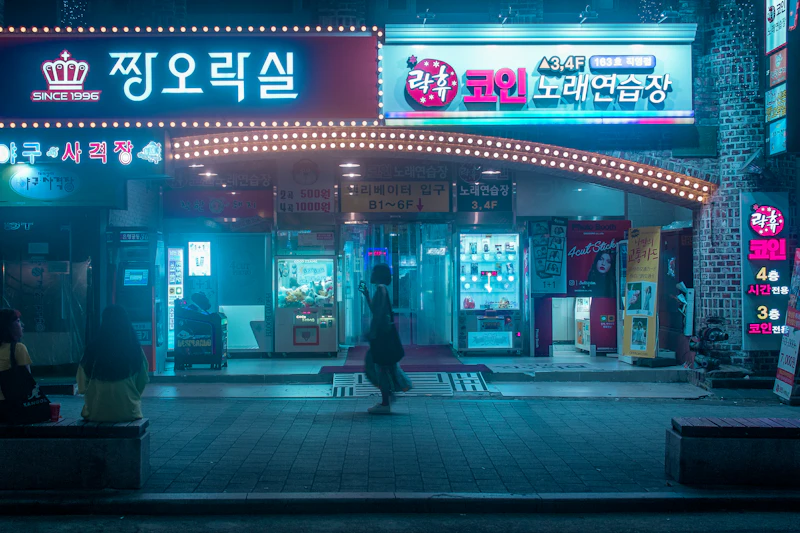
1. Autumn (September to November) — Peak Season
autumn is unequivocally the best time to explore Korea. Temperatures average between 12°C and 22°C (53°F–71°F), rainfall is low, and the fall foliage colors across mountains like Seoraksan and Seoul’s palace gardens are breathtaking. Dining outdoors at traditional pojangmacha (tent bars) is at its prime.
2. Spring (April to June) — Shoulder Season
Spring brings warm weather (10°C to 23°C / 50°F–73°F) and cherry blossom blooms across the country. April is scenic, though travelers should monitor air quality reports as yellow dust storms occasionally blow in during late spring.
3. Winter (December to February) and Summer (July to August)
Winters in Seoul are dry but severely cold, with temperatures frequently dropping below -10°C (14°F). Summers are intensely humid, dominated by the jangma (monsoon season) in July, with heavy rainfall. If visiting in summer, indoor activities, air-conditioned shopping malls, and underground markets are essential refuge spots.
Expert Tips: How to Show Gratitude Without Cash
Since cash tips are off the table, how do you properly express gratitude for exceptional service in South Korea? Consider using these culturally authentic gestures of appreciation:
- Master Basic Korean Phrases: A polite verbal thank-you paired with a slight head bow goes far.
- When finishing a meal, say to the owner or staff: “Jal meog-eoss-seub-ni-da” (잘 먹었습니다) — meaning “I ate very well.”
- When leaving any shop or taxi, say: “Gamsahabnida” (감사합니다) — meaning “Thank you.”
- Use Both Hands When Paying: When handing your credit card or cash to a cashier or receiving your receipt/change back, hold the card or money with both hands (or support your right forearm with your left hand). This traditional gesture signifies respect.
- Leave Online Reviews: Korean small business owners rely heavily on digital reputation. Leaving a 5-star review on Naver Map, KakaoMap, or Google Maps mentioning your server or the excellent food will genuinely help their business thrive.
- Gift Small Snacks or Drinks: If a private guide, driver, or hotel staff member goes above and beyond to help you, buying them a bottle of warm canned coffee or a snack from a nearby convenience store (like GS25 or CU) is seen as a thoughtful, non-offensive gift of appreciation.
Common Mistakes to Avoid
Avoid these frequent etiquette missteps when navigating service culture in South Korea:
- Leaving Cash on the Dining Table: Do not slide a ₩5,000 note under a plate or leave coins behind on a restaurant table. Staff will assume you forgot your change and run out after you to return it. Always pay at the register by the front door.
- Insisting on Tipping When Refused: If a server, driver, or staff member politely declines a tip, accept their refusal immediately. Pressuring them to take money creates discomfort and breaks social harmony (nunchi).
- Confusing Fast Service with Rudeness: Korean dining culture values efficiency, often referred to as the “ppalli-ppalli” (hurry, hurry) mindset. Servers may place food down quickly, clear finished plates right away, or leave your bill on the table immediately after serving. This speed reflects efficiency and respect for your time—not poor service.
- Expecting Table Side Check-Ins: Servers in Korea will rarely drop by your table mid-meal to ask “how is everything tasting?” If you need water, extra side dishes (banchan), or the bill, you must press the service call button on your table or call out politely: “Jeogiyo!” (저기요 — “Excuse me!”).
- Failing to Notice Self-Service Stations: Many casual restaurants have self-service corners for water, side dishes, and napkins. Check around the dining room before asking staff to fetch extra items for you.
About This Guide
This guide was produced by the Searching Korea editorial team, drawing on more than ten years of direct living, working, and dining experience across Seoul and South Korea. This guide draws on official government sources, established hospitality regulations, and published travel data to provide accurate, culturally grounded information for international visitors.