Introduction to Gyeongju: The Living Museum of South Korea
Located in the southeastern province of Gyeongsangbuk-do, Gyeongju serves as the cultural heart of South Korea. Often referred to as “the museum without walls,” Gyeongju was the ancient capital of the Silla Kingdom, which ruled vast portions of the Korean Peninsula for nearly a millennium between 57 BCE and 935 CE. Unlike modern metropolises like Seoul or Busan, Gyeongju maintains a lower skyline dominated by ancient grassy burial mounds, traditional hanok architecture, and mountain landscapes steeped in Buddhist heritage.
Today, Gyeongju is one of South Korea’s premier destinations for history enthusiasts, cultural travelers, and outdoor explorers. The city contains multiple UNESCO World Heritage sites, meticulously preserved relics, and a rapidly evolving modern culinary scene. Whether you are planning a day trip from Busan or an extended multi-day stay, this comprehensive guide provides essential practical details, attraction overviews, transportation advice, and budgetary information to help you navigate South Korea’s ancient capital effectively.
Best Time to Visit Gyeongju
Gyeongju experiences four distinct seasons, each offering a unique backdrop for sightseeing. While the city can be visited year-round, the spring and autumn months provide the most favorable weather and visual scenery.
- Spring (April to May): Spring brings mild temperatures ranging from 10°C to 22°C. Late March through early April is peak cherry blossom season. Major roads, such as the route surrounding Bomun Lake and the perimeter of the Daereungwon Tomb Complex, turn into vibrant pink corridors. Spring is exceptionally popular among domestic visitors, so booking accommodation well in advance is required.
- Autumn (September to November): Autumn is widely considered the optimal time to travel in Gyeongju. Temperatures range from 12°C to 20°C with crisp air and low humidity. During October and November, autumn foliage transforms the mountain temples of Bulguksa and Seokguram into vibrant shades of red and gold. Additionally, the fields near Cheomseongdae fill with blooming pink muhly grass during early autumn.
- Summer (June to August): Summers are hot and humid, with temperatures frequently exceeding 30°C. July and August bring the monsoon season, featuring heavy rains. Outdoor exploration can be challenging due to heat and humidity, though evening visits to lit attractions like Donggung Palace and Wolji Pond remain pleasant.
- Winter (December to February): Winters are cold and dry, with temperatures hovering between -5°C and 5°C. Snowfall is relatively light compared to northern regions of South Korea. While trees are bare, winter brings lower hotel prices and significantly smaller crowds at major historic sites.
Top Historic Attractions and UNESCO World Heritage Sites
The concentration of preserved artifacts and historical sites in Gyeongju is unmatched elsewhere in Korea. Below are the primary historic destinations to prioritize during your visit.
1. Bulguksa Temple
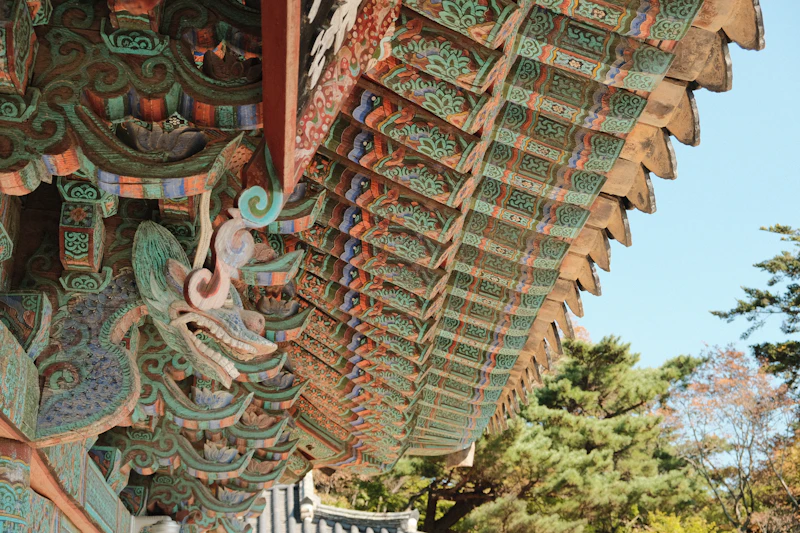
Constructed in 751 CE during the height of the Silla Kingdom, Bulguksa Temple is a masterpiece of East Asian Buddhist architecture and a designated UNESCO World Heritage site. Situated on the slopes of Mount Tohamsan, the temple complex features intricate wooden structures, stone bridges, and two famous pagodas: Dabotap and Seokgatap. Dabotap is famed for its complex, ornate stonework, while Seokgatap is renowned for its simple, balanced symmetry. Admission to the temple grounds is free, though nominal parking fees apply for private vehicles.
2. Seokguram Grotto
Located approximately 4 kilometers up Mount Tohamsan from Bulguksa Temple, Seokguram Grotto is a subterranean granite sanctuary housing a monumental stone statue of the Buddha overlooking the East Sea. Built concurrently with Bulguksa, the grotto displays sophisticated engineering capabilities of the 8th-century Silla artists who constructed the dome out of hundreds of granite blocks without mortar. The inner chamber is protected behind a glass wall to maintain climate control and preserve the carving. Entrance is free, and the grotto can be reached via local Bus 12 from Bulguksa or by a 50-minute uphill hiking trail.
3. Daereungwon Tomb Complex
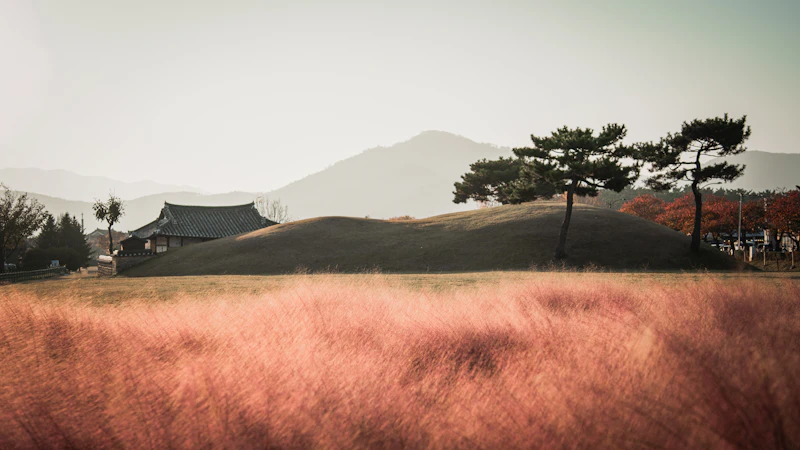
Located in central Gyeongju, Daereungwon contains 23 large earthen mounds containing the tombs of Silla kings, queens, and high-ranking nobles. The park features manicured walking paths lined with ancient pine trees. The most famous structure within the complex is Cheonmachong (the Heavenly Horse Tomb), which is open to the public. Inside, visitors can view replica display cases showing golden crowns, weaponry, pottery, and ornaments excavated from the site. Entrance to the park grounds is free, while entry into the interior of the Cheonmachong tomb costs 2,000 KRW for adults.
4. Cheomseongdae Observatory
Situated a short walk from Daereungwon, Cheomseongdae is the oldest surviving astronomical observatory in Asia. Built during the reign of Queen Seondeok in the 7th century, the bottle-shaped stone tower is constructed from 362 granite blocks, representing the days of the lunar year. The structure was used to observe stars to predict weather, agricultural cycles, and state fortunes. Cheomseongdae is free to access and sits in an open public park surrounded by seasonal flower gardens.
5. Donggung Palace and Wolji Pond
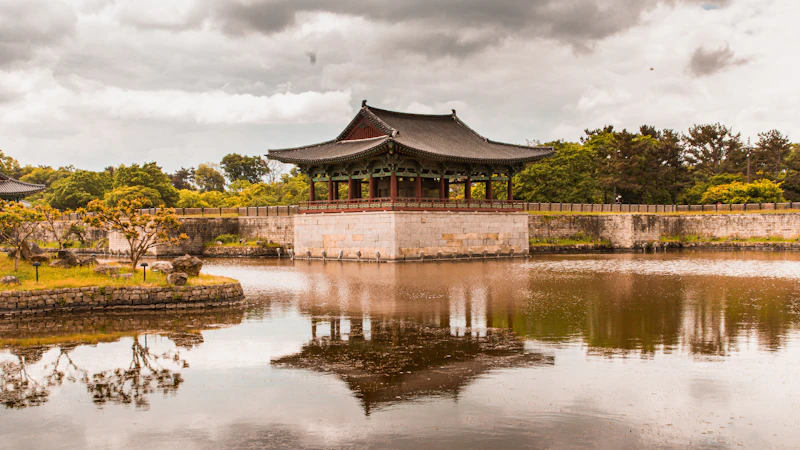
Formerly known as Anapji, Donggung Palace was a secondary palace complex used by the Silla crown prince, as well as a venue for royal banquets and state events. The palace sits adjacent to Wolji, an artificial pond constructed in 674 CE with curved shorelines that create the illusion that the pond is endless from any vantage point. While the site is open during the day, it is best visited at night when the restored palace pavilions and surrounding trees are illuminated, creating reflections across the water. Admission is 3,000 KRW for adults.
6. Gyeongju National Museum
To fully understand the artifacts excavated from the surrounding royal tombs, a visit to the Gyeongju National Museum is essential. The museum holds tens of thousands of relics from the Silla Dynasty, including pure gold crowns, intricate jewelry, Buddhist stone statues, and the famous Divine Bell of King Seongdeok (Emille Bell). Admission to the main exhibition halls is free of charge, though audio guides are available for rental in multiple languages.
7. Yangdong Folk Village
Located roughly 20 kilometers north of downtown Gyeongju, Yangdong is South Korea’s largest traditional folk village, dating back to the Joseon Dynasty. Unlike open-air museums, Yangdong is a real, inhabited village where descendants of ancient noble clans still reside in tile-roofed hanok homes and thatched cottages set against wooded hills. Visiting Yangdong offers an insight into Joseon-era Confucian culture and social structures. Admission is 4,000 KRW for adults.
Neighborhoods to Explore and Where to Stay
Gyeongju can be categorized into three primary districts depending on your travel style and itinerary preferences.
Hwangridan-gil (Downtown Historic District)
Hwangridan-gil is a lively street and surrounding neighborhood characterized by traditional hanok buildings that have been repurposed into trendy cafes, craft beer bars, boutique shops, and local eateries. It is the center of modern urban life in Gyeongju and sits adjacent to the Daereungwon Tomb Complex. Staying in this area offers walking access to central attractions, night markets, and major bus stops. Accommodations here consist largely of converted hanok guesthouses and boutique hotels.
Downtown & Bus Terminal Area
Located just west of Hwangridan-gil near the Hyeongsan River, the downtown area around the Gyeongju Express and Intercity Bus Terminals offers practical, budget-friendly accommodations, business hotels, and standard motels. This area is ideal for travelers relying on regional buses, as well as those looking for straightforward access to amenities like convenience stores, banks, and rental car outlets.
Bomun Lake Resort Area
Situated roughly 8 kilometers east of the city center, Bomun Lake Resort is a planned tourist district centered around a large artificial lake. This area houses international hotel chains, luxury resorts, golf courses, and the Gyeongju World amusement park. Bomun Lake is quiet, spacious, and family-friendly, though travelers staying here will need to rely on public buses or taxis to visit downtown historical sites.
Local Culinary Specialties
Gyeongju features several distinct dishes and regional snacks that visitors should try during their stay.
- Gyeongju Ssambap (Vegetable Wrap Set): Ssambap consists of a wide variety of fresh leafy greens, steamed cabbage, and kelp served alongside a main meat dish (such as marinated grilled pork or beef bulgogi), rice, fermented soybean paste (ssamjang), and dozens of side dishes (banchan). Major ssambap restaurants are clustered along the edges of the Daereungwon district. Expect to pay between 15,000 KRW and 22,000 KRW per person.
- Hwangnam-ppang (Gyeongju Bread): First baked in 1939 in the Hwangnam-dong neighborhood, this official local delicacy consists of a thin, soft pastry shell filled densely with sweet red bean paste made from locally sourced Korean beans. Freshly baked boxes can be purchased throughout the city, particularly near the bus terminals and Hwangridan-gil, ranging from 10,000 KRW to 20,000 KRW per box depending on quantity.
- Chalboribang (Sticky Barley Bread): A smaller, pancake-like snack made from glutinous barley flour with a thin layer of sweet red bean paste sandwiched in the middle. It has a chewy texture and is slightly less sweet than Hwangnam-ppang. Individual pieces cost around 1,000 KRW.
- Gyeongju Hanwoo (Korean Beef): Gyeongju is one of the largest producers of premium Hanwoo beef in South Korea. Specialized dining villages, such as the Cheonbuk Hanwoo Village on the outskirts of the city, serve freshly sliced charcoal-grilled beef cuts at reasonable prices compared to Seoul.
How to Get to and Around Gyeongju
Arriving in Gyeongju
Gyeongju is easily accessible from major cities across South Korea via high-speed train, regional train, or long-distance bus.
- By KTX High-Speed Train: The fastest way from Seoul or Busan is via the KTX or SRT high-speed train lines to Singyeongju Station. From Seoul Station, the KTX journey takes approximately 2 hours and 10 minutes (tickets cost around 49,000 KRW one-way). From Busan Station, the trip takes roughly 30 minutes (around 11,000 KRW). Note: Singyeongju Station is located about 15 kilometers southwest of the city center. You will need to take local express bus 50, 51, or 700 to reach downtown (takes approximately 20–30 minutes, costing 1,500 KRW).
- By Express or Intercity Bus: Long-distance buses drop passengers off directly at the Gyeongju Express Bus Terminal or Intercity Bus Terminal, both located right in the city center near Hwangridan-gil. Buses from Busan Central Bus Terminal take approximately 50 minutes (costs around 6,000 to 9,000 KRW), while buses from Seoul Express Bus Terminal take about 3.5 hours (costs around 22,000 to 35,000 KRW).
Getting Around the City
Navigating Gyeongju is straight forward due to its accessible terrain and integrated transit options.
- On Foot: Central Gyeongju—including Hwangridan-gil, Daereungwon, Cheomseongdae, Donggung Palace, and the National Museum—is flat and concentrated, making it easy to cover on foot.
- Bicycle Rentals: Bicycles are one of the most efficient ways to travel between central sites. Numerous rental shops operate near the bus terminals and Hwangridan-gil. Day rentals range from 10,000 KRW to 15,000 KRW for standard bikes, while electric bikes cost between 20,000 KRW and 30,000 KRW. Dedicated bike lanes connect downtown to Bomun Lake.
- Public Buses: Local buses connect downtown to outlying destinations like Bulguksa (Bus 10 or 11), Yangdong Village (Bus 203), and Singyeongju Station (Buses 50, 51, 700). Fares cost 1,500 KRW per ride when using standard rechargeable transit cards like T-Money or Cashbee. Bus 10 runs in a clockwise loop connecting major sights, while Bus 11 runs counter-clockwise.
- Taxis: Taxis are plentiful and affordable for short trips. A taxi ride across downtown typically costs between 5,000 KRW and 8,000 KRW. A ride from Singyeongju Station to Hwangridan-gil costs approximately 20,000 KRW. Ridesharing via the Kakao T app works smoothly across the city.
Estimated Travel Costs and Budget Breakdown
Gyeongju offers options for budget backpackers, mid-range cultural travelers, and luxury resort guests. Below is an overview of average daily expenses in Korean Won (KRW).
- Budget Traveler (40,000 – 70,000 KRW per day): Hostel dorm bed or basic guesthouse (20,000–35,000 KRW), street food, local noodle shops, and simple meals (15,000–25,000 KRW), bus transportation (5,000 KRW), and public sight admissions (5,000 KRW).
- Mid-Range Traveler (100,000 – 220,000 KRW per day): Private hanok stay or mid-scale hotel room (60,000–140,000 KRW per night), full sit-down meals like Ssambap or Hanwoo sets (30,000–50,000 KRW), occasional taxi rides or bicycle rentals (15,000 KRW), and entry tickets (10,000 KRW).
- Luxury Traveler (250,000+ KRW per day): High-end resort in Bomun Lake or upscale private hanok villa (180,000–400,000+ KRW per night), fine dining and specialty restaurants (60,000+ KRW), private taxis or car rentals (40,000+ KRW).
Practical Travel Tips for Gyeongju
- Use Navigation Apps Designed for Korea: Google Maps does not provide accurate turn-by-turn walking or driving directions in South Korea due to national security data regulations. Download Naver Map or KakaoMap for precise real-time public transit schedules, bus stop locations, and walking routes. Both apps are available in English.
- Purchase a T-Money Card: Buy a T-Money transit card at any convenience store (CU, GS25, Seven-Eleven) upon arrival in South Korea. Tap on and tap off when taking local buses in Gyeongju to receive discounted transfer rates and avoid handling exact cash.
- Wear Comfortable Walking Shoes: Many attractions involve walking across gravel paths, manicured grass, and uneven stone surfaces. If you plan to visit mountain sights like Seokguram or hike Mount Namsan, bring sturdy athletic or hiking shoes.
- Plan for Nighttime Sightseeing: Do not end your day at sunset. Attractions like Donggung Palace and Wolji Pond, Woljeonggyo Bridge, and Cheomseongdae are specifically lit up at night and offer a completely different visual experience compared to daytime hours.
- Reserve Hanok Accommodations Early: Traditional hanok guesthouses in the Hwangridan-gil district have limited room capacity. If traveling during cherry blossom season (April), autumn foliage season (October/November), or Korean national holidays (Chuseok and Seollal), secure your bookings at least two to three months in advance.
- Bring Cash for Small Vendors: While credit cards are accepted almost everywhere in South Korea, cash is still useful for small bike rental operators, street food stalls in Hwangridan-gil, and purchasing bus passes at rural stops. ATMs located inside convenience stores generally support international cards.
- Combine Bulguksa and Seokguram into a Single Half-Day: Because Bulguksa and Seokguram are located on Mount Tohamsan away from the city center, visit them together. Take Bus 10 or 11 from downtown to Bulguksa, explore the temple, then take local Bus 12 up to Seokguram Grotto before returning downtown.