
Quick Summary: Korean BBQ Costs at a Glance
- Average Cost Per Person: ₩15,000 – ₩25,000 (~$11 – $18.50 USD) for standard pork; ₩60,000 – ₩150,000+ (~$44 – $110+ USD) for premium Hanwoo beef.
- All-You-Can-Eat (Muhan Refill): ₩17,500 – ₩22,000 (~$13 – $16.30 USD) per person.
- Best Time to Visit: 5:00 PM – 6:00 PM on weekdays (avoids 1–2 hour dinner queues). Peak seasonal months: April–May & September–October for outdoor street-side grilling.
- Average Meal Duration: 1.5 to 2 hours.
- Dining Difficulty: Easy to Moderate (Self-grilling at budget spots; full service provided at mid-to-high end venues).
Having lived in Seoul for over a decade, one question lands in my inbox more than any other from first-time travelers: “Is Korean BBQ expensive?”
The short answer is no, Korean BBQ is not inherently expensive—in fact, for the quality and volume of food you receive, it is one of the highest-value dining experiences in Asia. However, the total damage on your receipt depends almost entirely on two factors: the type of meat you choose (pork versus domestic beef) and the venue style (neighborhood joint versus luxury steakhouse).
In this comprehensive 2025 guide, this guide breaks down exact costs per person, hidden table charges, minimum ordering rules, top venue recommendations with precise subway directions, and insider secrets learned over ten years on the ground in Seoul.
Understanding Korean BBQ Pricing: Pork vs. Beef
To accurately budget for your trip, you must understand how Korean BBQ menus are structured. Prices in Korea are listed per single serving (typically 150 grams to 180 grams of raw meat per portion). Unlike Western steakhouses, all side dishes (banchan), fresh wrap vegetables (ssam), garlic, dipping sauces, and dipping salts are included for free with unlimited refills.
1. Pork (Samgyeopsal & Moksal) — The Everyday Feast
Pork is the undisputed king of casual Korean dining. Pork belly (samgyeopsal) and pork shoulder/neck (moksal) form the core of daily K-BBQ culture. High-grade domestic Korean pork (often labeled Handon) is succulent, beautifully marbled, and remarkably affordable.
- Standard Neighborhood Joint: ₩14,000 – ₩17,000 (~$10.30 – $12.60 USD) per 150g serving.
- Premium / Dry-Aged Pork Specialty Shops: ₩19,000 – ₩23,000 (~$14.00 – $17.00 USD) per 150g serving.
- Jeju Black Pork (Jeju Heuk-dwaeji): ₩22,000 – ₩26,000 (~$16.30 – $19.25 USD) per 150g serving.
2. Domestic Beef (Hanwoo) — The Luxury Standard
If pork is everyday comfort food, Hanwoo (native Korean cattle) is a sacred culinary experience. Raised on specialized diets and prized for its intense, buttery marbling, Hanwoo (specifically Grade 1++ BMS 9) commands high prices similar to Japanese A5 Wagyu.
- Butcher-Style Restaurants (Majang Meat Market): ₩35,000 – ₩50,000 (~$26.00 – $37.00 USD) per 150g serving.
- Mid-Range Hanwoo Dining: ₩65,000 – ₩90,000 (~$48.00 – $66.50 USD) per 150g serving.
- High-End Fine Dining / Omakase: ₩180,000 – ₩350,000 (~$133.00 – $259.00 USD) per person set menu.
3. Imported Beef — The Middle Ground
If you prefer beef over pork but do not want to spend Hanwoo money, look for menus offering imported USDA Prime or Australian Angus beef (often listed as Miguk-san or Hoju-san).
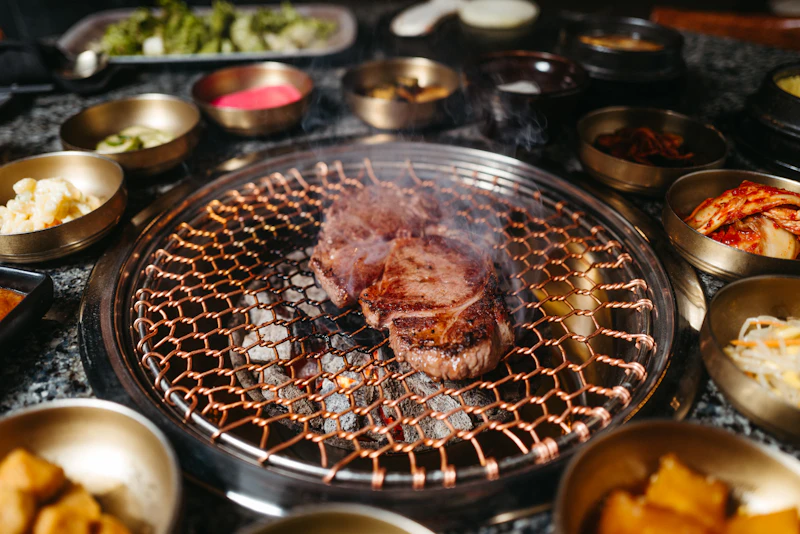
- Imported Beef Ribs (Galbi) or Marbled Cuts: ₩22,000 – ₩35,000 (~$16.30 – $26.00 USD) per serving.
Comprehensive Budget Breakdown Per Person (2025 Rates)
an average adult eats about 1.5 to 2 servings of meat during a standard meal. Here is what you can expect to spend in total per person, including side orders and drinks.
| Category | Cost Per Person (KRW) | Cost Per Person (USD) | What’s Included |
|---|---|---|---|
| Budget / Unlimited (Muhan Refill) | ₩17,500 – ₩24,000 | $13.00 – $17.80 | Unlimited pork/marinated meat, self-service rice, side dishes, and soft drinks. |
| Mid-Range Standard (Pork) | ₩25,000 – ₩38,000 | $18.50 – $28.00 | 2 portions of high-quality pork belly/neck, shared stew (doenjang-jjigae), rice, and 1 beer or soju. |
| Premium Pork Specialty | ₩40,000 – ₩60,000 | $29.50 – $44.50 | 2.5 portions of aged/Jeju black pork, table service by staff, specialized side dishes, craft alcohol or multiple drinks. |
| Mid-Range Hanwoo Beef | ₩80,000 – ₩130,000 | $59.00 – $96.00 | 1.5 to 2 portions of Grade 1+ Hanwoo beef, sides, cold noodles (naengmyeon), and drinks. |
| Ultra-Luxury Hanwoo Fine Dining | ₩200,000 – ₩380,000+ | $148.00 – $280.00+ | Multi-course Hanwoo beef tasting menu, private room, sommelier pairing, fully dedicated chef/griller. |
Hidden Costs, Drink Prices & The Mandatory Rules
When calculating your total bill, keep these crucial financial rules and add-ons in mind:
1. The Two-Serving Minimum Rule
In almost every non-buffet K-BBQ restaurant across Korea, there is a mandatory initial order minimum of 2 servings of meat per table. Even if you are dining solo, you cannot order just one 150g portion of pork belly. You must order at least two portions (which can usually be two different cuts, provided they use the same grill surface). If you visit as a party of three, ordering 3–4 portions initially is standard practice.
2. Side Dishes, Rice, and Stew Add-ons
While standard banchan (kimchi, pickled radish, lettuce, garlic) is 100% free and refillable, post-meat staple dishes cost a nominal extra fee:
- Bowl of White Rice (Gonggibap): ₩1,000 / ~$0.75 USD.
- Soybean Paste Stew (Doenjang-jjigae): ₩3,000 – ₩5,000 / ~$2.20 – $3.70 USD (often comes free at select neighborhood spots).
- Kimchi Stew (Kimchi-jjigae): ₩5,000 – ₩7,000 / ~$3.70 – $5.20 USD.
- Steamed Egg (Gyeran-jjim): ₩3,000 – ₩5,000 / ~$2.20 – $3.70 USD.
- Cold Buckwheat Noodles (Naengmyeon): ₩6,000 – ₩9,000 / ~$4.40 – $6.65 USD.
- Self-Service Fried Rice (Bokkumbap): ₩3,000 – ₩5,000 / ~$2.20 – $3.70 USD per portion.
3. Drinks & Alcohol
Alcohol is remarkably affordable in Korea compared to Western restaurants, as venues rely on quick turnover rather than huge liquor markups.
- Standard Soju (Chamisul / Jinro / Chum-Churum): ₩5,000 / ~$3.70 USD per bottle.
- Domestic Beer (Cass / Terra / Kelly): ₩5,000 – ₩6,000 / ~$3.70 – $4.40 USD per 500ml bottle.
- Soft Drinks (Coke / Sprite / Zero Soda): ₩2,000 / ~$1.50 USD.
Top 5 Recommended K-BBQ Restaurants in Seoul across Every Budget
Our editorial team has personally vetted hundreds of BBQ houses across Seoul over the past ten years. Here are five standout spots covering every price point, complete with precise navigation details.
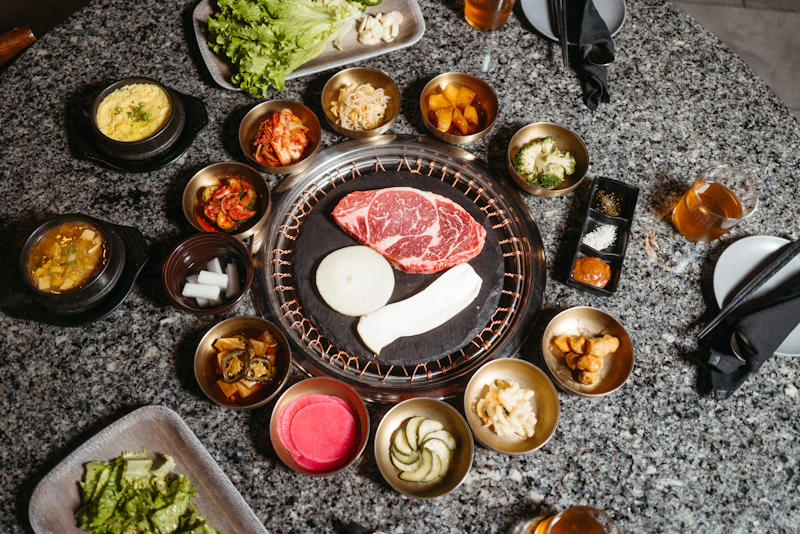
1. Budget / All-You-Can-Eat: Myeongryun Jinsa Galbi (Myeongdong Branch)
This massive, modernized chain offers unlimited marinated pork rib (돼지갈비), pork belly, charcoal chicken, self-service rice, soft drinks, and side dishes for a single fixed rate. It is clean, efficient, and ideal for big eaters on a tight budget.
- Price: ₩19,900 (~$14.70 USD) per adult.
- Address: 2F, 3-1 Myeongdong 10-gil, Jung-gu, Seoul (서울특별시 중구 명동10길 3-1 2층)
- Subway Station: Myeongdong Station (Line 4), Exit 8 (Walk 3 minutes straight down Myeongdong 10-gil).
- Operating Hours: 11:30 AM – 11:00 PM daily (Last order 10:00 PM). Open 365 days a year.
2. Mid-Range Iconic Pork: Geumdwaeji Sikdang (Gold Pig Restaurant)
Featured in the Michelin Guide Bib Gourmand, Gold Pig serves bone-in pork loin and thick-cut pork belly from specially bred YBD pigs on cast-iron grills with real bone charcoal. Staff cook everything to perfection for you. Expect long queues unless you register early on CatchTable.
- Price: ₩19,000 – ₩21,000 (~$14.00 – $15.50 USD) per 150g portion. Expect ~₩35,000 / ~$26 USD per person total.
- Address: 149 Dasan-ro, Jung-gu, Seoul (서울특별시 중구 다산로 149)
- Subway Station: Yaksu Station (Line 3 & Line 6), Exit 2 (Walk 3 minutes straight ahead).
- Operating Hours: 11:30 AM – 11:00 PM daily (No afternoon break). Open year-round.
3. Historic Outdoor Street-Vibe: Mapo Jeongdaepo
Located in the famous Mapo BBQ Alley, this local institution has been serving thick pork salt-grill (Sogeum-gu-i) and skirt meat (Galmaegisal) for decades. The signature feature is a moat around the grill where savory egg crust is poured and cooked live at your table free of charge.
- Price: ₩16,000 – ₩18,000 (~$11.80 – $13.30 USD) per portion.
- Address: 183-1 Dohwa-dong, Mapo-gu, Seoul (서울특별시 마포구 도화동 183-1)
- Subway Station: Gongdeok Station (Line 5, Line 6, AREX), Exit 9 (Walk 2 minutes).
- Operating Hours: 11:30 AM – 12:00 Midnight daily. Closed on major Lunar New Year / Chuseok holidays.
4. Value-For-Money Hanwoo: Majang-dong Meat Market (Market Butcher Dining)
If you want top-grade 1++ Hanwoo beef without luxury restaurant markups, head directly to Seoul’s primary wholesale livestock market. Buy custom-cut Hanwoo packages directly from ground-floor butcher shops (like Born & Bred Wholesale or Haneul 축산), then take your tray up to a 2nd-floor restaurant (Sikdang) where they set up your table and charcoal for a small per-person fee.
- Price: Meat package ₩60,000 – ₩90,000 (~$44 – $66 USD) per person + Table Setting Fee (Sangcharim-bi) ₩7,000 (~$5.20 USD) per adult.
- Address: 52 Majang-ro 33-gil, Seongdong-gu, Seoul (서울특별시 성동구 마장로33길 52)
- Subway Station: Majang Station (Line 5), Exit 2 (Walk 10 minutes) or Yongdu Station (Line 2 Branch), Exit 4 (Walk 7 minutes).
- Operating Hours: Market open 8:30 AM – 10:00 PM. Dining halls operate 11:00 AM – 10:30 PM daily.
5. Ultra-Luxury Hanwoo Fine Dining: Born & Bred (Upper Floors)
Widely regarded as the temple of Korean beef, Born & Bred serves curated multi-course Hanwoo omakase meals in private rooms. Highly acclaimed internationally, this is where world-renowned chefs and celebrities go for high-end Hanwoo.
- Price: Private Room Speakeasy Omakase: ₩250,000 – ₩350,000 (~$185 – $259 USD) per person. Casual 2nd Floor Dining Hall: ₩120,000 – ₩180,000 (~$88 – $133 USD) per person.
- Address: 1-4 Majang-ro 42-gil, Seongdong-gu, Seoul (서울특별시 성동구 마장로42길 1-4)
- Subway Station: Majang Station (Line 5), Exit 2 (Walk 8 minutes).
- Operating Hours: 12:00 PM – 10:30 PM (Break time 3:00 PM – 5:00 PM). Closed Mondays. Reservations mandatory via CatchTable Global.
Best Time to Visit Seoul for K-BBQ
Korean BBQ is a year-round passion, but timing your visit seasonal-wise and daily will drastically improve your experience and lower your waiting stress.
Best Months of the Year
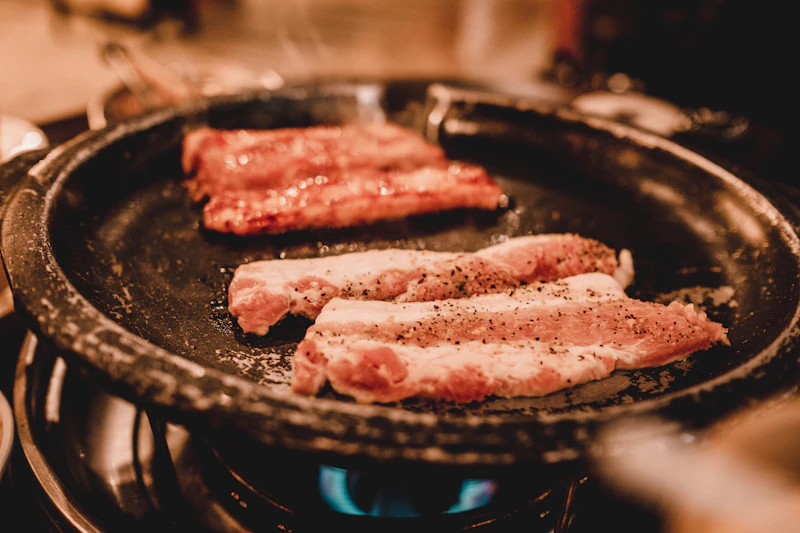
We highly recommend visiting during April to May (Spring) and September to October (Autumn). During these months, temperatures range from 15°C to 24°C (59°F to 75°F), allowing traditional BBQ venues in areas like Euljiro, Jongno 3-ga, and Mapo to open their sliding glass walls or extend tables directly onto the sidewalks. Dining outside under night neon lights while grilling pork belly on crisp autumn evenings is the pinnacle of Seoul dining culture.
Note on Summer (July–August): Seoul summers are intensely humid and hot. Grilling over 400°C charcoal indoors can get uncomfortably warm despite air conditioning. Note on Winter (December–February): Drafty street-style joints get cold; stick to indoor, well-ventilated specialty venues.
Best Time of Day to Avoid Long Lines
- Weekdays: Arrive between 5:00 PM and 5:45 PM. Corporate office workers in Seoul leave around 6:00 PM, and popular BBQ venues fill up instantly by 6:15 PM, leading to 1–2 hour wait times.
- Lunch Specials: Many mid-range pork joints offer discounted lunch set menus (Jeongsik) between 11:30 AM and 2:00 PM, where you get meat, stew, and rice for ₩12,000 – ₩15,000 (~$8.80 – $11.00 USD) per person.
Expert Tips for Saving Money and Dining Like a Local
this guide has gathered several insider hacks over the past decade that tourists rarely find in basic guidebooks:
- Order Unmarinated Cuts First, Marinated Cuts Second: Always order unseasoned meats (Samgyeopsal, Moksal, or fresh beef cuts) first. Once you switch to sweet marinated meats (Dwaeji Galbi or Yangnyeom Galbi), the marinade burns fast on the metal grill mesh, requiring grill grate replacements and altering your palate.
- Take Advantage of Free Banchan Refills: Never hesitate to ask for more lettuce, garlic, sesame oil, or kimchi. Say “Banchan deo juseyo” (More side dishes, please). It is fully expected and cost-free.
- Make “Bokkumbap” at the End of Pork Meals: At slant-grill or stone-grill pork spots, save a small portion of pork belly and roasted kimchi. Ask the server for Bokkumbap (Fried rice, ₩3,000). They will chop your remaining meat and kimchi on the grill plate, mix in rice, seaweed flakes, and sesame oil for a savory finish.
- Use CatchTable Global App: Popular spots like Geumdwaeji Sikdang, Sukseongdo, and Namyoung Don use digital queue systems. Download the CatchTable Global app to join remote waiting lines before you physically arrive at the location, saving hours of standing on the street.
- Look for “Self-Bars” (셀프바): Many casual BBQ spots have a buffet station in the center of the restaurant. Help yourself to extra lettuce, perilla leaves, garlic, ssamjang sauce, and kimchi without waiting for staff.
Common Mistakes to Avoid
Avoid these frequent tourist errors to save money and ensure a seamless meal:
- Mistake 1: Trying to order 1 serving for 2 people. Restaurant owners will politely decline. The minimum setup overhead (charcoal, banchan dishwashing, gas) requires at least 2 meat portions per table.
- Mistake 2: Leaving garlic on the grill wire until it burns and drops into the coal. Put your raw garlic cloves inside the small metal cup containing sesame oil provided at your table (or ask for “Maneul-gireum-jang”). The garlic will boil deliciously in the oil without burning.
- Mistake 3: Throwing away the paper jacket bags. Most K-BBQ venues provide large plastic bags or hollow storage chairs/stools. Put your coats, sweaters, and bags inside immediately upon sitting down to prevent charcoal smoke and oil splatter from soaking into your clothing.
- Mistake 4: Calling staff continuously by waving hands silently. Look for a small plastic call button (벨) stuck on the side or corner of your wooden table. Press it once; a chime rings in the kitchen, and a server will come immediately. If there is no button, shouting “Yogi-yo!” (“Over here, please!”) is standard etiquette.
- Mistake 5: Overordering expensive cuts right away. Start with 2 portions of core meat. Gauge your appetite before adding additional orders, as side dishes and stews quickly fill you up.
About This Guide
This guide was compiled by the lead travel writers at Searching Korea based on more than 10 years of living, dining, and working directly in Seoul. Prices listed reflect actual current menu rates collected across Seoul in 2025. We do not accept paid placements or free meals from restaurants featured in our guides; all venue visits are conducted anonymously and paid for independently to ensure completely objective recommendations.