
Quick Summary: Intercity Travel in South Korea
- Cheapest Transport Mode: Express / Intercity Standard Bus (일반고속) & Mugunghwa-ho Slow Train (무궁화호)
- Average Intercity Cost: ₩12,000 – ₩30,000 (~$9 – $22 USD) per journey across medium-to-long routes
- Best Time for Budget Travel: March to May and September to November (avoiding major holiday surges)
- Average Travel Duration: 2.5 to 5.5 hours (compared to 1.5 to 2.5 hours on high-speed KTX)
- Difficulty Level: Easy to Moderate (Booking apps require navigation, but physical terminals are highly efficient)
Having navigated South Korea’s transportation grid for over a decade—from the bustling concourses of Seoul Station to obscure rural bus stops in Gangwon-do—this guide at Searching Korea has tested every conceivable route across the peninsula. While most guidebooks heavily promote the high-speed KTX (Korea Train Express), relying solely on bullet trains can quickly erode a modest travel budget. A single one-way KTX ticket from Seoul to Busan costs roughly ₩59,800 (~$44 USD). If you are hopping between four or five cities, transit fees alone can exceed your accommodation costs.
The good news is that South Korea possesses one of the world’s most sophisticated, punctual, and remarkably affordable regional transport networks. By understanding how to leverage standard express buses, slow-rail corridors, standing train tickets, and domestic budget flight anomalies, you can cut your intercity travel costs by 50% to 70% without sacrificing comfort. In this comprehensive guide, we unpack the cheapest ways to travel between Korean cities based on 10+ years of on-the-ground experience.
1. Express and Intercity Buses: The Absolute Budget Champions
express and intercity buses represent the single best balance of cost, network reach, and reliability in South Korea. The national bus system is divided into two main categories: Express Buses (고속버스 – Gosok Bus), which run directly between major hubs via expressways with minimal stops, and Intercity Buses (시외버스 – Siwoe Bus), which connect smaller towns and make localized stops.
Understanding Bus Seating Tiers
When booking express buses, you will encounter three primary seat classes. Choosing the correct class is crucial for budget optimization:
- Standard / General (일반 – Ilban): 4 seats per row (2×2 layout). This is the cheapest option available. Seats are comfortable, equipped with air conditioning, and offer ample legroom compared to standard Western economy coaches.
- Excellence / Superior (우등 – Udeung): 3 seats per row (2×1 layout). Slightly more expensive (around 30-40% more than Standard), offering wider recliner seats.
- Premium (프리미엄): 3 seats per row with personal video screens, privacy curtains, wireless phone charging, and near-flat reclining. High luxury, but pricing approaches KTX levels.
To maximize savings, Consider booking the Standard (Ilban) class whenever available. For example, a Standard Express Bus ticket from Seoul to Busan costs approximately ₩26,700 (~$20 USD)—less than half the price of a KTX ticket.
Key Seoul Bus Terminals & Location Details
Seoul serves as the primary hub for long-distance buses. It is essential to arrive at the correct terminal, as routes are strictly divided by destination:
1. Seoul Express Bus Terminal (Gyeongbu / Unjin Lines)
Serves destinations east and south including Busan, Daegu, Gyeongju, and Daejeon.
• Exact Address: 194 Sinbanpo-ro, Seocho-gu, Seoul (서울특별시 서초구 신반포로 194)
• Subway Access: Express Bus Terminal Station (Lines 3, 7, and 9). Use Exit 1 or 2 for the main Gyeongbu Line terminal concourse.
• Operating Hours: 05:30 – 24:00 daily (Ticketing counters open around 05:30; automated kiosks operate 24/7).
2. Central City Terminal (Honam Line)
Located in the exact same physical complex as the Express Bus Terminal, but serves southwestern destinations like Jeonju, Gwangju, and Mokpo.
• Exact Address: 176 Sinbanpo-ro, Seocho-gu, Seoul (서울특별시 서초구 신반포로 176)
• Subway Access: Express Bus Terminal Station (Lines 3, 7, and 9). Follow overhead signs inside the station to Exit 7 or 8 for Central City.
• Operating Hours: 05:30 – 24:00 daily.
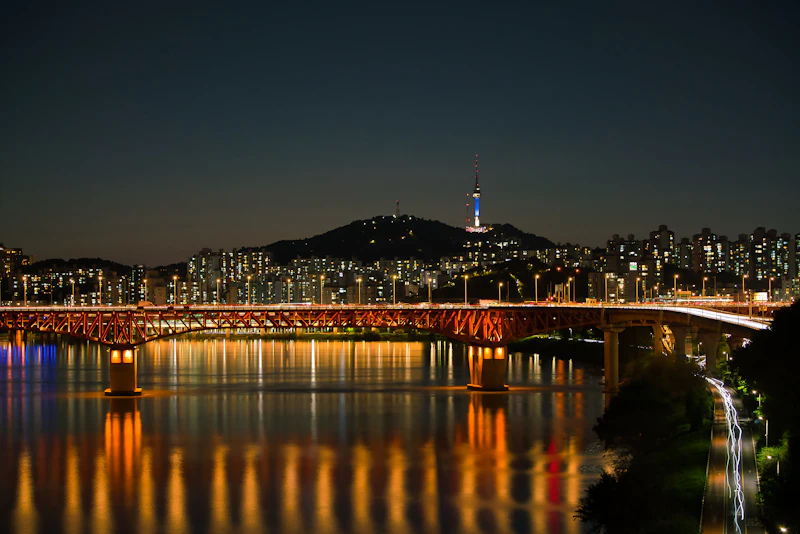
3. East Seoul Bus Terminal (Gangbyeon)
Primary hub for intercity routes heading to Gangwon-do (Sokcho, Gangneung) and rural destinations.
• Exact Address: 50 Gangbyeonbuk-ro, Gwangjin-gu, Seoul (서울특별시 광진구 강변북로 50)
• Subway Access: Gangbyeon Station (Line 2), Exit 4. The terminal is directly across the street.
• Operating Hours: 05:00 – 23:00 daily.
2. Mugunghwa-ho Trains: Classic Low-Cost Rail Travel
If you prefer the stability and scenery of rail travel over highway traffic, the Mugunghwa-ho (무궁화호) is South Korea’s workhorse regional train. Named after the national flower (Hibiscus syriacus), these trains are slower than the high-speed KTX and modern ITX-Maum services, but they stop at almost every regional station and cost a fraction of the price.
Mugunghwa Pricing vs. KTX
Comparing Mugunghwa rail fares to KTX highlights why budget travelers should consider slow trains for short to medium distances:
| Route | Mugunghwa-ho (Cost / Duration) | KTX High-Speed (Cost / Duration) | Savings |
|---|---|---|---|
| Seoul to Daejeon | ₩9,600 (~$7.10 USD) / 2 hrs 00 min | ₩23,700 (~$17.50 USD) / 1 hr 00 min | 59% Savings |
| Seoul to Dongdaegu | ₩21,100 (~$15.60 USD) / 3 hrs 50 min | ₩43,500 (~$32.20 USD) / 1 hr 45 min | 51% Savings |
| Seoul to Busan | ₩28,600 (~$21.20 USD) / 5 hrs 15 min | ₩59,800 (~$44.30 USD) / 2 hrs 30 min | 52% Savings |
| Seoul to Jeonju | ₩17,600 (~$13.00 USD) / 3 hrs 20 min | ₩34,400 (~$25.50 USD) / 1 hr 35 min | 49% Savings |
While taking a 5-hour Mugunghwa train from Seoul to Busan takes up a substantial portion of your day, taking it on shorter segments (such as Seoul to Daejeon or Daegu to Busan for ₩7,500 / ~$5.50 USD) offers an unbeatable cost-to-time ratio.
The Standing Ticket Hack (Ipseok – 입석)
When Mugunghwa or ITX seats are fully booked—or if you simply want an extra discount—ask for a Standing Ticket (입석 – Ipseok) at the ticketing counter. Standing tickets are sold at a 15% discount off the standard seat price. On Mugunghwa trains, standing ticket holders can sit in any unreserved seat in the snack bar car (Car 4 on most configurations) or use the folding jump seats situated in the vestibules between train cars. this guide frequently uses this method during peak weekend travel hours when reserved seats sell out days in advance.
Key Train Stations in Seoul
• Seoul Station (서울역): 405 Hangang-daero, Yongsan-gu, Seoul. Connected via Subway Line 1 and Line 4 (Exit 1). Handles main Gyeongbu Line trains.
• Yeongdeungpo Station (영등포역): 846 Gyeongin-ro, Yeongdeungpo-gu, Seoul. Line 1 (Exit 1). Excellent secondary departure point for Mugunghwa trains heading south, often less crowded than Seoul Station.
• Cheongnyangni Station (청량리역): 214 Wangsan-ro, Dongdaemun-gu, Seoul. Line 1 and Gyeongui-Jungang Line (Exit 1). Main hub for trains running along the central inland lines toward Andong and Gangwon-do.
3. Budget Domestic Flights vs. Ground Transportation
Travelers often assume flying between cities is expensive. However, due to hyper-competition between domestic low-cost carriers (LCCs) like Jeju Air, T’way Air, Jin Air, and Air Busan, domestic flights can occasionally undercut train prices.
The domestic route between Seoul Gimpo (GMP) and Busan Gimhae (PUS) frequently sees mid-week non-peak promotional fares as low as ₩22,000 to ₩35,000 (~$16 – $26 USD) inclusive of taxes and 15kg checked luggage. This makes flying cheaper than a KTX ticket and comparable in price to an express bus, with a flight time of just 55 minutes.
When to fly: Mid-week (Tuesday through Thursday) afternoon departures.
When to avoid: Friday evening, Saturday morning, and Sunday evening, when weekend commuters drive one-way airfares above ₩90,000 (~$67 USD).
Access Note: Gimpo International Airport (GMP) is accessible via Seoul Subway Line 5, Line 9, and the AREX airport railroad (Gimpo Int’l Airport Station). From central Seoul (Myeongdong/Seoul Station), subway fare to Gimpo Airport is roughly ₩1,700 (~$1.25 USD).
4. Comprehensive Route Cost Comparison Matrix
To help you plan your itinerary, this guide compiled this pricing snapshot comparing the four primary transit modes across South Korea’s most popular travel corridors (prices accurate as of 2026):
| Route | Mugunghwa Rail | Standard Bus | KTX High-Speed | Domestic Flight |
|---|---|---|---|---|
| Seoul ↔ Busan | ₩28,600 / ~$21 USD | ₩26,700 / ~$20 USD | ₩59,800 / ~$44 USD | ₩22,000 – ₩45,000 / ~$16-$33 USD |
| Seoul ↔ Sokcho | N/A (No direct rail) | ₩17,300 / ~$13 USD | N/A | N/A |
| Seoul ↔ Jeonju | ₩17,600 / ~$13 USD | ₩15,000 / ~$11 USD | ₩34,400 / ~$25 USD | N/A |
| Seoul ↔ Gyeongju | ₩22,500 / ~$17 USD (via Taehwa) | ₩22,500 / ~$17 USD | ₩49,300 / ~$36 USD (Singyeongju) | N/A |
| Seoul ↔ Gangneung | ₩14,800 / ~$11 USD (Nuri-ro) | ₩16,600 / ~$12 USD | ₩27,600 / ~$20 USD | N/A |
5. Budget Breakdown Across Travel Styles
Depending on your budget flexibility, here is what you can expect to spend strictly on intercity and regional transportation over a 7-day multi-city itinerary (e.g., Seoul → Jeonju → Gyeongju → Busan → Seoul):
1. Shoestring Budget Tier
• Transport Strategy: Exclusively Standard Express Buses, Mugunghwa standing tickets, and local city subways/city buses using a reloadable T-money card.
• Intercity Travel Cost (7 Days): ₩65,000 – ₩85,000 (~$48 – $63 USD)
• Local City Transit Cost: ₩25,000 (~$18.50 USD)
• Total Expected Transit Spend: ₩90,000 – ₩110,000 (~$66.50 – $81.50 USD)
2. Mid-Range Budget Tier
• Transport Strategy: Mix of Superior Express Buses, KTX for long legs (e.g., Seoul to Busan), and Mugunghwa for shorter legs.
• Intercity Travel Cost (7 Days): ₩120,000 – ₩160,000 (~$89 – $118 USD)
• Local City Transit Cost: ₩35,000 (~$26 USD) (Includes occasional short taxi trips)
• Total Expected Transit Spend: ₩155,000 – ₩195,000 (~$115 – $144 USD)
3. Comfort & Speed (Luxury Budget) Tier
• Transport Strategy: Exclusive use of First Class KTX seats, Premium Recline Buses, and private taxis within cities.
• Intercity Travel Cost (7 Days): ₩230,000 – ₩320,000 (~$170 – $237 USD)
• Local City Transit Cost: ₩100,000+ (~$74 USD) in taxis
• Total Expected Transit Spend: ₩330,000 – ₩420,000 (~$244 – $311 USD)
6. Best Time to Visit & Travel Intercity
Timing your trips across South Korea directly affects transport availability and regional pricing.
Optimal Months: April–May & September–November
Spring (April–May) and Autumn (September–November) offer moderate weather, clear conditions for highway travel, and stable transport schedules. Highways experience minimal delay outside of standard weekend getaway hours.
Peak Periods to Avoid for Budget Travel
- Seollal (Lunar New Year – late January / February): Millions of locals travel to family home provinces. Train tickets sell out within minutes of release 4 weeks prior, and highways experience massive traffic delays. Express bus travel times can double or triple.
- Chuseok (Korean Thanksgiving – September / October): Identical travel conditions to Seollal. Avoid booking intercity road or rail travel during the official 3-to-5-day holiday window.
- Summer Vacation Peak (Late July to Mid-August): Fares for domestic budget flights to Jeju and coastal destinations (Gangneung, Busan) reach maximum rates.
7. Expert Tips: Insider Knowledge for Budget Intercity Travel
Over The ten-plus years of navigating Korea’s transit corridors, we have refined several practical techniques that standard travel guides overlook:
1. Take Late-Night “Midnight” Buses (심야고속 – Simya Gosok)
Night buses depart terminals between 22:00 and 02:00. While they carry a slight 10% surcharge (e.g., Seoul to Busan Night Standard Bus costs roughly ₩29,300 / ~$21.70 USD), taking a midnight bus eliminates the cost of a hotel room for one night. Highways are completely clear, meaning night buses frequently reach their destination 30 to 45 minutes faster than daytime schedules.
2. Master the Foreign Credit Card Workaround for Bus Booking
The official national express bus booking platforms (KOBUS and T-Money Bus) frequently reject international credit cards online due to Korean payment gateway verification (3D Secure / Ipin). Our insider tip: Do not panic if the app fails. Bus routes rarely sell out entirely on weekdays. Simply walk up to the automated ticketing kiosks at the bus terminal—the physical machines inside Seoul Express Bus Terminal, Central City, and East Seoul Terminal accept foreign Visa and Mastercard credit cards without issue. Language settings can be toggled to English at the main touch screen.
3. Use Local City Transit Cards Everywhere
Your standard physical T-money, Cashbee, or NAMANE card loaded in Seoul works seamlessly on city subways and local city buses in Busan, Daegu, Daejeon, Gwangju, Jeonju, and even regional rural buses in Gangwon-do and Jeju Island. Using a transit card rather than paying cash saves ₩100 per ride and unlocks free local transfers between city bus and subway lines within a 30-minute window.
4. Leverage Korail Pass Only If Booking High-Frequency KTX Journeys
The Korail Pass (exclusive to foreign tourists) permits unlimited KTX travel for 2 to 5 days. However, at ₩121,000 (~$90 USD) for a 2-day consecutive pass, it is only economical if you plan on riding long-distance high-speed KTX routes multiple times in 48 hours. If you are taking slow trains or buses, skipping the pass and paying point-to-point in cash or card is significantly cheaper.
8. Common Mistakes to Avoid
- Confusing Express Bus Terminal with Central City Terminal: While physically attached under the same roof at Express Bus Terminal Station (Lines 3, 7, 9), they have distinct departure halls. If your destination is Jeonju or Gwangju, heading to the Gyeongbu line counters will mean a long walk back across the concourse. Check your ticket for “Honam (호남선)” versus “Gyeongbu (경부선)”.
- Assuming KTX Stations Are Always in the City Center: High-speed rail lines often require new track infrastructure built outside downtown cores. For example, the KTX station for Gyeongju (Singyeongju Station) is a 20-minute, ₩2,000 city bus ride away from the historic downtown. The Express Bus terminal in Gyeongju, by contrast, drops you directly in the city center within walking distance of primary sights. Factor onward local transport costs when comparing modes.
- Failing to Carry Emergency Cash for Rural Transit Card Top-Ups: While Korea is almost entirely cashless, reloading a physical T-money card at convenience stores or subway stations strictly requires physical Korean Won cash. Always keep ₩20,000 (~$15 USD) in paper bills in your wallet specifically for transit card reloads when traveling through smaller provincial towns.
- Booking Weekend Afternoon Highways Returning to Seoul: On Sunday afternoons and evenings, expressways heading north back into Seoul become heavily congested. A standard 2.5-hour bus ride from Gangneung or Sokcho can extend to 4.5 hours. On Sunday return legs, opt for rail travel (Mugunghwa or KTX) to guarantee your schedule.
About This Guide
This guide was compiled by the Searching Korea editorial team based on direct, first-hand experience traveling across all eight provinces of South Korea over the past decade. These transit corridors are well-documented by travelers, including these exact transit corridors—from late-night express bus runs to standing-room Mugunghwa journeys—to ensure our route recommendations, station exit details, and real-time pricing reflect the actual conditions travelers encounter on the ground today.