
Quick Summary: Seoul to Busan Travel Guide
- Is it worth visiting? Absolutely. Busan offers a dramatically different vibe from Seoul—coastal cliffs, sandy beaches, historic temples built into rocky coastlines, and distinct regional cuisine.
- Day Trip vs. Overnight: Day trips are technically possible via KTX (2.5 hours each way), but we strongly recommend at least 1 night (2D1N) or 2 nights (3D2N) due to Busan’s sprawling geographic size.
- Estimated Round-Trip Transport Cost: ₩119,600 / ~$88.50 USD per person (KTX Economy Class).
- Best Time to Visit: April to May (Spring) and September to November (Autumn) for clear skies and mild ocean breezes.
- Trip Difficulty: Easy to Moderate (High-speed KTX makes transit seamless, though navigating Busan’s spread-out districts requires good subway and taxi planning).
The Ultimate Dilemma: Day Trip or Overnight Stay?
After living in Seoul for over a decade and making dozens of trips down to South Korea’s southern coastline, this guide at Searching Korea is frequently asked one pressing question by first-time visitors: “Can I just do Busan as a day trip from Seoul, or do I need to spend the night?”
The short answer? While a high-speed day trip is physically possible, an overnight stay of at least 2 days and 1 night (2D1N) is dramatically better.
Thanks to the Korea Train eXpress (KTX), you can travel the 325 kilometers (200 miles) between Seoul Station and Busan Station in as little as 2 hours and 15 minutes. On paper, departing Seoul at 6:30 AM and returning at 10:00 PM gives you over 12 hours on the ground. However, what most travelers fail to realize until they step off the train is that Busan is not a compact, centralized city. It is a massive, linear metropolis pinched between rugged mountains and the ocean, stretching nearly 30 kilometers from Gamcheon Culture Village in the west to Haedong Yonggungsa Temple in the east.
trying to squeeze Busan’s major highlights into a single day results in spending more time inside subways and taxis than actually enjoying the coastal air. Below, we break down the exact logistics, costs, transit options, and itineraries so you can decide which option fits your travel style best.
—
Seoul to Busan Transportation Breakdown
To plan your journey effectively, you need to understand your transit options. The bullet train is the undisputed king of this route, but alternative options exist depending on your budget and starting location in Seoul.
| Mode of Transport | Travel Time | One-Way Cost (KRW / USD) | Best For |
|---|---|---|---|
| KTX Train (Seoul Station / Yongsan) | 2h 15m – 2h 45m | ₩59,800 (~$44.30 USD) Economy ₩83,700 (~$62.00 USD) First Class |
Most travelers staying in central Seoul (Myeongdong, Hongdae, Itaewon). |
| SRT Train (Suseo Station) | 2h 10m – 2h 30m | ₩52,000 (~$38.50 USD) Standard | Travelers staying in Gangnam, Jamsil, or southeast Seoul. |
| Express Bus (Express Bus Terminal) | 4h 00m – 4h 30m | ₩26,700 – ₩41,800 (~$19.80 – $31.00 USD) | Strict budget travelers who don’t mind long travel times. |
| Domestic Flight (Gimpo to Gimhae) | 1h 05m (Air time only) | ₩35,000 – ₩95,000 (~$26.00 – $70.00 USD) | Rarely recommended once airport check-in and transfer times are factored in. |
Booking Your Train Tickets: Critical Details
We strongly advise booking your KTX tickets exactly 30 days in advance (when tickets open on the official Korail website or app). KTX tickets along the Seoul-Busan corridor regularly sell out, especially for Friday evening departures, weekend mornings, and national holidays. If you are traveling during peak seasons (Spring Cherry Blossoms or Autumn foliage), tickets can disappear within minutes of release.
—
Option A: The 1-Day Busan Blitz (Is It Doable?)
If your itinerary in South Korea is extremely tight and you absolutely cannot spare an extra night away from your Seoul hotel, you can execute a 1-day trip. However, you must accept a tight schedule and focus strictly on one geographical cluster (either Western Busan or Eastern Busan).
Realistic 1-Day Itinerary (Focused on West & Central Busan)
- 06:30 AM – 09:05 AM: Depart Seoul Station on KTX 011; arrive at Busan Station.
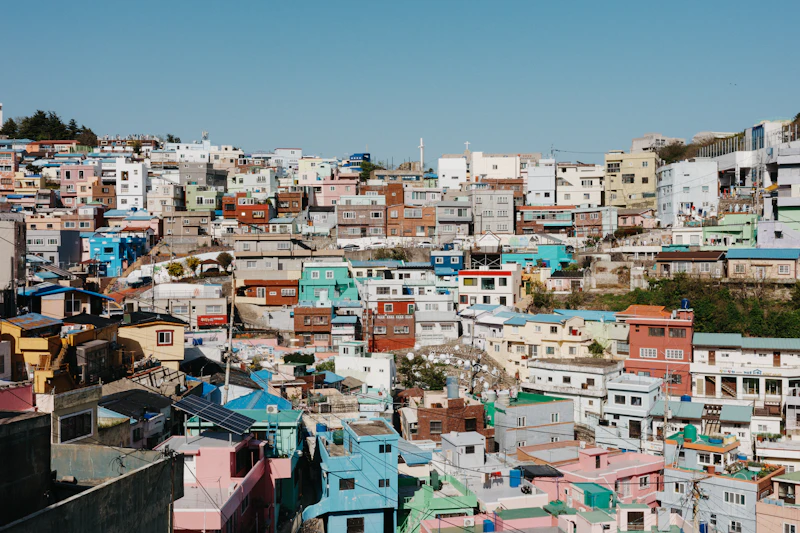
- 09:30 AM – 11:30 AM: Take a short taxi ride to Gamcheon Culture Village before the tour buses arrive. Explore the colorful alleyways and iconic viewpoints.
- 12:00 PM – 02:00 PM: Head down to Jagalchi Fish Market and BIFF Square. Enjoy a lunch of fresh grilled fish or traditional Busan-style pork soup (Dwaeji Gukbap).
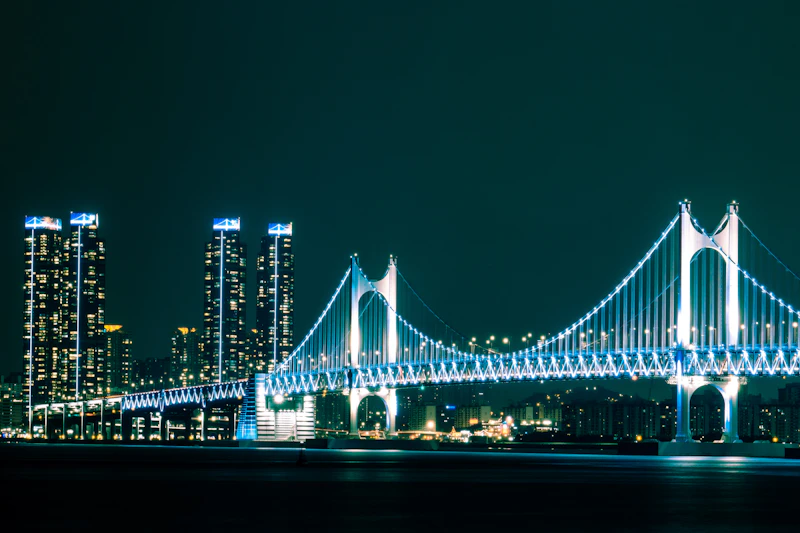
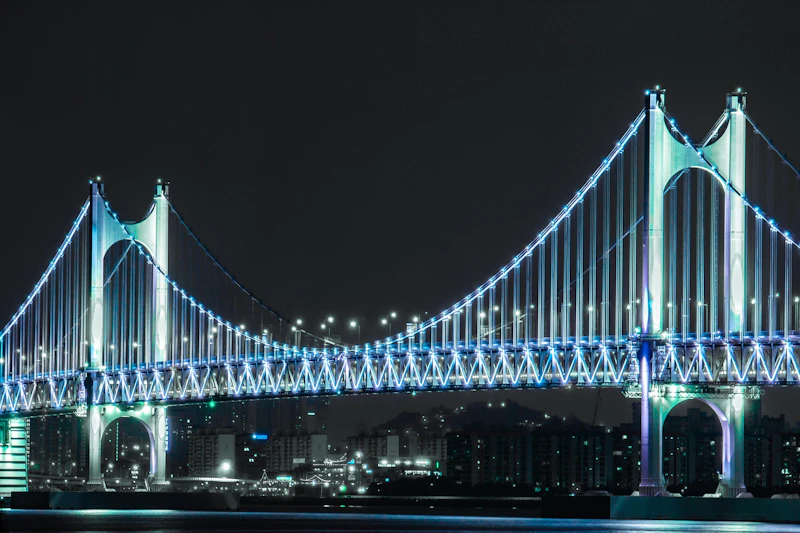
- 02:30 PM – 05:30 PM: Take Metro Line 1 to Line 2 toward Gwangalli Beach. Relax at an oceanfront café while staring out at the iconic Gwangan Bridge.
- 06:00 PM – 08:00 PM: Dinner at Gwangalli (fresh raw fish or Korean BBQ) and watch the evening bridge lights illuminate.
- 08:30 PM – 09:00 PM: Take Metro Line 2 back to Busan Station.
- 09:30 PM – 12:05 AM: Return KTX train back to Seoul Station.
Our Assessment: This day is exhausting. You will log roughly 15,000 to 20,000 steps, spend around 5.5 hours in high-speed transit, and miss out on Eastern Busan highlights like Haedong Yonggungsa Temple and the Haeundae Blueline Park Sky Capsule. It is a viable backup plan, but far from ideal.
—
Option B: The 2-Day / 1-Night (2D1N) Golden Itinerary
spending one night in Busan completely transforms the experience from a rushed checklist into a memorable coastal getaway. Here is how this guide structures the ideal 2D1N trip.
Day 1: Historic Culture, Seafood & Illuminated Bridges
Arrive at Busan Station around mid-morning. Drop your luggage off at your hotel (consider staying in Haeundae for beach luxury or Seomyeon for central transit access). Begin your day at Gamcheon Culture Village for morning photography, then head down to Nampo-dong to explore Jagalchi Market and the street food stalls of BIFF Square.
In the late afternoon, head to Gwangalli Beach. Spend your evening taking in the panoramic views of the Gwangan Bridge (Diamond Bridge). If you visit on a Saturday night, you can catch the famous free Gwangalli Marvelous Drone Light Show (held twice every Saturday evening).
Day 2: Coastal Rail, Ancient Temples & Modern Skyscrapers
Start your second day early at Haedong Yonggungsa Temple, one of South Korea’s very few coastal Buddhist temples, situated directly on cliff edges facing the East Sea. From there, take a short taxi ride to Mipo Station to ride the Haeundae Blueline Park Sky Capsule—retro, colorful railcars running elevated along the ocean cliffs toward Cheongsapo.
Enjoy a seafood lunch in Cheongsapo, walk along the coastal green railway, and finish your afternoon at BUSAN X the SKY, located on the 99th and 100th floors of the LCT Tower, offering breathtaking 360-degree views of Haeundae Beach. Catch an 08:00 PM KTX back to Seoul, arriving refreshed by 10:30 PM.
—
Must-Visit Busan Attractions: Practical Guide & Logistics
1. Gamcheon Culture Village (감천문화마을)
Known as the “Santorini of Korea,” this hillside neighborhood was originally built by refugees fleeing the Korean War in the 1950s. Today, it is a vibrant art village filled with pastel painted houses, murals, and small art galleries.
- Exact Address: 203, Gamnae 2-ro, Saha-gu, Busan (부산광역시 사하구 감내2로 203)
- Nearest Subway: Toseong Station (Busan Metro Line 1, Exit 6). Walk around the corner to the bus stop outside Pusan National University Hospital and take local mini-bus (Saha 1-1, Seogu 2, or Seogu 2-2) up the steep hill to Gamcheon.
- Operating Hours: Village area open 24 hours public access; resident privacy hours and tourist shops strictly operate 09:00 – 18:00 (March to October) and 09:00 – 17:00 (November to February).
- Admission Cost: Free entry. Optional map purchase at the info booth: ₩2,000 (~$1.50 USD).
2. Haedong Yonggungsa Temple (해동용궁사)
First established in 1376, this magnificent temple offers a rare experience compared to South Korea’s mountain-bound temples, as it perches directly over the crashing waves of the ocean.
- Exact Address: 86, Yonggung-gil, Gijang-eup, Gijang-gun, Busan (부산광역시 기장군 기장읍 용궁길 86)
- Nearest Subway/Bus: Osiria Station (Donghae Line, Exit 1). From Exit 1, take Bus 139 or a quick 5-minute taxi (~₩5,000 / ~$3.70 USD). Alternatively, from Haeundae Station (Line 2, Exit 7), take Bus 1001 or 181.
- Operating Hours: 04:30 – 20:30 daily year-round.
- Admission Cost: Free entry. Parking fee: ₩3,000 (~$2.20 USD) for standard vehicles.
3. Haeundae Blueline Park (Sky Capsule & Beach Train)
A modern redevelopment of the abandoned Donghae Nambu Line railway. The colorful, slow-moving 4-person Sky Capsules offer some of the best photogenic views in all of Korea.
- Exact Address (Mipo Station): 94, Dalmaji-gil 62beon-gil, Haeundae-gu, Busan (부산광역시 해운대구 달맞이길62번길 94)
- Nearest Subway: Jung-dong Station (Busan Metro Line 2, Exit 7). Walk 15 minutes toward the coast to Mipo Station.
- Operating Hours: 09:30 – 18:30 (Operating hours extend to 19:30 or 20:30 in peak summer months of July/August).
- Admission Costs:
- Sky Capsule (One-way, Mipo to Cheongsapo): 2-person pod: ₩35,000 (~$26.00 USD); 3-person pod: ₩45,000 (~$33.30 USD); 4-person pod: ₩50,000 (~$37.00 USD).
- Beach Train (Single ride): ₩7,000 (~$5.20 USD) per person. Unlimited Pass: ₩13,000 (~$9.60 USD).
4. Jagalchi Market & BIFF Square
Korea’s largest seafood market, where hard-working local women (known affectionately as Jagalchi Ajumma) sell hundreds of species of fresh and dried fish.
- Exact Address: 52, Jagalchil-ro, Jung-gu, Busan (부산광역시 중구 자갈치로 52)
- Nearest Subway: Jagalchi Station (Busan Metro Line 1, Exit 10) or Nampo Station (Busan Metro Line 1, Exit 2).
- Operating Hours: 05:00 – 22:00 daily. (Note: Market hall is closed on the 1st and 3rd Tuesday of every month).
- Admission Cost: Free entry. Meal costs inside ground-floor market stalls vary (expect ₩40,000 – ₩70,000 / ~$30.00 – $52.00 USD per person for raw fish sets).
—
Best Time of Year to Visit Busan
Busan features a humid subtropical climate, making it noticeably milder in winter and slightly breezier in summer than landlocked Seoul. Here is our seasonal evaluation:
- Spring (April to May) — Highly Recommended: Temperatures range from 13°C to 22°C (55°F – 71°F). Cherry blossoms peak in early April along Dalmaji Hill and Mount Hwangnyeong. Clear skies and perfect walking weather.
- Autumn (September to November) — Peak Experience: this guide’s favorite time to travel. Skies are crisp and dry, ocean temperatures remain warm through September, and the Busan International Film Festival (BIFF) lights up the city every October.
- Summer (June to August) — Extremely Crowded: July and August bring dense humidity, heavy monsoons, and massive local tourist crowds to Haeundae and Gwangalli beaches. Hotel rates hit maximum surge pricing.
- Winter (December to February) — Quiet & Chilly: Temperatures range from 0°C to 10°C (32°F – 50°F). It rarely snows in Busan due to coastal ocean winds. While cold, it is crisp, bright, and far less crowded than Seoul.
—
Estimated Travel Budget Breakdown
To help you structure your expenses, this guide compiled this estimated cost breakdown per person. Prices reflect current rates in both South Korean Won (KRW) and US Dollars (USD).
| Expense Category | Budget Traveler | Mid-Range Traveler | Luxury Traveler |
|---|---|---|---|
| Transport (Seoul–Busan RT) | Express Bus ₩53,400 (~$39.50 USD) |
KTX Economy Class ₩119,600 (~$88.50 USD) |
KTX First Class ₩167,400 (~$124.00 USD) |
| Accommodation (1 Night) | Hostel / Guesthouse ₩30,000 (~$22.00 USD) |
3-Star / Business Hotel ₩100,000 (~$74.00 USD) |
5-Star Luxury Resort (Signiel/Paradise) ₩350,000+ (~$260.00+ USD) |
| Meals & Street Food (Per Day) | Dwaeji Gukbap & Street Snacks ₩25,000 (~$18.50 USD) |
Seafood Restaurants & Ocean Cafes ₩60,000 (~$44.50 USD) |
High-end Sashimi & Fine Dining ₩150,000+ (~$111.00+ USD) |
| Attractions & Activities | Free Sights & Metro Train ₩10,000 (~$7.40 USD) |
Sky Capsule + BUSAN X the SKY ₩45,000 (~$33.30 USD) |
Yacht Tour + Full Private Sightseeing ₩120,000 (~$89.00 USD) |
| ESTIMATED TOTAL (2D1N) | ~₩118,400 (~$87.40 USD) | ~₩324,600 (~$240.30 USD) | ~₩787,400+ (~$584.00+ USD) |
—
Expert Tips from 10+ Years Living in Korea
Over our years navigating South Korea’s transportation networks, we have picked up several practical tricks that can save you significant time, money, and frustration on a Busan trip:
- Use ZimCarry Luggage Service at Busan Station: If you arrive in Busan hours before hotel check-in (or want to execute a day trip without dragging bags around), visit the ZimCarry booth right inside Busan Station (1st Floor near Exit 1). For around ₩5,000 – ₩10,000 (~$3.70 – $7.40 USD), they will deliver your luggage directly from the train station to your hotel lobby while you explore baggage-free.
- Book the Sky Capsule Weeks in Advance: The Haeundae Blueline Park Sky Capsule is arguably Busan’s most viral attraction right now. Walk-up tickets are almost always sold out by 10:00 AM. Reservations open online exactly 4 weeks in advance at midnight Korean Standard Time. Book the Mipo to Cheongsapo direction for the best ocean views closest to the water edge.
- T-Money Cards Work Seamlessly in Busan: You do not need to buy separate transit passes for Busan. The same physical T-Money card or Korea Tour Card you use on the Seoul Subway works on all Busan subway lines, local buses, and even taxis.
- Choosing Between Haeundae and Gwangalli for Hotels: If you want luxury resorts, infinity pools, and direct access to high-end dining, stay in Haeundae. If you want a younger, lively nightlife scene with craft beer pubs, live street musicians, and an illuminated view of the Gwangan Bridge directly from your bedroom window, choose a hotel along Gwangalli Beach.
- Avoid Jagalchi “Tourist Traps”: When buying raw fish at Jagalchi Market, first-timers often get overwhelmed by aggressive vendors on the first floor. If you want a stress-free meal, head to the nearby Minrak Raw Fish Town near Gwangalli Beach, or simply order set-menu grilled fish (Saengseon-gumi) at the traditional restaurants along the street behind Jagalchi for fixed, transparent pricing (₩12,000 – ₩15,000 / ~$8.90 – $11.00 USD per person).
—
Common Mistakes to Avoid
- Mistake 1: Relying on KakaoMap/Naver Map without localized planning. While Google Maps is generally unreliable for walking directions in South Korea, Naver Map and KakaoMap work perfectly. However, double-check your intra-city transit times in Busan. Taking the subway from Gamcheon (West) to Haedong Yonggungsa (East) takes over 1.5 hours one-way!
- Mistake 2: Staying right outside Busan Station. The area immediately surrounding Busan Station (Chinatown/Texas Street) is transit-convenient, but lacks coastal charm and clean beach atmosphere. Move your base east to Seomyeon, Gwangalli, or Haeundae for a far better overall environment.
- Mistake 3: Traveling during Chuseok or Seollal without 3-month prep. During Korean Lunar New Year (Seollal) or Autumn Thanksgiving (Chuseok), millions of Koreans travel across the country. KTX tickets sell out within seconds during special pre-sale windows, and highways become gridlocked. Avoid domestic travel on these exact national holiday dates unless tickets are secured months ahead.
- Mistake 4: Missing the last KTX train. KTX trains back to Seoul stop running shortly after 22:30. If you miss your scheduled return train, standby seats are rarely available on late-night trains, forcing you to find an emergency hotel or take an overnight slow bus.
—
Information in this guide is based on publicly available sources as of 2026. Verify details with the official venue before visiting.