
Discover Sokcho: South Korea’s Premier Autumn Destination
Located on the northeast coast of Gangwon-do province, Sokcho is a picturesque city bounded by the emerald waters of the East Sea and the grand peaks of Seoraksan National Park. While Sokcho attracts visitors year-round for its fresh seafood and coastal scenic spots, autumn transforms the region into one of South Korea’s most breathtaking travel destinations. Between mid-October and early November, the dramatic granite ridges of Seoraksan are blanketed in vivid hues of crimson, orange, and gold, while cool, dry breezes make urban exploration exceptionally pleasant.
Beyond its iconic mountain, Sokcho offers a rich cultural identity shaped by history. Nowhere is this more evident than in Abai Village, a historic neighborhood settled by North Korean refugees during the Korean War. Here, visitors can step back in time, sample unique regional dishes, and cross the local canal on a traditional hand-pulled ferry. This comprehensive travel guide covers everything you need to know to plan the ultimate Sokcho autumn itinerary, from practical transportation logistics and mountain hiking routes to local culinary highlights and budget planning.
Getting to Sokcho from Seoul
Sokcho is easily accessible from Seoul, making it a popular choice for both weekend getaways and extended itineraries. Because Sokcho is not directly served by the KTX high-speed train network (a high-speed rail line is currently under construction), express and intercity buses represent the most efficient and economical travel method.
By Express or Intercity Bus
- From Seoul Express Bus Terminal (Gangnam): Premium and Express buses depart regularly for the Sokcho Express Bus Terminal (Sokcho Gosok). The journey takes approximately 2 hours and 10 minutes to 2 hours and 30 minutes, depending on traffic. One-way fares range from ₩16,000 for standard buses to ₩23,000 for premium comfortable seating.
- From Dong Seoul Bus Terminal (Gangbyeon Station): Intercity buses depart frequently for the Sokcho Intercity Bus Terminal (Sokcho Sioewae). The trip takes roughly 2 hours and 15 minutes, with ticket prices ranging between ₩15,000 and ₩19,000.
Navigating Within Sokcho
Sokcho features an efficient local public bus system that accepts standard T-money cards and major foreign credit cards with contactless payment functions. Bus #7 and Bus #7-1 are the most important routes for travelers, as they connect the Sokcho Express Bus Terminal, the Downtown/Central Market area, and the main entrance of Seoraksan National Park (Sogongwon). Taxis are also widely available and reasonably priced; a taxi ride across town generally costs between ₩6,000 and ₩12,000, while a ride from downtown to the Seoraksan Park entrance costs around ₩18,000 to ₩22,000.
Hiking Seoraksan National Park in Autumn
Seoraksan is South Korea’s third-highest peak (1,708 meters at Daecheongbong) and was designated a UNESCO Biosphere Protection Site in 1982. During the autumn foliage season (Danpung), which typically peaks between October 15 and November 5, the park attracts outdoor enthusiasts from across the globe. Entrance to Seoraksan National Park is free of charge.
Key Trails and Hiking Routes
Seoraksan offers routes tailored to every fitness level, ranging from paved, flat walks to demanding multi-day mountain ascents.
1. Gwongeumseong Fortress Cable Car (Easy / Family-Friendly)
For visitors seeking panoramic views without a strenuous climb, the Seoraksan Cable Car located near the Sogongwon entrance transports passengers up to the Gwongeumseong Fortress ruins (800m above sea level). From the upper station, a brief 10-to-15-minute walk up wooden stairs brings you to a bare rock peak offering 360-degree views of the surrounding valleys, the East Sea, and Sokcho City.
- Cable Car Cost: ₩15,000 for adults (round-trip); ₩11,000 for children (ages 3–11).
- Operational Note: Tickets are sold on a first-come, first-served basis on the day of travel. During peak foliage weekends, tickets can sell out by mid-morning. Arrive by 7:30 AM to secure a spot.
2. Ulsanbawi Rock Trail (Moderate to Challenging)
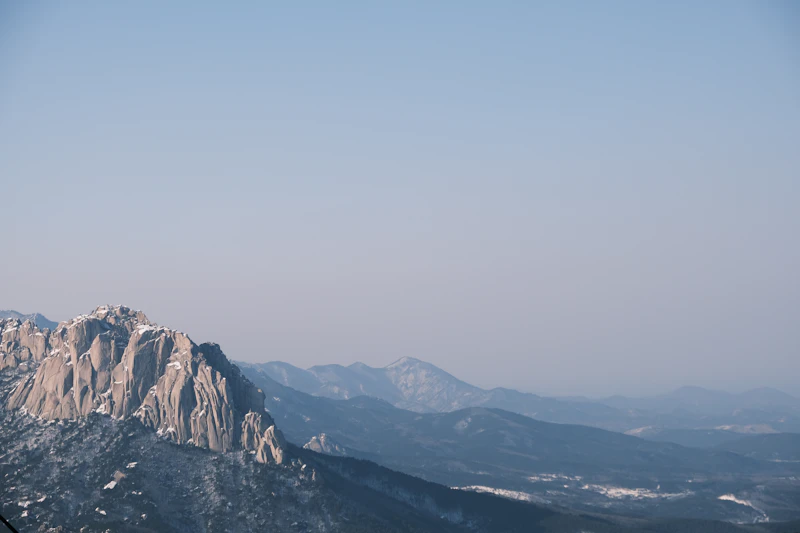
Ulsanbawi is an iconic granite formation consisting of six peak crags spanning an 8-kilometer chain. The round-trip hike from the Sogongwon Visitor Center takes roughly 3.5 to 4.5 hours (approx. 7.6 km total).
- Trail Profile: The first half of the hike is a gentle walk past Sinheungsa Temple and Heun goebawi (Rocking Rock). The final section consists of a steep climb up over 800 steel and wooden stairs built directly into the mountain face.
- Foliage Highlights: The valley surrounding the trail explodes with fiery red maple leaves, contrasting sharply against the white granite walls.
3. Biryong Falls and Towangseong Falls Observatory (Moderate)
This trail follows a crystal-clear mountain stream through dense forest, passing Yukdam Falls and Biryong Falls. Hikers wishing to push further can tackle a steep 415-step staircase leading to the Towangseong Falls Observatory, which offers a dramatic view of a three-tier waterfall cascading down a cliff face.
- Distance/Time: 2.8 km one way (5.6 km round-trip); approximately 2 to 2.5 hours total.
- Difficulty: Easy up to Biryong Falls; strenuous for the final ascent to the observatory.
4. Cheonbuldong Valley Trail (Moderate to Advanced)
Meaning “Valley of a Thousand Buddhas,” Cheonbuldong is widely considered the ultimate foliage trail in Korea. Rock formations resembling thousands of Buddha statues line a valley filled with turquoise pools, waterfalls, and vibrant autumn trees. Hikers can trek as far as Yangpok Shelter (around 6.5 km one way) before turning back.
Essential Tips for Hiking Seoraksan in Autumn
- Start Early: Traffic leading into the park along Route 7 can lock up completely by 8:30 AM in late October. Board the #7 or #7-1 bus by 6:30 AM to arrive as gates open.
- Dress in Layers: Autumn mornings in the mountains can hover near freezing (2°C–5°C), while afternoons warm up to 15°C–18°C. Wear moisture-wicking layers and a windproof jacket.
- Footwear: Granite rocks can be slick, particularly when covered in fallen leaves. Sturdy trail runners or hiking boots with high-friction rubber outsoles are strongly recommended.
- Park Facilities: Restrooms and small convenience kiosks are available near the entrance and at major trail intersections, but stocking up on water and snacks in advance is advised.
Exploring Abai Village (Abai Maeul)
Located on a narrow sandy peninsula between Sokcho Harbor and Cheongho Lake lies Abai Village. The village was founded in the early 1950s by refugees from Hamgyong Province in North Korea who fled south during the Korean War, expecting to return home shortly after. “Abai” is the local Hamgyong dialect word for “grandfather” or “elder.” Today, the neighborhood preserves its unique North Korean cultural influence through traditional architecture, historical murals, and distinct regional food.
How to Reach Abai Village: The Gaetbae Ferry
While Abai Village can be accessed by car via modern bridges, the traditional and most memorable way to enter is by taking the Gaetbae. The Gaetbae is a manual, non-motorized cable ferry that connects downtown Sokcho across a narrow sea canal to the peninsula.
- How It Works: Passengers pull the ferry along a submerged wire cable using long metal hooks. Passengers are encouraged to grab a hook and assist the operator in pulling the vessel across the water.
- Operating Hours: 5:00 AM to 11:00 PM daily.
- Cost: ₩500 per person each way (payable in cash or local transit cards at the ticket window).
Culinary Specialties of Abai Village
The isolation of North Korean refugees led to the creation of iconic localized versions of traditional northern dishes. Dining in Abai Village offers a unique culinary journey into North Korean regional food culture.
1. Abai Sundae (Squid Sausage)
Unlike standard Korean *sundae* (blood sausage filled with glass noodles), Abai Sundae was adapted to local coastal resources. Fresh squid (*ojing-eo*) is cleaned, stuffed with a mixture of minced squid, pork, vegetables, sticky rice, and tofu, then steamed and sliced. It is frequently pan-fried in an egg batter before serving.
Another local variation is *Myeongtae Sundae*, which uses whole dried pollack skin as the sausage casing—a traditional recipe originating directly from Hamgyong-do.
2. Hamhung Cold Noodles (Hamhung Naengmyeon)
This dish features thin, springy noodles made from potato or sweet potato starch, tossed in a spicy, savory chili sauce and topped with *hoe* (raw seasoned flatfish or skate). The dish offers a perfect balance of spicy, sour, and sweet flavors, accompanied by a side cup of hot beef bone broth.
- Average Meal Costs in Abai Village: ₩15,000 to ₩25,000 for a platter of Abai/Squid Sundae; ₩10,000 to ₩12,000 for a bowl of Hamhung Naengmyeon.
Other Sokcho Highlights to Include in Your Itinerary
Sokcho Tourist & Fishery Market (Central Market)
No trip to Sokcho is complete without exploring the bustling paths of the Sokcho Central Market. The covered market features distinct zones dedicated to fresh seafood, live fish, dried fish, and street food snacks.
- Dakgangjeong (Sweet Crispy Chicken): Sokcho’s most famous food export. Deep-fried chicken bits are coated in a sticky, sweet, and mild-spicy garlic glaze and sprinkled with pumpkin seeds. Look for long queues at famous stalls like *Manseok Dakgangjeong* (₩19,000–₩21,000 per box).
- Red Snow Crab (Hongge): Sokcho is renowned for wild-caught deep-sea red snow crab. Many market stalls offer live crabs steamed on the spot, complete with crab-fried rice served inside the shell (₩30,000–₩50,000 per crab depending on market rates).
Yeonggeumjeong Pavilion
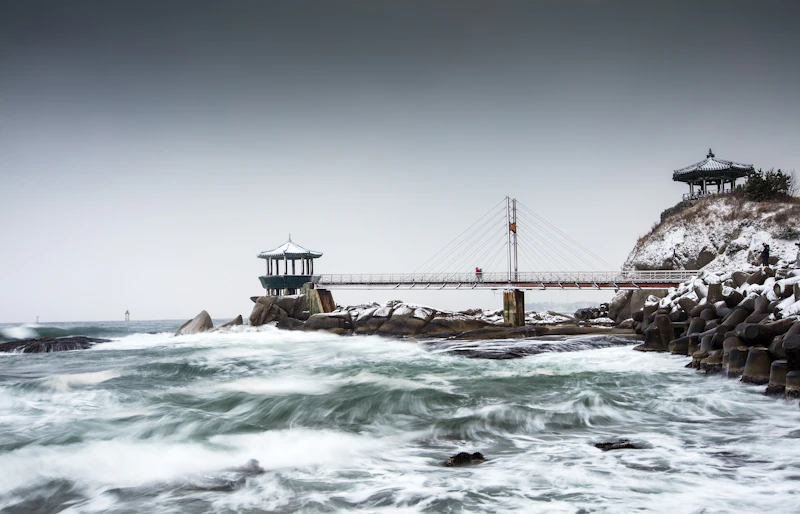
Perched on a rocky headland near Sokcho Port, Yeonggeumjeong consists of two pavilions—one situated on a hilltop and another extending out over the ocean via a stone footbridge. The spot is celebrated as one of the best locations on the East Coast to watch the sunrise over the ocean, with the sound of waves hitting the rocks mimicking the clear sounds of a Korean traditional zither (*Geum*).
Sokcho Beach and Sokcho Eye Ferris Wheel
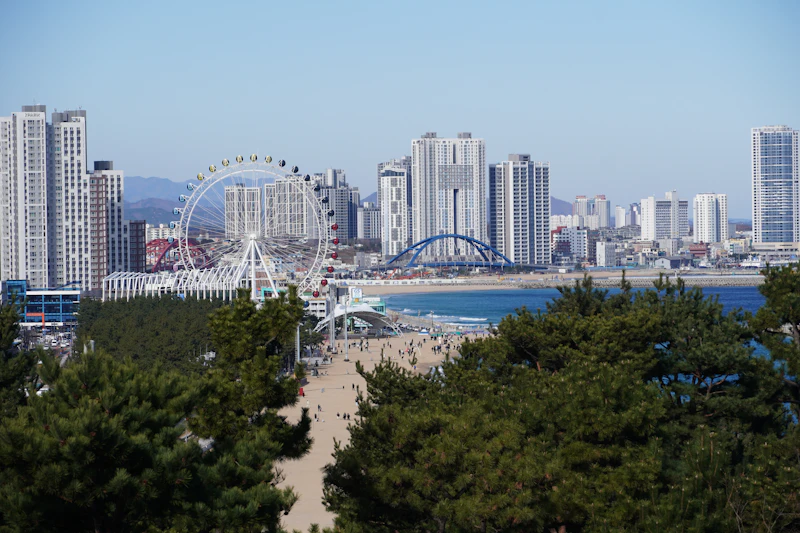
Located just a 5-minute walk from the Sokcho Express Bus Terminal, Sokcho Beach offers clear coastal waters, sandy shorelines, and pine tree walking trails. Overlooking the beach is the *Sokcho Eye*, a 65-meter-tall giant Ferris wheel providing panoramic ocean views over the coastline (Ticket cost: ₩12,000 per adult).
Sample 2-Day Sokcho Autumn Itinerary
Day 1: Seoraksan Foliage & Central Market
- 06:30 AM: Take Bus #7 or #7-1 to Seoraksan National Park.
- 07:30 AM: Purchase Cable Car tickets to Gwongeumseong or start the Ulsanbawi Rock hike early.
- 12:30 PM: Enjoy a mountain lunch at the base of the park (try *Pajeon* green onion pancake and *Makgeolli* rice wine).
- 03:00 PM: Return to the city; check into accommodation.
- 05:30 PM: Visit Sokcho Tourist & Fishery Market for *Dakgangjeong*, fresh seafood, and local market snacks.
Day 2: Coastal Exploration & Abai Village
- 06:30 AM: Sunrise walk at Yeonggeumjeong Pavilion.
- 09:00 AM: Stroll along Sokcho Beach and ride the Sokcho Eye Ferris Wheel.
- 11:00 AM: Ride the Gaetbae ferry across the canal into Abai Village.
- 12:00 PM: Lunch at Abai Village (*Squid Sundae* and *Hamhung Naengmyeon*).
- 02:00 PM: Walk through the quiet coastal alleys of Abai Village and stop at a seafront cafe.
- 04:00 PM: Depart via express bus back to Seoul.
Practical Travel Information and Helpful Tips
Recommended Accommodation Areas
- Near Sokcho Express Bus Terminal / Sokcho Beach: Ideal for travelers using public transit who want convenient access to the beach, cafes, and direct bus routes to Seoraksan.
- Downtown / Central Market Area: Best for food enthusiasts who want to be within walking distance of night food markets, Abai Village, and local eateries.
- Seoraksan Park Entrance (Haodong / Mount Resorts): Perfect for dedicated hikers who want to step directly onto mountain trails early in the morning without commuting from town.
Budget Breakdown (Per Person per Day)
- Transportation: Express Bus round-trip (~₩36,000); Local buses/taxis (~₩10,000–₩15,000).
- Food & Dining: ₩35,000–₩50,000 per day (covering seafood, street food, and meals in Abai Village).
- Activities: Free (Seoraksan Park Entry); ₩15,000 (Cable Car); ₩1,000 (Gaetbae Round-trip); ₩12,000 (Sokcho Eye).
- Accommodation: ₩60,000–₩120,000 per night for mid-range hotels/guesthouses.
Essential Digital Apps for Navigating South Korea
- Naver Map or KakaoMap: Google Maps does not provide turn-by-turn walking or driving navigation in South Korea due to national security map data regulations. Download Naver Map or KakaoMap (both offer English interfaces) to check real-time bus arrival schedules and walking routes.
- Papago: Recommended translation app developed by Naver, offering superior accuracy for Korean language translation over standard tools.
- KOBUS / T-Money Bus: Useful for checking Express bus schedules from Seoul to Sokcho. Note that booking foreign credit cards on Korean transport apps can sometimes fail; purchasing tickets at bus terminal kiosks using international credit cards is recommended.
You Might Also Like
Frequently Asked Questions
How do I get from Seoul to Sokcho?
The fastest option is to take an express bus from Seoul Express Bus Terminal or East Seoul Bus Terminal directly to Sokcho, which takes about 2 to 2.5 hours. Tickets cost approximately 16,000 to 23,000 KRW ($12–$18 USD) each way.
When is the best time to visit Seoraksan National Park for peak autumn foliage?
Peak foliage in Seoraksan usually occurs between mid-October and late October. Autumn colors start near the mountain peak in early October and gradually work their way down to the lower valleys by early November.
How do I get to Abai Village and how much does the Gaetbae ferry cost?
Abai Village is located near central Sokcho and is easily reached by local bus or on foot from the downtown area. Crossing the canal on the iconic hand-pulled Gaetbae ferry costs 500 KRW (about $0.40 USD) per person each way, payable in cash.
Searching Korea Editorial Team
Korea Travel Experts · Based in Seoul
this guide of Korea-based travel writers has been exploring South Korea for over a decade. We visit every destination we write about, verify prices and hours firsthand, and update our guides regularly to ensure accuracy. Our mission is to help travelers experience Korea like a local.