
Quick Summary: Solo Travel in South Korea
- Safety Rating: Generally Safe for Tourists
- Daily Budget: Budget: ₩65,000–₩95,000 ($48–$70 USD) | Mid-Range: ₩140,000–₩240,000 ($103–$177 USD) | Luxury: ₩400,000+ ($295+ USD)
- Best Time to Visit: Spring (April–May) & Autumn (September–November)
- Recommended Duration: 7 to 14 Days
- Solo Travel Difficulty: Easy (Excellent transport, high safety, expanding solo-dining culture)
Is South Korea Safe for Solo Travelers? The Honest Truth
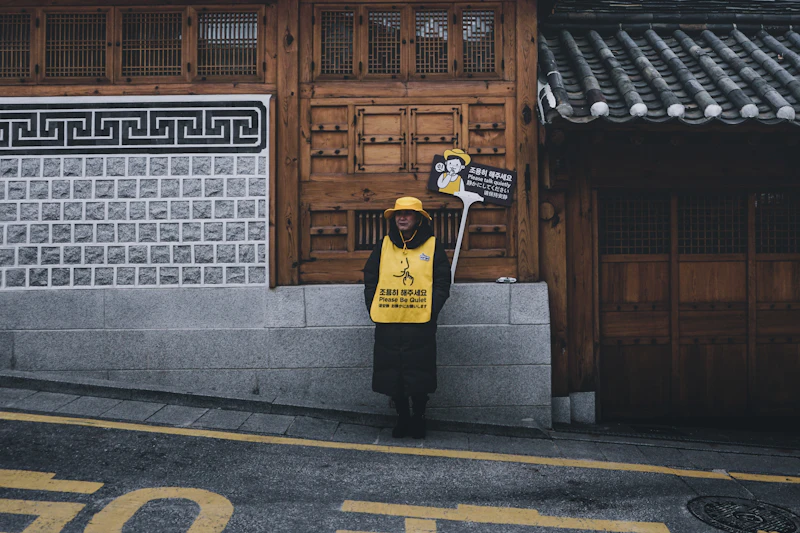
After living in Seoul for over a decade and navigating every corner of the Korean peninsula solo, we can unequivocally say: South Korea is one of the safest travel destinations on earth. Violent crime against tourists is extraordinarily rare. It is entirely normal to see locals leave their iPhones and MacBooks unattended on café tables while taking a bathroom break, or to watch young women walk home alone through dimly lit alleyways at 3:00 AM without fear.
However, “extremely safe” does not mean “zero risk.” During our years on the ground, this guide has learned the subtle nuances of safety in Korea that standard guidebooks often gloss over. Here is the realistic breakdown of safety for solo travelers, including solo female travelers, in 2025.
Physical Crime vs. Petty Theft
In terms of violent crime (mugging, armed robbery, assault), South Korea ranks among the safest nations globally according to the UNODC (United Nations Office on Drugs and Crime). CCTV coverage in major cities like Seoul, Busan, and Incheon is virtually total. Pickpocketing is almost non-existent. If you drop your wallet in a crowded subway station, there is a 90% chance a fellow commuter will leave it on a nearby bench or hand it directly to the station master’s office.
Solo Female Travel: What You Need to Know
For female solo travelers, South Korea offers unprecedented freedom of movement. You can explore vibrant night markets or enjoy late-night shopping in Dongdaemun well past midnight without feeling uncomfortable. However, there are specific issues to be aware of:
- Digital Sex Crimes (Molka / Hidden Cameras): Illegally hidden cameras in public restrooms, changing rooms, and budget motels have been a noted concern in South Korea over recent years. While the Seoul Metropolitan Government conducts regular sweeps of public facilities, Consider checking suspicious small holes in public toilet stalls or using restrooms inside major department stores, subway stations, or chain cafés like Starbucks where maintenance standards are higher.
- Nightlife Aggression: In major nightlife precincts—specifically Hongdae, Itaewon, and Gangnam—heavy alcohol consumption (soju and beer) is deeply ingrained in the local culture. Solo travelers, particularly women, may occasionally encounter overly persistent uninvited attention or drunken catcalling outside bars and clubs late at night. A firm “No, thank you” or simply walking briskly away into a lighted area is usually sufficient to defuse the situation.
- Drink Spiking: While rare, incidents can occur in crowded venues. Never leave your glass unattended in crowded nightlife districts.
Traffic and Pedestrian Safety
the single greatest daily physical hazard in South Korea is actually road traffic. Delivery motorbikes routinely drive on pedestrian sidewalks to meet strict delivery timers, and electric scooters (*Kickgoing*, *Beam*) are frequently parked haphazardly or ridden silently past pedestrians. Always look both ways before stepping onto sidewalks, and remain alert when exiting shops directly onto street corners.
—
Essential Tech Apps for Solo Travelers
Navigating South Korea solo requires a specific digital toolkit. Due to national security restrictions regarding spatial mapping data, global standard apps like Google Maps do not offer accurate walking or driving directions in South Korea. Before stepping off the plane at Incheon International Airport (ICN), ensure you have downloaded the following apps:
1. Naver Map / KakaoMap
Google Maps will show you public transit routes, but it cannot calculate walking directions or real-time bus arrivals. Naver Map (available in English, Chinese, and Japanese) is the absolute essential navigation tool. It provides door-to-door transit routes, walking paths, real-time bus locations, and restaurant reviews.
2. Papago
Google Translate often struggles with the intricate honorifics and contextual nuances of the Korean language. Papago, developed by Korean tech giant Naver, is significantly more accurate for Korean-to-English translation. It features real-time voice translation, image scanning (essential for reading printed menus and street signs), and text input.
3. Kakao T (Taxi Hailing)
Uber operates in Korea primarily as UT/Uber Taxi, but coverage outside central Seoul can be spotty. Kakao T is the nationwide standard taxi-hailing platform. Recent updates allow international visitors to register overseas credit cards and use the app without requiring a local Korean phone number.
4. SIM Card, eSIM, and Portable Wi-Fi (Pocket Wi-Fi)
Staying connected is critical for real-time translation and navigation. You can collect physical SIM cards or portable Wi-Fi routers directly at Incheon Airport Terminal 1 or Terminal 2 arrivals halls.
- KT / SK Telecom Unlimited Data eSIM (10 Days): ₩38,500 / ~$28.50 USD
- LG U+ Portable Wi-Fi Egg (Unlimited Data, 5 Days): ₩22,000 / ~$16.30 USD
—
Navigating the Solo Dining Culture (“Honbap”)
Historically, Korean food culture revolves around communal dining. Iconic dishes like Korean BBQ (Samgyeopsal), Dakgalbi (spicy stir-fried chicken), and Budae Jjigae (army stew) are traditional shared meals designed for two or more people. In the past, solo travelers walking into traditional restaurants were occasionally turned away at the door during peak lunch hours.
Fortunately, the modern phenomenon known as Honbap (solo dining) has revolutionized Korea’s culinary landscape. Solo travel in 2025 is easier than ever if you know where and how to order.
Rules of Engagement for Solo Dining
- Look for 1-Person Serving Indicators: Look for signs reading “1인분 가능” (Single portion available) or menu items listed per single portion.
- Ordering K-BBQ Solo: If you are determined to eat traditional Korean BBQ alone at a standard grill house, offer to pay for two portions (e.g., ordering two 150g servings of pork belly). Most restaurants will gladly seat a solo diner if you meet the two-portion minimum threshold.
- Avoid Peak Hours: Visit popular traditional restaurants between 1:30 PM – 4:30 PM or after 8:00 PM when servers are less rushed and more welcoming to solo patrons occupying a table.
Recommended Solo-Friendly Dining Locations in Seoul
1. Ssaum Sikdang (Myeongdong Branch) — Individual K-BBQ
This clever fast-casual chain specializes in single-serving Korean BBQ plates served on personal hot stone trays, complete with rice, ssam vegetables, and side dishes.
- Address: 21 Myeongdong 7-gil, Jung-gu, Seoul (서울 중구 명동7길 21)
- Transit: Subway Line 2, Euljiro 1-ga Station, Exit 5 (3-minute walk)
- Operating Hours: Daily 11:00 AM – 10:00 PM (Last order 9:30 PM)
- Price: Single-portion Pork Belly (Samgyeopsal) Set: ₩9,500 / ~$7.00 USD
2. Baekje Samgyetang — Ginseng Chicken Soup
Individual ceramic bowls of bubbling ginseng chicken soup make Samgyetang an ideal solo dish. Baekje has been serving solo diners and travelers in Myeongdong for over 50 years.
- Address: 50-11 Myeongdong 8-gil, Jung-gu, Seoul (서울 중구 명동8길 50-11)
- Transit: Subway Line 4, Myeongdong Station, Exit 6 (5-minute walk)
- Operating Hours: Daily 9:00 AM – 10:00 PM (Open 365 days a year)
- Price: Standard Samgyetang: ₩18,000 / ~$13.30 USD
3. Major Department Store Food Halls (B1 Floors)
For high-quality solo dining without any linguistic barrier, visit the basement level food courts of major department stores like Shinsegae Department Store Main Branch (Line 4 Hoehyeon Station Exit 7) or Hyundai Department Store Trade Center Branch (Line 2 Samseong Station Exit 5). They feature counter-style seating, digital touchscreen ordering terminals in English, and food options ranging from handmade dumpling soup (*Kalguksu*) to premium Japanese tonkatsu.
—
Where to Stay: Best Neighborhoods for Solo Travelers
| Neighborhood | Vibe & Atmosphere | Best Suited For | Transit Access |
|---|---|---|---|
| Hongdae / Yeonnam-dong | Youthful, artsy, energetic, late-night cafes & street music | First-timers, solo budget travelers, social backpackers | Line 2, AREX Airport Express, Jungang Line |
| Myeongdong / Euljiro | Central hub, shopping-centric, walkable to palaces, street food | Sightseers, shoppers, travelers seeking central convenience | Line 2 (Euljiro 1-ga), Line 4 (Myeongdong) |
| Seongsu-dong | Industrial-chic, trendy cafes, designer boutiques, artistic | Fashion enthusiasts, digital nomads, repeat visitors | Line 2 (Seongsu Station) |
| Gwanghwamun / Insadong | Historic, quiet evening atmosphere, traditional tea houses | Culture lovers, mature solo travelers seeking quiet nights | Line 1 (Jonggak), Line 3 (Anguk) |
Top Hotel & Hostel Recommendations
Budget Choice: Step Inn Myeongdong 1
A spotlessly clean boutique hostel offering private single pods and single private rooms with sweeping views over Myeongdong Cathedral. Extremely secure with digital keycard access.
- Address: 15th Floor, 55 Myeongdong 10-gil, Jung-gu, Seoul
- Transit: Line 4 Myeongdong Station Exit 8 (4-minute walk)
- Price Range: ₩45,000 – ₩85,000 / ~$33 – $63 USD per night
Mid-Range Choice: L7 Hongdae by LOTTE
Modern, design-forward hotel located right in the heart of Hongdae’s entertainment strip. Offers secure elevator card readers, a rooftop pool, self-check-in kiosks, and exceptionally helpful English-speaking staff.
- Address: 141 Yanghwa-ro, Mapo-gu, Seoul
- Transit: Line 2 Hongik University Station Exit 1 (2-minute walk)
- Price Range: ₩140,000 – ₩230,000 / ~$103 – $170 USD per night
—
Top Solo Activities in Seoul & Beyond
1. Experience a Traditional Korean Spa (Jjimjilbang)
Unwinding at a bathhouse is a quintessentially Korean experience that is inherently suited for solo travelers. Bathing areas are strictly gender-segregated (entirely nude), while unisex communal areas feature varied temperature sauna rooms, ice rooms, and casual dining counters where you can sip cold sweet rice drink (Sikhye).
- Top Pick: Spa Land Centum City (Busan) — Frequently rated the finest spa in the country.
- Address: 35 Centum 4-ro, Haeundae-gu, Busan (부산 해운대구 센텀4로 35)
- Transit: Busan Metro Line 2, Centum City Station (Directly connected to Shinsegae Department Store)
- Hours: Daily 9:00 AM – 10:00 PM (Last admission 9:00 PM)
- Entry Fee: ₩20,000 / ~$14.80 USD (4-hour access pass)
2. Han River Picnic & Convenience Store Ramen
Join locals along the banks of the Han River for an iconic solo pastime: cooking automated instantaneous ramen at a riverside convenience store. Walk to Yeouido Hangang Park, head to the local GS25 or CU store, purchase an instant ramen cup with a foil bowl, and use the automated boiling water machines provided outdoors.
- Location: Yeouido Hangang Park
- Transit: Line 5 Yeouinaru Station Exit 2 (Directly opens into the park)
- Cost: Instant Ramen + Egg + Iced Coffee set: ₩5,500 / ~$4.00 USD
3. Solo Hiking up Namsan or Bukhansan National Park
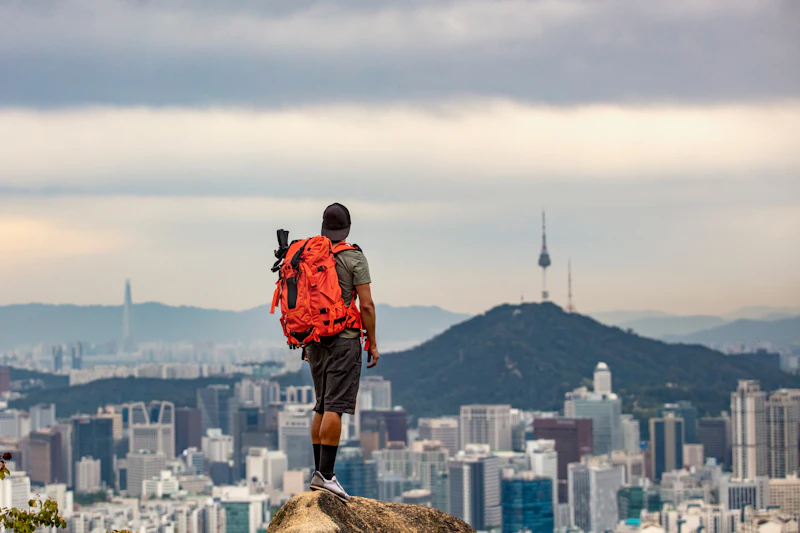
Hiking is Korea’s national pastime. Trails are extraordinarily well-maintained, clearly marked with English signage, and heavily trafficked, making them incredibly safe for solo hikers. For a mild urban trek, walk the historic Seoul City Wall trail up to N Seoul Tower on Namsan Mountain. For rugged granite peaks, take the subway to the base of Bukhansan National Park.
- Bukhansan Trailhead Transit: Line 3 Gupabal Station Exit 1 → Catch Bus 704 to Bukhansanseong Fortress entrance.
- Entry Fee: Free (Open year-round from sunrise to sunset)
—
Best Time to Visit South Korea
Spring (April – May)
Why visit solo: Ideal weather, breathtaking cherry blossoms (typically peaking early April in Seoul), and vibrant outdoor festivals. Comfortable temperatures averaging 12°C to 22°C (53°F to 71°F) make city exploration on foot delightful.
Autumn (September – November)
Our Top Recommendation: Autumn is widely considered by this guide to be the single best season to explore Korea. Precipitation is at its lowest, skies are crisp blue, and fiery red maple leaves blanket palace grounds and national parks. Temperatures average 10°C to 20°C (50°F to 68°F).
Summer (June – August)
What to watch out for: Late June through late July brings Jangma (the East Asian monsoon season), featuring heavy rainfall, high humidity, and occasional typhoons. Temperatures frequently exceed 33°C (91°F) with extreme humidity. Pack lightweight rain gear and waterproof footwear.
Winter (December – February)
What to watch out for: Siberian wind blasts drop temperatures well below freezing (frequently down to -10°C / 14°F). However, winter offers clear skies, excellent skiing in Gangwon-do province, lower hotel accommodation rates, and cozy street food stalls selling hot fishcake broth (Eomuk).
—
Solo Travel Budget Breakdown
Below is a realistic projection of daily expenses for solo travelers in South Korea for 2025 (calculated per person, per day):
| Category | Budget Tier | Mid-Range Tier | Luxury Tier |
|---|---|---|---|
| Accommodation | ₩35,000 – ₩55,000 ($26 – $40 USD) Hostel pod / Guesthouse |
₩90,000 – ₩160,000 ($66 – $118 USD) 3-Star Hotel / Business Hotel |
₩300,000 – ₩600,000+ ($222 – $444+ USD) 5-Star Luxury Hotel |
| Food & Dining | ₩20,000 – ₩30,000 ($15 – $22 USD) Street food, Gimbap chains |
₩40,000 – ₩70,000 ($30 – $52 USD) Mid-range cafes, casual BBQ |
₩120,000 – ₩250,000+ ($88 – $185+ USD) Fine dining, Hanwoo beef |
| Transportation | ₩5,000 – ₩8,000 ($3.70 – $6 USD) Subway & Bus (T-Money) |
₩15,000 – ₩25,000 ($11 – $18 USD) Subway + 1-2 Taxi rides |
₩50,000 – ₩100,000 ($37 – $74 USD) Private cars / Taxis all day |
| Activities & Sightseeing | ₩5,000 – ₩10,000 ($3.70 – $7.40 USD) Palace entry, park visits |
₩20,000 – ₩40,000 ($15 – $30 USD) Museums, Spas, Cable cars |
₩80,000 – ₩150,000+ ($59 – $111+ USD) Guided private tours, DMZ |
| ESTIMATED DAILY TOTAL | ₩65,000 – ₩103,000 ($48 – $76 USD) |
₩165,000 – ₩295,000 ($122 – $218 USD) |
₩550,000 – ₩1,100,000+ ($406 – $814+ USD) |
—
Expert Tips for Solo Travelers (Insider Advice)
1. Master the T-Money Card & Transit Systems
Do not buy single-use metro tickets. Upon arrival at Incheon Airport, purchase a re-chargeable T-Money Card from any convenience store (CU, GS25, 7-Eleven) for ₩4,000 (~$3.00 USD). Load it with cash (Korean Won cash is required to top up transit cards at metro station kiosks). The T-Money card gives you discounted transfers between subways and city buses within a 30-minute window.
Pro Tip: Seoul recently introduced the Climate Card (Gifu Donghaeng Card) for tourists. A 3-day pass costs ₩10,000 (~$7.40 USD) and provides unlimited subway and city bus travel throughout Seoul proper.
2. Store Your Luggage at Metro Stations
If you check out of your hotel early but have an evening train to Busan or a late flight out of Incheon, take advantage of the digital locker storage systems located inside almost every major Seoul Metro station (known as T-Luggage). Storage fees range from ₩3,000 to ₩8,000 ($2.20 – $5.90 USD) for 4 hours depending on locker size. Payment can be made using your credit card or T-Money card directly on the touchscreen console.
3. Save Emergency & Tourist Support Numbers
The Korea Tourism Organization operates an exceptional 24/7 travel helpline called 1330 Korea Travel Hotline.
- From a local phone: Dial 1330
- From an overseas phone: Dial +82-2-1330
- Services: Free real-time translation (English, Japanese, Chinese), travel assistance, and emergency assistance. You can also message them via KakaoTalk or text.
4. Respect Local Cultural Etiquette
- Two-Handed Courtesy: When handing money, credit cards, or items to cashiers or waiters, pass them using both hands (or with your right hand supported at the elbow by your left hand). It is a universally appreciated sign of respect.
- Subway Priority Seats: Avoid sitting in the designated seats at the ends of subway cars. These are strictly reserved for the elderly, pregnant women, and individuals with disabilities. Even if the train is completely packed and the seats are empty, locals leave them open.
- No Tipping Policy: Tipping is not part of Korean culture. Leaving cash on a table at a restaurant or tipping taxi drivers is unnecessary and may cause confusion. Excellent service is included in the stated price.
—
Common Mistakes to Avoid
1. Relying Exclusively on Credit Cards for Small Vendors
While South Korea is largely a cashless society where standard credit cards (Visa, Mastercard) are accepted at almost all retail stores and restaurants, cash remains essential for two things: topping up your T-Money transit card and purchasing street food at traditional markets (such as Gwangjang Market or Namdaemun Market).
2. Expecting English Signs in Rural Regions
While English signage is ubiquitous in Seoul, Busan, and Jeju, traveling solo into lesser-visited provincial areas like Jeonju, Sokcho, or Gyeongju requires preparation. Download your Papago language packs for offline translation and keep your destination addresses written in Korean characters (Hangeul) saved on your phone.
3. Ignoring Metro Closing Times
The Seoul Metro system does not run 24 hours a day. Last trains typically depart terminus stations around midnight (11:30 PM to 12:00 AM on weekdays, slightly earlier on weekends). If you miss the final train, you will need to hail a taxi using Kakao T or utilize the Night Bus (Owl Bus / N-Bus) network, which operates specific nocturnal routes marked with an “N” (e.g., N13, N26).
4. Entering “No Kids” or Private Member Cafes
Certain high-end boutique cafes in trendy districts like Seongsu or Gangnam have introduced “No Kids Zones” or reservation-only entry rules. Always check the door signage before walking in and seating yourself.
—
Editorial Note: This guide was independently compiled by the Searching Korea editorial team based on over a decade of continuous living, solo navigating, and first-hand exploration across South Korea. visit every recommended venue, test public transit routes, and verify current pricing to ensure our readers receive accurate, unbiased, and actionable travel advice.