
Discovering Gyeongju in Autumn: South Korea’s Golden Kingdom
Known as the “museum without walls,” Gyeongju was the ancient capital of the Silla Kingdom for nearly a thousand years. While this historic city in southeastern South Korea offers rich cultural heritage year-round, autumn transforms its UNESCO World Heritage sites into a spectacular canvas of deep crimsons, fiery oranges, and brilliant golds. Ancient royal burial mounds, thousand-year-old Buddhist temples, and traditional timber bridges are framed by vivid fall foliage, making Gyeongju one of the premier autumn destinations in East Asia.
Unlike modern metropolis cities, Gyeongju features a low-rise landscape where historical monuments harmonize with nature. Visiting Gyeongju during the autumn foliage season allows travelers to step back in time while enjoying comfortable walking weather, crisp air, and stunning natural scenery. This comprehensive guide provides a complete itinerary, detailed spot breakdowns, transportation advice, budget estimates, and practical tips to help you execute the perfect Gyeongju autumn travel plan.
Best Time for Autumn Foliage in Gyeongju
Timing is essential when planning a fall foliage trip to Gyeongju. Due to the city’s geographical location in the southeastern inland region of South Korea, peak foliage arrives slightly later than in northern regions like Seoul or Seoraksan National Park.
- Early Autumn (Mid to Late October): Leaves begin changing color, particularly in higher elevation zones like Mount Tohamsan. The silver grass (eoksa) and famous pink muhly fields around Cheomseongdae reach peak beauty during this window.
- Peak Foliage (Late October to Early November): This is the absolute best time to visit. Maples around Bulguksa Temple turn bright scarlet, and the ginkgo trees lining major avenues and historical sites burst into brilliant canary yellow.
- Late Autumn (Mid November): The leaf canopy begins to drop, creating vibrant golden carpets on the ground, especially along the ginkgo tree avenues. Temperatures drop significantly, bringing crisp, clear fall days.
The Ultimate 2-Day Gyeongju Autumn Foliage Itinerary
To fully appreciate Gyeongju’s fall scenery without feeling rushed, a two-day itinerary is ideal. This sequence balances iconic UNESCO sites, scenic natural walks, vibrant food districts, and stunning night views.
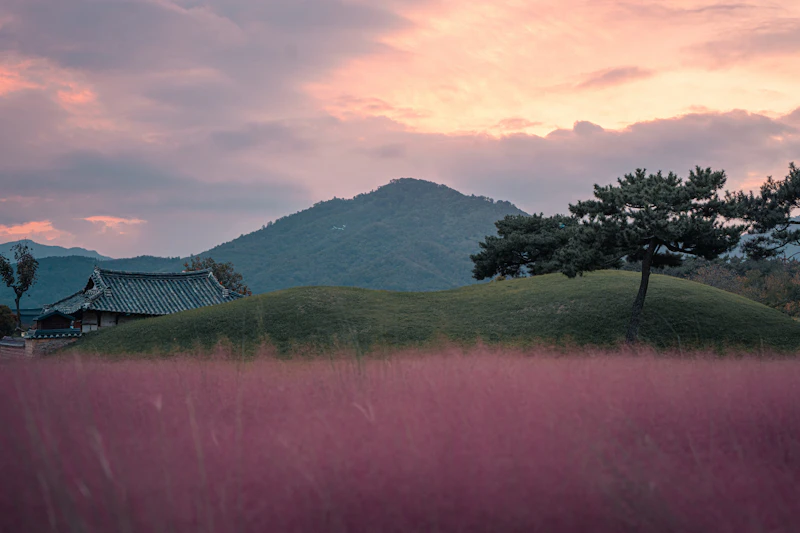
Day 1: Historic Heart of Gyeongju, Royal Tombs, and Evening Illuminations
Day 1 focuses on the central historic zone of Gyeongju, which can easily be explored on foot or by bicycle.
- Morning: Daereungwon Tomb Complex & Hwangridan-gil
Start your morning early at Daereungwon Ancient Tombs. The rolling green mounds of ancient Silla kings are lined with massive ginkgo and maple trees. Walk along the outer stone wall path (Doldam-gil) for breathtaking autumn photos. Afterward, cross over to Hwangridan-gil, a trendy neighborhood filled with restored traditional Hanok houses, cafes, and local eateries. Grab lunch and enjoy autumn-themed Korean desserts. - Afternoon: Cheomseongdae Historic Zone & Gyeongju Hyanggyo
Walk south to Cheomseongdae, the oldest surviving astronomical observatory in Asia. Surrounding the observatory are vast seasonal flower gardens, including feathery pink muhly grass and yellow cosmos. Continue walking toward the Gyeongju Hyanggyo (Confucian Academy) and Woljeonggyo Bridge, where ancient gingko trees frame the historic wooden structure over the Namcheon River. - Evening: Donggung Palace and Wolji Pond Night Foliage
As dusk approaches, head to Donggung Palace and Wolji Pond. While beautiful by day, this secondary palace of the Silla crown prince is famous for its night illumination. Autumn foliage surrounding the serene artificial pond reflects perfectly on the mirror-like water surface, creating one of the most magical night scenes in South Korea.
Day 2: Sacred Mountains, Temple Maples, and Ginkgo Tunnels
Day 2 takes you slightly outside the city center to Mount Tohamsan and the scenic eastern outskirts, where Gyeongju’s most dramatic maples and ginkgo groves reside.
- Morning: Bulguksa Temple & Seokguram Grotto
Take an early bus to Bulguksa Temple, the crown jewel of Gyeongju’s autumn colors. Arriving before 9:00 AM allows you to experience the peaceful morning light filtering through dense red maples near the Iljoemun Gate and Cheonwangmun Gate. Walk up the stone staircases (Baegungyo and Cheongungyo) framed by vivid crimson leaves. Optionally, take local bus #12 up to Seokguram Grotto higher up Mount Tohamsan for panoramic mountain views. - Early Afternoon: Tongiljeon Ginkgo Tree Avenue
Head south toward Tongiljeon Shrine. The main straight road leading to Tongiljeon is lined on both sides with towering ginkgo trees that create a symmetrical golden tunnel in late October and early November. Climb the stairs of Tongiljeon Shrine to look down at the golden corridor stretching across the rural plains. - Late Afternoon: Bomun Lake Resort & Bomunjeong Pavilion
Finish your afternoon at Bomun Lake Resort. Visit Bomunjeong, a small, picturesque pond featuring a wooden pavilion surrounded by weeping cherry trees and maples whose red leaves dip into the water. Walk along the lakeside promenade as the sun sets over the water.
Detailed Spot Breakdown: Top Foliage Destinations in Gyeongju
1. Bulguksa Temple (불국사)
Bulguksa Temple is widely considered one of South Korea’s top three fall foliage locations. Built in 751 AD, this grand Buddhist complex sits on the slopes of Mount Tohamsan. In autumn, the temple grounds turn into a fiery landscape of red maple leaves (danpung).
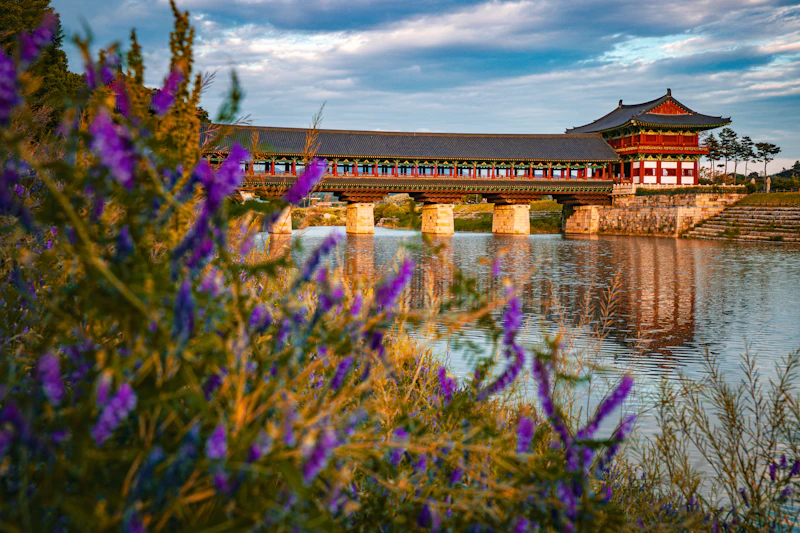
- Key Highlights: The small pond near the entrance gate (Banyayeon), the historic stone bridges, and the traditional courtyard architecture framed by deep red maples.
- Best Photography Spots: The wooden bridge over the entrance pond, looking back toward the main temple entrance; and the view looking up at the Cheongungyo stone stairs framed by maple foliage.
- Admission: Free (Since May 2023, entry to national heritage temples in Korea is free, though parking charges apply).
- Location: 385 Bulguksa-ro, Gyeongju-si. Accessible via City Buses #10, #11, or #700 from downtown.
2. Cheomseongdae Historic Zone & Pink Muhly Field (첨성대)
While Cheomseongdae is famous for its 7th-century stone tower, the surrounding parklands transform dramatically during fall. The zone features a contrast between historic preservation and natural color.
- Key Highlights: The massive field of Pink Muhly grass located right next to Cheomseongdae creates a soft, purple-pink fog aesthetic from late September through October. Adjacent patches feature towering autumn silver grass and vibrant yellow ginkgos along the walking paths.
- Best Time to Visit: Late afternoon, just before golden hour, when sunlight hits the pink muhly grass and illuminates the warm tones of the stone observatory.
- Admission: Free.
- Location: 140-1 Inwang-dong, Gyeongju-si. Located centrally within easy walking distance from Daereungwon.
3. Donggung Palace and Wolji Pond (동궁과 월지)
Formerly known as Anapji Pond, this historic palace site was used for royal banquets during the Silla Kingdom. The architecture was specifically designed to make the pond feel like a ocean, with winding shorelines hiding parts of the complex from view.
- Key Highlights: Red and gold trees planted along the curved shorelines of the pond. At night, artificial spotlights illuminate both the wooden pavilions and the surrounding trees, projecting clear reflections onto the black water.
- Visiting Tip: Arrive roughly 30 minutes before sunset to capture the transition from blue hour light to full evening illumination.
- Admission: 3,000 KRW for Adults; 2,000 KRW for Youth; 1,000 KRW for Children.
- Location: 102 Wonhwa-ro, Gyeongju-si.
4. Tongiljeon Ginkgo Avenue (통일전)
Tongiljeon is a shrine built to commemorate the unification of the Three Kingdoms of Korea. While the shrine itself offers historical value, its main autumn draw is the straight 2-kilometer avenue leading directly to its gates.
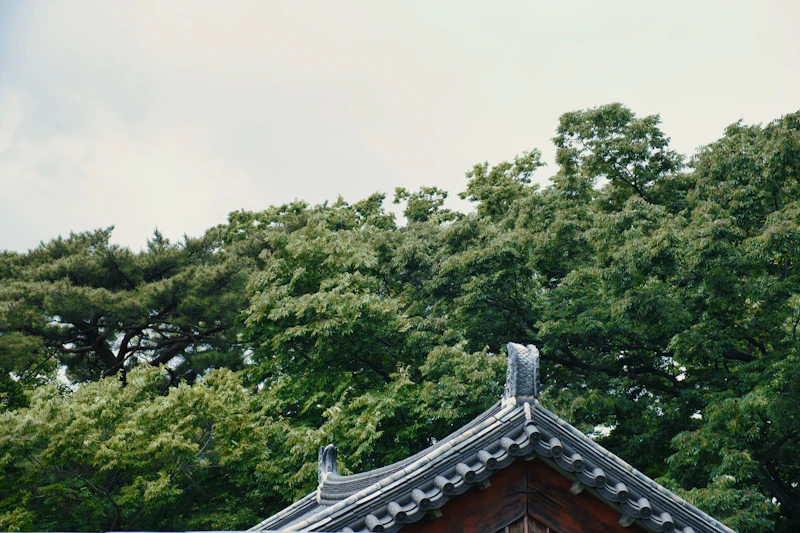
- Key Highlights: Perfectly manicured, dense ginkgo trees lining both sides of the roadway. When peak foliage hits in late October, the street turns into a brilliant yellow corridor, with golden leaves carpeting the pedestrian sidewalks.
- Photography Tip: Walk up to the high balcony of the main gate at Tongiljeon Shrine to look back down over the street for an elevated wide-angle shot of the golden ginkgo road.
- Admission: Free.
- Location: 920 Namsan-dong, Gyeongju-si. Accessible via Bus #11 from downtown or Bulguksa.
5. Bomunjeong Pavilion & Bomun Lake Resort (보문정)
Located within the Bomun Tourist Complex, Bomunjeong is a small, quiet traditional gazebo hidden just off the main road. CNN once named Bomunjeong one of South Korea’s top 50 scenic locations to visit.
- Key Highlights: The small lily pond reflects a beautiful wooden gazebo and surrounding weeping trees whose leaves turn deep bronze, yellow, and red. The walking trails around nearby Bomun Lake also offer kilometers of continuous foliage views.
- Admission: Free.
- Location: Shinpyeong-dong, Gyeongju-si (Near the K-Hotel Gyeongju). Accessible via Bus #10 or #700.
Transportation Guide: Getting to and Around Gyeongju
How to Travel to Gyeongju
- From Seoul: Take the KTX (Korea Train eXpress) from Seoul Station to Singyeongju Station. The high-speed train takes approximately 2 hours and 10 minutes. Standard one-way tickets cost around 49,300 KRW. Alternatively, long-distance intercity buses run from Seoul Express Bus Terminal to Gyeongju Bus Terminal (approx. 3.5 to 4 hours, ~25,000–38,000 KRW).
- From Busan: Take the KTX from Busan Station to Singyeongju Station (approx. 30 minutes, ~11,000 KRW) or take an intercity bus from Busan Central Bus Terminal (Nopo-dong) directly to Gyeongju Bus Terminal (approx. 50 minutes, ~6,000 KRW).
Getting Around Gyeongju Locally
- City Buses: Major tourist destinations are well-connected by local buses. Key routes include:
- Bus #10 & #11: Loop buses connecting Gyeongju Station/Bus Terminal, Cheomseongdae, Donggung & Wolji, Bulguksa Temple, and Bomun Resort.
- Bus #700: Direct route connecting Singyeongju KTX Station to major tourist hubs including Bulguksa and Bomun Lake Resort.
- Fare: 1,500 KRW using a standard T-Money or Korea Tour Card transportation card.
- Taxis: Taxis are widely available and relatively affordable for short trips around the central historic district. Base fare starts at 4,000 KRW. Rides between downtown and Bulguksa Temple generally cost between 15,000 KRW and 20,000 KRW. Kakao T app works smoothly in Gyeongju.
- Bicycle Rentals: The central historic zone (Daereungwon, Cheomseongdae, Hwangridan-gil, Woljeonggyo) is flat and highly bike-friendly. Bicycle rentals are available near the bus terminal and Hwangridan-gil for approximately 10,000–15,000 KRW per day. Electric scooters are also popular.
Estimated Travel Costs & Budget Breakdown
Gyeongju is an affordable destination compared to Seoul. Below is an estimated budget for a standard 2-day fall travel trip per person:
- Transportation (KTX roundtrip from Seoul): ~98,600 KRW
- Local Transit (Buses & Taxis): ~15,000 – 25,000 KRW
- Accommodation (1 night in Hanok stay or 3-star hotel): ~70,000 – 150,000 KRW per room/night
- Attraction Entrance Fees: ~3,000 – 6,000 KRW total (Bulguksa, Cheomseongdae, and Tongiljeon are free; Donggung Palace is 3,000 KRW)
- Meals & Cafes (2 days): ~60,000 – 90,000 KRW (Silla-style Korean set meals range from 15,000 to 25,000 KRW per person; street food like 10-Won Cheese Bread costs ~3,000 KRW)
- Total Estimated Budget (per person excluding hotel): ~180,000 – 220,000 KRW
Essential Practical Tips for Gyeongju Fall Travel
- Dress in Smart Layers: Autumn in Gyeongju features large diurnal temperature variations. Morning temperatures can drop to 5°C–8°C (41°F–46°F), while daytime temperatures reach pleasant highs of 18°C–20°C (64°F–68°F). Carry a light down jacket, scarf, or layerable cardigan for early mornings and late evenings.
- Beat the Autumn Crowds at Bulguksa: Bulguksa Temple is extremely popular during peak foliage (late October to early November). Tour buses usually arrive around 9:30 AM. To enjoy quiet views and clear photo opportunities, aim to arrive right when the gates open at 8:00 AM.
- Rent a Hanbok for Unique Photos: Renting traditional Korean clothing (Hanbok) is very popular around Hwangridan-gil and Cheomseongdae. Hanbok rentals typically range from 15,000 KRW to 30,000 KRW for 2 hours. Hanbok photos set against deep red maples and historic stone walls provide fantastic travel souvenirs.
- Luggage Storage Solutions: If arriving early by KTX or bus before hotel check-in, utilize the coin lockers available at Singyeongju KTX Station, Gyeongju Express Bus Terminal, or major attraction entrances like Bulguksa.
- Monitor Peak Foliage Forecasts: Weather patterns shift annually. Check official Korean Meteorological Administration (KMA) autumn forecasts released in mid-September to confirm exact peak foliage windows before booking non-refundable transport.
- Try Local Autumn Treats: Don’t leave Gyeongju without sampling Hwangnam-ppang (Gyeongju Bread), a soft pastry filled with sweet red bean paste that pairs perfectly with warm tea or coffee on a crisp fall day.
You Might Also Like
Frequently Asked Questions
When is the best time to see autumn foliage in Gyeongju?
The peak season for autumn colors in Gyeongju typically runs from late October to mid-November, with early November offering the most vibrant leaves at spots like Bulguksa Temple.
How do you get from Seoul to Gyeongju?
The fastest option is taking the KTX high-speed train from Seoul Station to Singyeongju Station, which takes about 2 hours. From Singyeongju Station, local city buses or taxis take 15–20 minutes to reach the main tourist areas.
Is Donggung Palace and Wolji Pond worth visiting at night during autumn?
Yes, visiting at dusk is ideal because you can see the fall leaves in daylight before staying for the illumination of the illuminated palace reflecting on the water. Entry costs 3,000 KRW for adults, and purchasing tickets online or arriving slightly before sunset helps avoid long lines.
Searching Korea Editorial Team
Korea Travel Experts · Based in Seoul
this guide of Korea-based travel writers has been exploring South Korea for over a decade. We visit every destination we write about, verify prices and hours firsthand, and update our guides regularly to ensure accuracy. Our mission is to help travelers experience Korea like a local.